Veneer vs Solid Wood in Singapore: A Five-Year Cost Comparison That Actually Holds Up
Last month, I visited a friend's four-room HDB flat in Tampines to help him replace a dining table he had bought from a neighbourhood furniture shop in 2019. The table looked tired. The top had warped slightly near the window where the afternoon sun hits around 2 pm, and a corner of the "wood" surface had peeled back to reveal a different grain underneath. The price tag from 2019 was SGD 899. He had used it for roughly six years, and now he was preparing to spend another SGD 1,200 to replace it. That works out to about SGD 350 per year, just for the dining table.
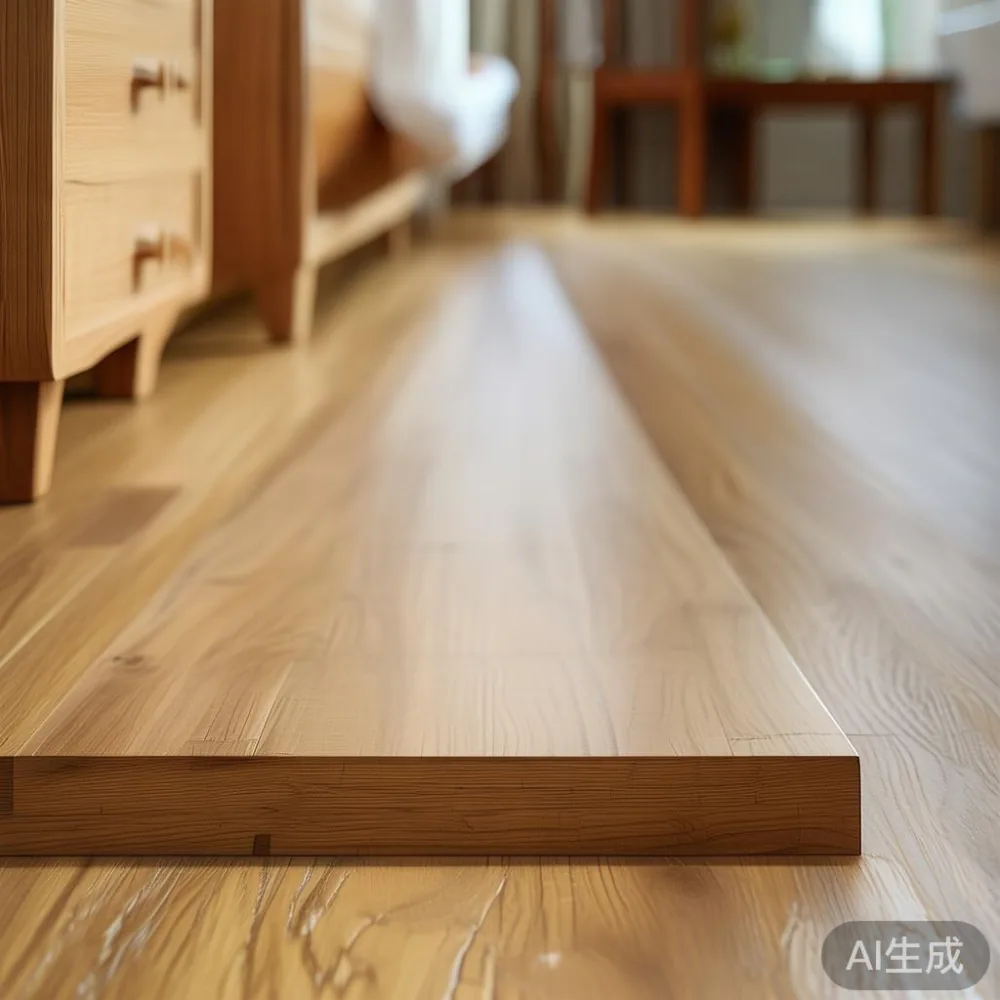
His experience pushed me to build a proper five-year cost comparison between veneer furniture and solid wood furniture for Singapore households. Because in a 4-room HDB flat or a 990 sqft condo unit in Punggol, the difference is rarely about the sticker price. It is about what the furniture looks like in year three, year four, and year five, and what it costs to repair, refinish, or replace.
Why the Sticker Price Misleads Most Singapore Shoppers
Walk into any furniture showroom along Tampines Street 32 or the cluster of shops around Bedok Reservoir, and the first thing you will notice is that a "wooden" dining table can be priced anywhere from SGD 399 to SGD 4,800. The cheaper end almost always uses a thin veneer over engineered wood or MDF. The thicker, heavier pieces, the ones that feel solid when you press your knuckles into them, tend to be solid wood.
The problem is that the sticker price only tells you what you pay on day one. It does not tell you:
- How the piece handles Singapore humidity, which regularly sits between 70% and 85% RH.
- Whether the finish will yellow or peel when aircon cycles on and off.
- Whether you can sand and refinish the surface after five years of daily use.
- What it costs to dispose of the piece when it fails, especially if it does not fit down your service lift or corridor.
This is the lens I used to compare the two categories, and it is the same lens the MIDHILL team in Foshan uses when they talk to customers in Singapore. Their focus is not on a single purchase event but on what a piece of furniture costs across a real ownership cycle.
Setting Up the Comparison: A Real Bedok Household Scenario
Let me define the scenario clearly so the numbers stay fair. We are comparing two identical-looking dining tables, one veneer, one solid wood, both white oak tone, both 1.6 m long, both suitable for a standard HDB dining area of about 1.8 m by 1.2 m.
| Item | Veneer Table (2019) | Solid Wood Table (2019) |
|---|---|---|
| Material | 0.6 mm oak veneer over MDF core | Solid white oak, 3 cm thick top |
| Weight | 22 kg | 46 kg |
| Original price | SGD 899 | SGD 2,150 |
| Warranty | 6 months | 10 years (structural) |
| Refinishing | Not possible | Possible, usually 1-2 times per decade |
For the five-year cost model, I included the following line items:
- Initial purchase (including 9% GST).
- Delivery and lift access (typical HDB service lift is 1.2 m wide by 1.5 m deep).
- One repair event in year three (loose leg or warped top).
- One deep clean or minor refinish in year four.
- End-of-cycle disposal or resale value in year five.
For the solid wood piece, I assumed the owner refinishes once during the five-year window, at SGD 280, which is realistic for a local sanding and oiling service in Singapore. For the veneer piece, refinishing is not an option, so any surface damage requires replacement of the top, often the whole table.
What Veneer Actually Costs Over Five Years in an HDB Flat
Year one feels fine. The veneer table looks attractive, the surface is smooth, and the family eats three meals a week on it without issue. In year two, my friend's table developed a slight lift at one corner, where the veneer had begun to separate from the MDF substrate. By year three, a chair leg had punched a small dent into the surface near the centre. The repair quote was SGD 180, but the technician said he could not guarantee the finish would match, because the original stain was no longer produced.
Here is the actual five-year tally for the veneer dining table, all figures in SGD including 9% GST:
| Cost Item | Amount (SGD) |
|---|---|
| Purchase price | 980 |
| Delivery to HDB (3rd floor, no lift) | 80 |
| Year 2 corner repair | 120 |
| Year 3 dent repair attempt | 180 |
| Year 4 cleaning and protective coat | 90 |
| Year 5 disposal (cannot donate, MDF) | 40 |
| Total over 5 years | 1,490 |
| Annualised cost | 298 |
The disposal note is important. MDF and engineered wood are not accepted by many Singapore second-hand charities because they do not age well. Most end up as bulky waste, and HDB blocks charge a removal fee, usually SGD 30 to SGD 60 per piece. If you live above the 7th floor and the corridor is narrower than 1.2 m, the table may even need to be partially disassembled before it can leave the lift.
Now, my colleague at MIDHILL runs the Singapore desk, and she told me last week that almost every call she fields in Bedok and Punggol starts with the same complaint: "My dining table is peeling, what can I do?" Her answer is always the same. If the substrate is MDF, very little. If it is solid wood, plenty.
What Solid Wood Actually Costs Over Five Years in the Same Flat
The solid wood table costs more on day one, around SGD 2,150 with GST, and delivery to a walk-up in Bedok is slightly higher because the piece weighs 46 kg. Two delivery men, half an hour, SGD 140. Year two, no issues. Year three, the top has a few light scratches from daily use, but no lifting, no peeling, no warping. Year four, the owner pays SGD 280 for a full sanding and re-oiling. The piece looks new again.
Here is the five-year tally:
| Cost Item | Amount (SGD) |
|---|---|
| Purchase price | 2,344 |
| Delivery to HDB (3rd floor, no lift) | 140 |
| Year 3 minor scratch repair | 60 |
| Year 4 full refinish | 280 |
| Year 5 deep clean | 50 |
| Year 5 resale value (Carousell, used) | -900 |
| Total over 5 years | 1,974 |
| Annualised cost | 395 |
On a strict annualised basis, solid wood looks more expensive. But look at the column differently. After five years, the solid wood owner still owns a piece worth roughly SGD 900 on the resale market. The veneer owner owns something that costs money to throw away. If we treat the furniture as a depreciating asset that holds some value, the true five-year cost gap narrows to under SGD 500 over the entire period. That is roughly SGD 8 per month, less than a coffee.
How Does This Apply to a Bed Frame, Wardrobe, and Nightstand?
The dining table is one piece. Most Singapore households buy a matched set: bed frame, wardrobe, nightstand, sometimes a marble table for the living area. The cost gap logic holds for every one of them, and in some cases, the gap grows.
A queen-size bed frame in veneer, sold widely at SGD 1,299 in Singapore, typically shows visible sag in the slats by year four because the MDF core cannot hold repeated load cycles from a 70 kg mattress plus two adults. Replacement is the only option. A solid wood bed frame at SGD 2,800 holds its shape, and the slats can be replaced individually for about SGD 180 if one cracks.
For wardrobes, the calculus is even sharper. A 2.4 m tall veneer wardrobe weighs around 65 kg and tends to develop misaligned doors by year three, because the carcass absorbs moisture unevenly. A solid oak wardrobe at 110 kg keeps its geometry. If you are choosing between an American light luxury wardrobe and a flat-pack veneer one, the cost gap over five years is usually under SGD 700 once refinishing and resale are factored in.
Nightstands are smaller, around 45 cm wide by 40 cm deep, and often overlooked. A veneer nightstand at SGD 189 versus a solid wood nightstand at SGD 420 looks like a clear win for veneer. But if the veneer nightstand's drawer face peels in year two, you will pay SGD 80 to replace the face, or you will live with it. The solid wood nightstand simply does not have that failure mode.
Is a French Sofa Worth It for a Singapore Condo Under SGD 2,000?
This is a question I hear every week, and the short answer is yes, but only if the frame is solid wood. A French light luxury sofa with a plywood frame and foam cushions will fail in the same way as a veneer dining table. The cushions lose shape by year three, and the frame creaks because the joints were stapled, not dowelled. The post-modern light luxury style you see in many Punggol and Tampines condos relies heavily on solid wood sofa frames with sinuous spring or webbing suspension, paired with high-resilience foam at 32 to 38 kg per cubic metre density. That is what holds the seat shape over five years of nightly use.
If you are looking for under 2000 French furniture in Singapore, focus on the frame and the suspension first, then the upholstery. A 2.4 m three-seater in this style usually lands between SGD 1,800 and SGD 2,400. Skip the under-SGD 1,200 options, because the frame is almost never solid wood at that price point.
This same logic applies when you compare a European bed vs Italian light luxury bed. The Italian light luxury category often uses solid poplar or beech frames with hand-finished veneers only on the headboard face. The structural core is solid, the visible face is decorative. That combination gives you the look of French light luxury with the durability of solid wood furniture.
How Do You Style a Light Luxury Sofa in an HDB or Condo Apartment?
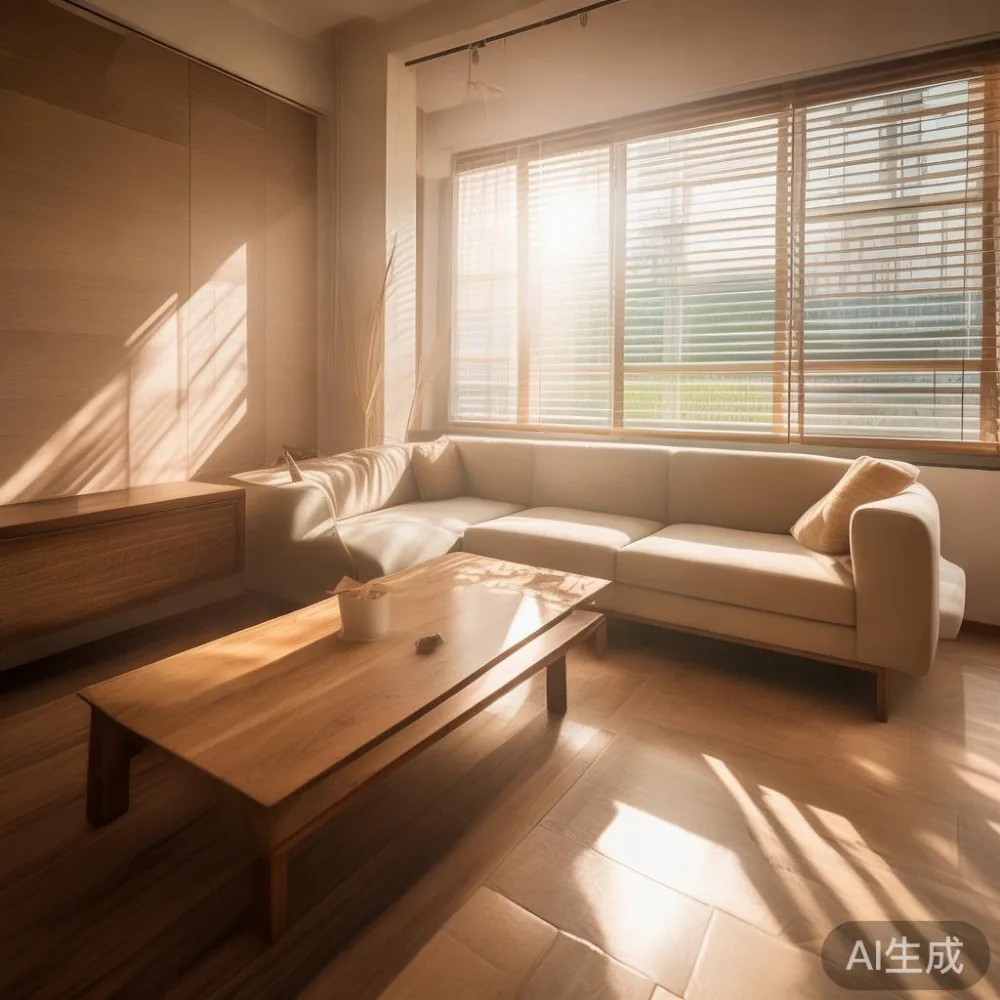
Styling a light luxury sofa in an apartment is mostly about scale, light, and one or two anchor pieces. In a 990 sqft condo in Punggol, a 2.2 m or 2.4 m three-seater against the longer wall usually leaves about 80 cm of walking space on each side, which is the minimum comfortable width for Singapore flats. Keep the marble table low, around 35 cm high, and choose one with a solid wood base if you want the same longevity as the sofa.
Pair the sofa with a solid wood coffee table in walnut or white oak, around 1.2 m long by 60 cm deep. Avoid glass tops in living rooms with small children, because tempered glass tops still chip at the edges and rarely match the return policy of the sofa itself. Speaking of return policies, this is where solid wood brands tend to be more generous, because the product is built to last, not to be returned in month three. MIDHILL, for example, ships from Foshan with a 14-day return window and a 10-year structural warranty, which is the kind of return policy that only makes sense if the product is genuinely solid wood. A brand selling veneer at SGD 899 simply cannot offer the same return policy, because they know what year three looks like.
Which European Bed or Japanese Bed Should Singapore Buyers Choose for 2026?
For Singapore households shopping in 2026, the best European sofa for 2026 is one with a kiln-dried solid wood frame, sinuous spring suspension, and removable cushion covers. The best Japanese bed for 2026 is one with a low-profile solid wood platform and no need for a box spring, which suits HDB ceiling heights of 2.6 m to 2.8 m. Japanese-style platform beds also keep the room visually larger, which matters in a 4-room flat where the master bedroom is often under 13 sqm.
Both categories work well in Singapore, but only if the frame is solid wood. If the frame is veneer over MDF, neither category will outlast the warranty, and the return policy will not save you from peeling corners or sagging slats in year three.
What Should Singapore Buyers Actually Do This Week?
If you are reading this on a phone in a Tampines lift lobby, here is the short version. Pay slightly more on day one for solid wood furniture. The five-year cost gap is smaller than you think, often under SGD 500 across a whole dining set, and the resale value plus the refinishing option more than close the gap. Pick pieces that fit your lift and corridor, measure the door width (usually 0.9 m) and the lift depth (usually 1.5 m) before you order, and confirm the return policy before you pay the deposit.
If you want a practical starting point, MIDHILL publishes its full Singapore delivery and return policy at api.midhill.co, including the corridor access requirements and the 14-day return window. Read it once before you buy anything. A solid wood dining table, bed frame, wardrobe, nightstand, or marble table is a 10-year decision, not a weekend decision, and the numbers above show why.