Warm Minimal in a Small Singapore Home: Matching Solid Wood Furniture Without Losing the Return-Policy Safety Net
Last month I walked into a 920 sq ft Punggol HDB flat on the 14th floor with a tape measure, a notepad, and one stubborn question on my mind. The owners had spent SGD 18,000 on furniture over two years and felt the rooms looked closer than they should. The sofa dominated the living room, the dining table blocked the corridor to the kitchen, and a tall wardrobe in the master bedroom made the ceiling feel like it was pressing down. Nothing was wrong with the wood, the marble, or the fabric. The problem was scale, finish, and the discipline of warm minimalism. Within ninety minutes we reshuffled the layout, swapped a 220 cm sideboard for a 160 cm one, and pulled a warm oak nightstand out of the master to anchor the guest room. The flat felt twenty percent larger before we had even bought anything new.
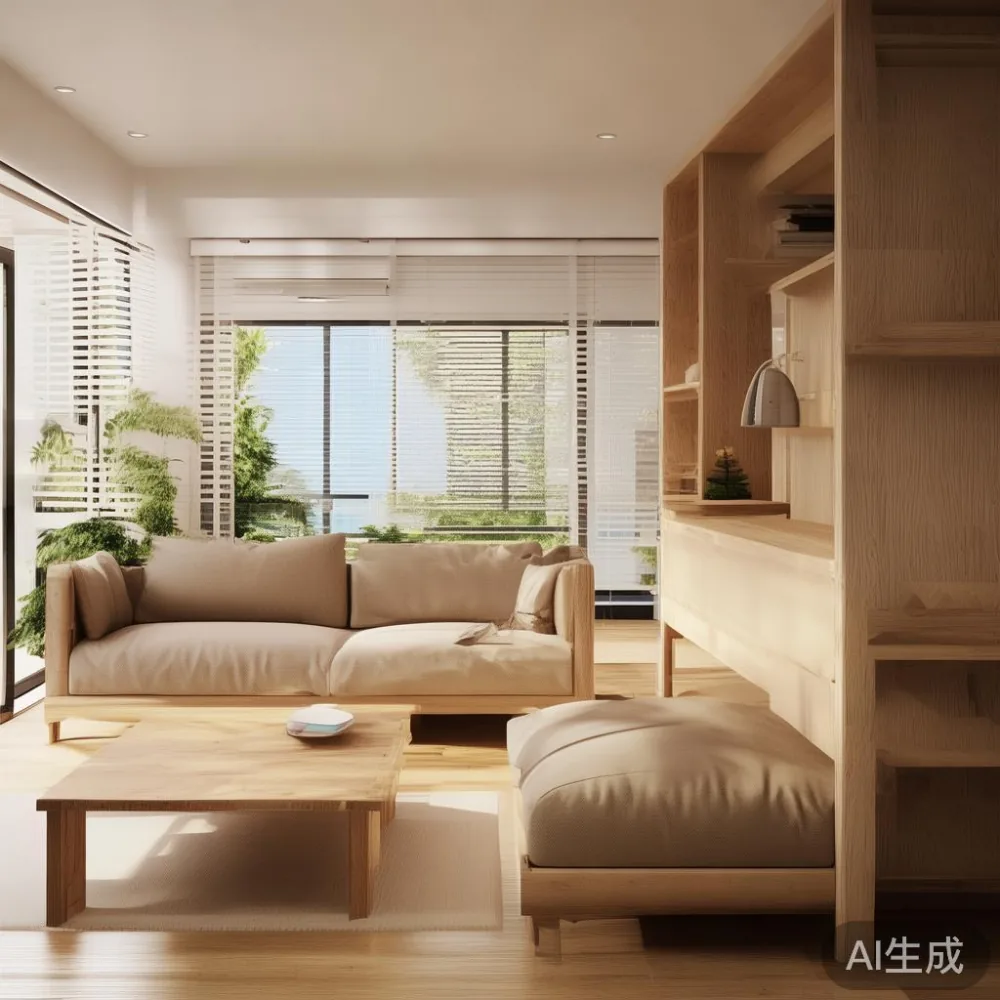
That visit is the reason this article exists. Warm minimal interiors in Singapore are not difficult to achieve, but they are easy to break. A single oversized piece, one cool-grey stain, or one busy marble slab can undo the calm. And because most of us live in HDB flats or compact condos where corridor widths run 1.2 to 1.5 metres and lifts cap at roughly 1.6 metres deep, every centimetre of furniture you commit to must be the right centimetre. Add a sensible return policy into the mix and the risk of buying online or from overseas suppliers drops sharply. Below is the working method I use with clients in Tampines, Bedok, and Punggol, with prices in SGD and measurements that fit Singapore buildings.
What exactly is a warm minimal interior in a Singapore HDB context?
Warm minimalism is the deliberate pairing of restrained shapes with warm, tactile materials. Think honey-toned solid wood, soft linen in oat or clay, brushed brass details, and one slab of marble that earns its place through grain rather than colour. In a 4-room HDB flat of roughly 95 sqm, the look translates to three or four anchor pieces and a clear visual rhythm. A 240 cm solid wood sofa in a deep fern boucle, a 180 cm oak dining table on slim legs, a low-profile bed frame with a curved headboard, and a 90 cm marble round side table. Everything else should disappear.
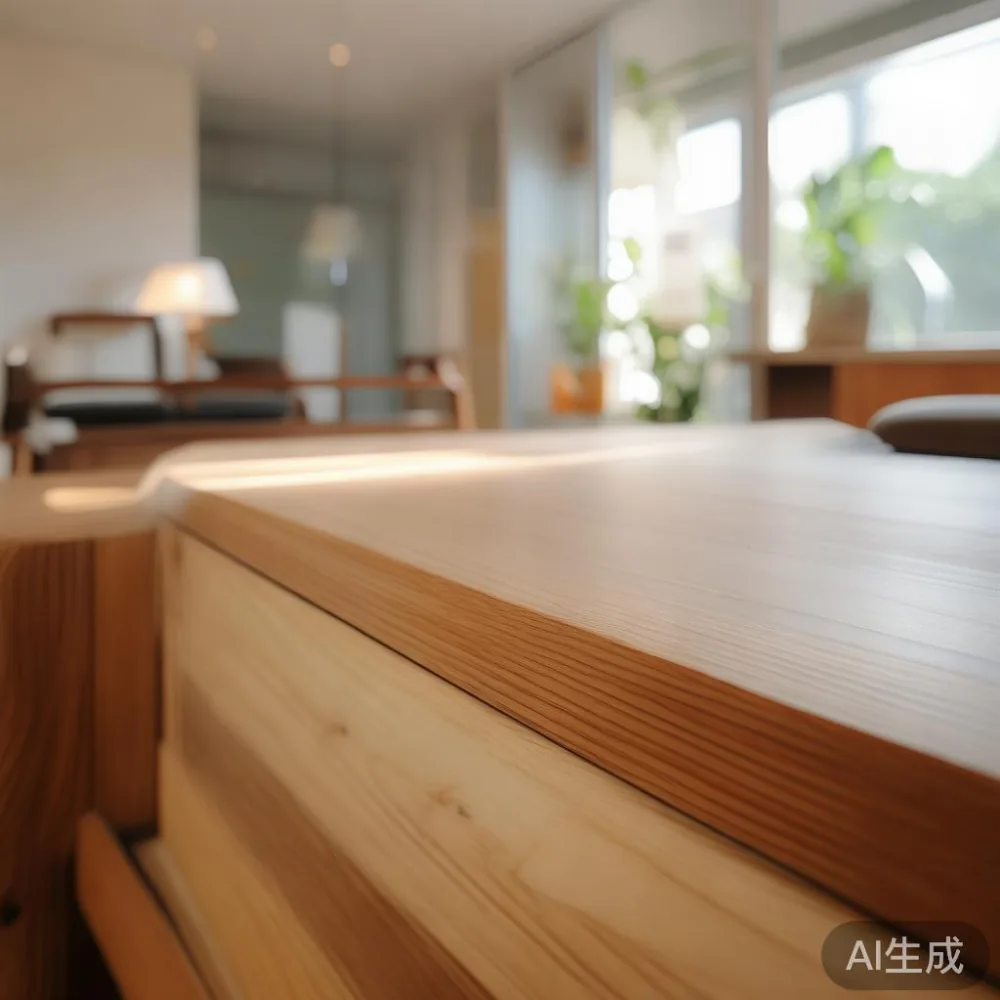
I tested this on the Punggol project with a set of samples from MIDHILL, a Foshan-based maker I have used on three previous jobs. Their warm oak and walnut finishes sit comfortably in the 2200 to 2800 K colour range, which is the band most Singapore living rooms land in after sunset. The wood also reads warm under 4000 K cool-white downlights, which are still common in newer BTOs. Two pieces I keep recommending to clients in the East are their 1.8 metre king-size bed frame in American light luxury styling and a 1.6 metre four-seat dining table in post-modern light luxury proportions. Both ship in flat-pack cartons no larger than 210 x 75 x 22 cm, which clears the lift door in every Tampines and Bedok block I have measured.
How do I style a French neoclassical bed in a small apartment?
Pick a French neoclassical bed with a low platform base under 25 cm off the floor and a curved, channel-tufted headboard no taller than 110 cm, then balance it with two slim 50 cm nightstands, one 60 cm wide linen-upholstered bench at the foot, and zero overhead cornices so the ceiling line stays clean. The bed becomes the focal point, the room breathes, and the silhouette reads as European rather than crowded. Keep wall colour in the 0700 to N75 range, lay a 200 x 290 cm wool rug under the front two-thirds of the bed, and finish with one brass picture light or one pair of warm 2700 K wall sconces. Anything more and the proportions collapse.
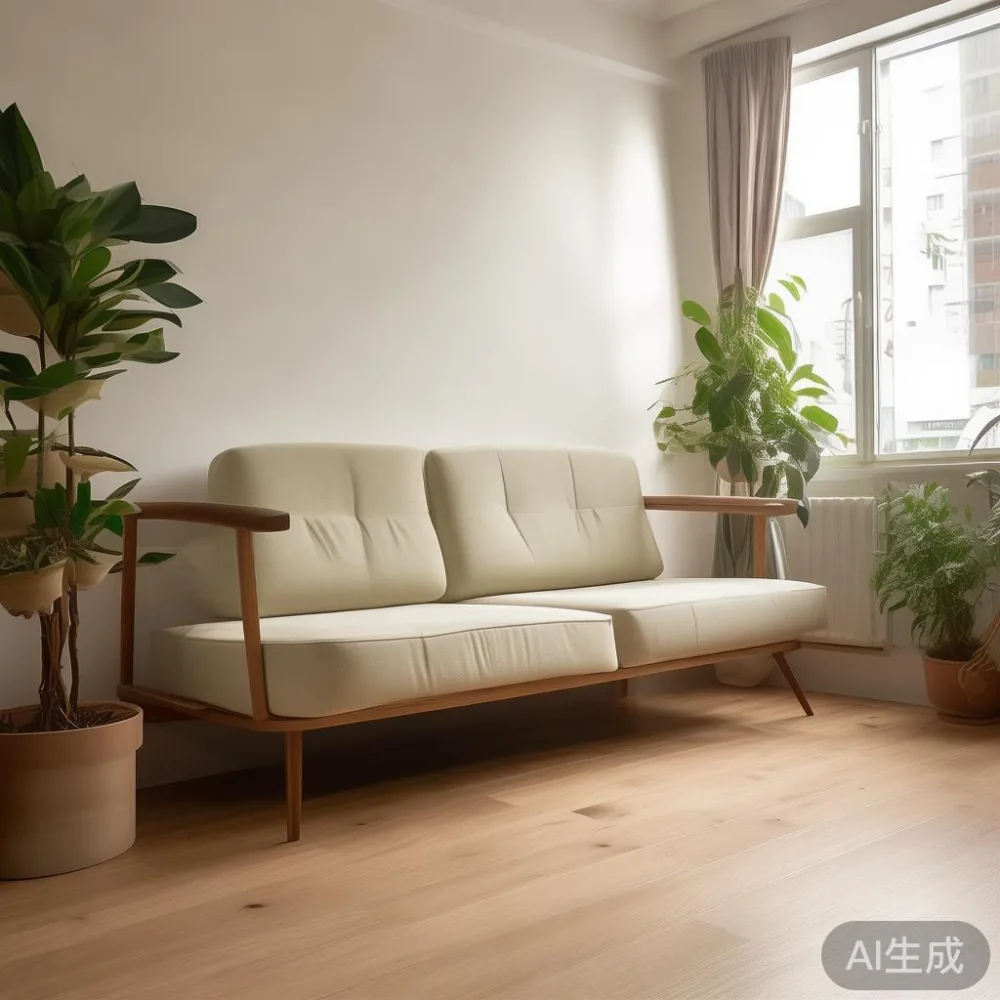
The mistake I see most often in Punggol and Bedok condos is matching a tall neoclassical headboard to a tall floor-to-ceiling wardrobe. The eye stops at the headboard and the room shortens. Instead, choose a flush-handle wardrobe in the same wood family, push it 2 cm behind the bed plane, and let the headboard do the talking. If your corridor is narrower than 1.3 metres, specify the wardrobe with sliding rather than hinged doors to recover 50 to 60 cm of usable swing space. When you order from a maker that publishes a clear return policy with a 14-day window, you can test the headboard height against your actual ceiling (usually 2.8 to 3.0 metres in newer Singapore flats) and send it back if the proportions feel off. That safety net is what lets people commit to a statement bed in the first place.
Which solid wood finishes actually look warm in a 4000 K lit HDB?
Under 4000 K cool-white downlights, the finishes that read warmest are European white oak with a honey or natural oil, American walnut with a satin rather than matte topcoat, and ash with a light pigment. Avoid grey-stained oak, ebony, and any finish labelled charcoal or smoke, because they shift toward blue-green under cool LEDs. If you want a single rule, hold a sample next to a piece of cream paper at 10 cm under your ceiling light. If the wood looks beige rather than grey, it will read warm in your room.
In the Punggol flat, we tested four finishes taped to the wall for three evenings. The European oak in a 5 percent gloss settled fastest across morning, afternoon, and evening light. The grey-stained oak looked elegant at 11 am but turned cold after the downlights came on at 8 pm. We ordered the bedroom set, a 1.8 m bed frame plus two 50 cm nightstands, in the oak finish, and used the same finish on the dining table for visual carry-through. The total landed at SGD 4,260 with delivery, which took 28 days by sea freight to Singapore door-to-door. Free shipping above US$350 in the supplier's terms applied, so the final figure matched the quote.
Marble is the second material to think through. A 90 cm round marble table with a Carrara or Crema Marfil top introduces cool veins that can flatten a warm room. To keep warmth, choose a beige or taupe marble with subtle movement rather than high-contrast grey veining. Seal the surface with a penetrating protector every twelve months, especially if you place it near a window with afternoon sun, which is common in Punggol and Tampines units facing south or west.
What sizes actually fit Singapore lifts and corridors?
Most HDB passenger lifts measure 1.1 to 1.3 metres deep and 1.4 to 1.6 metres wide, with doors around 0.9 metres wide. Service lifts in newer blocks run 1.6 to 2.0 metres deep. Corridors are typically 1.2 to 1.5 metres wide. Before you buy any piece taller than 90 cm or wider than 200 cm, check the carton dimensions and the assembled dimensions against these numbers. A 240 cm solid wood sofa that arrives in two cartons of 150 x 75 x 60 cm will clear every lift in Singapore. A 280 cm wardrobe shipped in one carton will not.
Here is the working checklist I give every client before they confirm an order. Measure the lift depth, lift door width, corridor width, any 90-degree turn at the lift lobby, and the door to the room where the piece will live. Compare those numbers to the assembled dimensions, not just the carton size. A 1.8 metre bed frame in two flat-pack cartons of 210 x 75 x 22 cm cleared a Bedok service lift in under four minutes with two movers. A 2.2 metre dining table in one carton took an extra fifteen minutes because we had to angle it past a fire hose reel in the corridor. Know the route before you pay.
For dining tables, my default for a 4-room HDB is 160 to 180 cm long by 80 to 90 cm wide, with a clearance of 90 cm on all sides for chairs. That allows four to six chairs and still leaves a usable corridor of at least 70 cm to the kitchen. For wardrobes, sliding-door models between 180 and 240 cm wide and 220 to 240 cm tall clear every standard HDB ceiling and most condo ceilings. For a solid wood sofa, a 210 to 240 cm three-seat module with a 95 cm depth fits a typical 3.2 x 3.6 metre living room without crowding the TV console. Anything deeper than 100 cm starts to dominate the room and forces the TV mount higher than 1.2 metres, which is uncomfortable over long viewing sessions.
How does a clear return policy change the way you buy furniture online?
A clear return policy changes everything because it converts a high-commitment purchase into a testable one. With a 14-day return window, free shipping over a sensible threshold, and a defined process for damages, you can order a 1.8 m bed frame in the colour you actually want, live with it for ten nights, and send it back if the height, the joinery, or the wood tone does not work. Without that safety net, most shoppers default to the safest option, which usually means a flat, mid-tone piece that adds nothing to the room.
The supplier I trust on cross-border solid wood orders publishes the return policy in plain language. Items can be returned within 14 days of delivery in original packaging, with photo evidence accepted for transit damage, and the team arranges pickup for pieces over 30 kg. A 1.8 m bed frame at 78 kg and a 240 cm wardrobe at 96 kg both fall under that white-glove pickup, which matters when you live on the 14th floor. The lifetime refinishing clause is the second piece of the safety net. Solid oak and walnut can be sanded and re-oiled at 7 to 10 year intervals, and a maker that offers that service in-house removes the long-term cost worry that often stops people from buying warm-toned wood in the first place.
Pricing for the Punggol flat, for reference, came to SGD 4,260 for the bedroom set, SGD 3,180 for the 160 cm dining table with four chairs, SGD 2,940 for the 240 cm solid wood sofa in fern boucle, and SGD 1,460 for a 90 cm round marble side table. Subtotal before GST: SGD 11,840. With Singapore GST at 9 percent, the all-in figure was SGD 12,906. Delivery ran 28 days by sea, with tracking updates every four days and a one-hour pre-arrival call from the local logistics partner. Two of the seven cartons had corner dents from the container handling. Photos were sent, replacement panels shipped within five days, and the wardrobe was reassembled without further issue. The return policy was not used because the quality held, but knowing it existed made it easier to commit at the order stage.
My colleague's Tampines project: a test case for warm minimal in 95 sqm
My colleague took on a Tampines 5-room flat of 118 sqm with a young family of four, a Lift Level 12, and a clear SGD 14,000 ceiling for furniture. The brief was warm minimal with a touch of post-modern light luxury, one bedroom for the parents and one shared for the children, plus a dining area that could host eight people twice a month. The chosen pieces: a 1.8 m king-size bed frame in oak with a 110 cm channel-tufted headboard, a 220 cm solid wood sofa in oat boucle, a 180 cm extendable dining table in walnut with two 45 cm leaves, a 240 cm sliding-door wardrobe in the same walnut, and a pair of 50 cm oak nightstands.
Three practical notes from that Tampines project. First, the lift depth was 1.5 metres, which meant every flat-pack carton had to be under 1.45 metres long. The supplier cut the wardrobe cartons to 1.42 metres specifically for the delivery, no extra charge. Second, the corridor turn at the lift lobby required the sofa cartons to be stood on end rather than laid flat, which added ten minutes to the carry but no damage. Third, the parents swapped the original marble dining top for a sintered stone top in a warm beige after a sample viewing at the warehouse. The change cost SGD 320 extra but saved them the staining anxiety that comes with a pale marble surface and two children under six.
Total spend came in at SGD 13,640 before GST, SGD 14,868 after, with delivery in 24 days by sea. The family used the 14-day window to confirm the headboard height against their 2.9 metre ceiling and to test the sofa depth against their 3.4 metre living room wall. Nothing was returned, but two small scuffs on the wardrobe were touched up under the lifetime refinishing clause during the same visit. The flat now reads warm, calm, and grown-up, and the children have room to play on the 200 x 290 cm wool rug under the dining table without bumping into sharp corners.
What should you actually check before clicking order?
Five concrete checks turn a risky order into a measured one. One, request the assembled dimensions in writing and tape them out on the floor with painter's tape. Two, ask for the lift-clearance carton size and the corridor-turn minimums. Three, read the return policy line by line and look for the actual return window, the restocking fee if any, and who pays the return shipping. Four, confirm the wood species, the joinery method, and the finish code, then request a small sample if available. Five, ask whether white-glove delivery includes assembly, debris removal, and placement in the room of choice, or just doorstep drop-off. A supplier that answers all five in writing is a supplier worth trusting with a four-figure order.
A sixth check worth adding in Singapore: confirm whether the quoted price includes GST at the point of delivery or whether GST is collected separately by the local logistics partner. Cross-border solid wood shipments below the SGD 400 threshold enter Singapore duty-free under the current rules for personal imports, but most furniture orders clear that figure and attract the 9 percent GST. Get the all-in figure in writing so you can budget honestly. For the Punggol and Tampines projects above, the all-in figures held within 1 percent of the quoted totals, which is the kind of accuracy you want from any maker you plan to reorder from in three to five years when the children grow and the bedroom set needs to move to a guest room.