Comparing Veneer & Solid Wood Sofa Prices in Singapore
Choosing furniture for a Tampines HDB flat, a Bedok condo, or a compact Punggol home often comes down to two labels on the product page: veneer or solid wood. The sticker prices can look similar, yet the five-year costs may not be. Veneer may reduce the initial outlay, while solid wood can offer advantages in repairability, refinishing, and long-term use. The right comparison is not simply about the lowest purchase price. It includes delivery access, maintenance, replacement parts, return handling, and how often the piece is moved.

This guide compares a solid wood sofa, bed frame, dining table, wardrobe, and nightstand with practical veneer equivalents over 60 months. Prices are shown in Singapore dollars and include 9% GST where applicable. The figures are planning estimates rather than quotations: exact costs vary with dimensions, timber species, finish, access conditions, and custom work.
MIDHILL has manufactured solid wood furniture since 2008 and exports to more than 15 countries. Its 10-year structural warranty and lifetime refinishing policy affect the long-term calculation, while a 14-day return policy gives buyers time to assess colour and fit at home. Delivery over US$350 is free under the stated company policy; in Singapore, a quoted local delivery fee should still be confirmed before ordering.
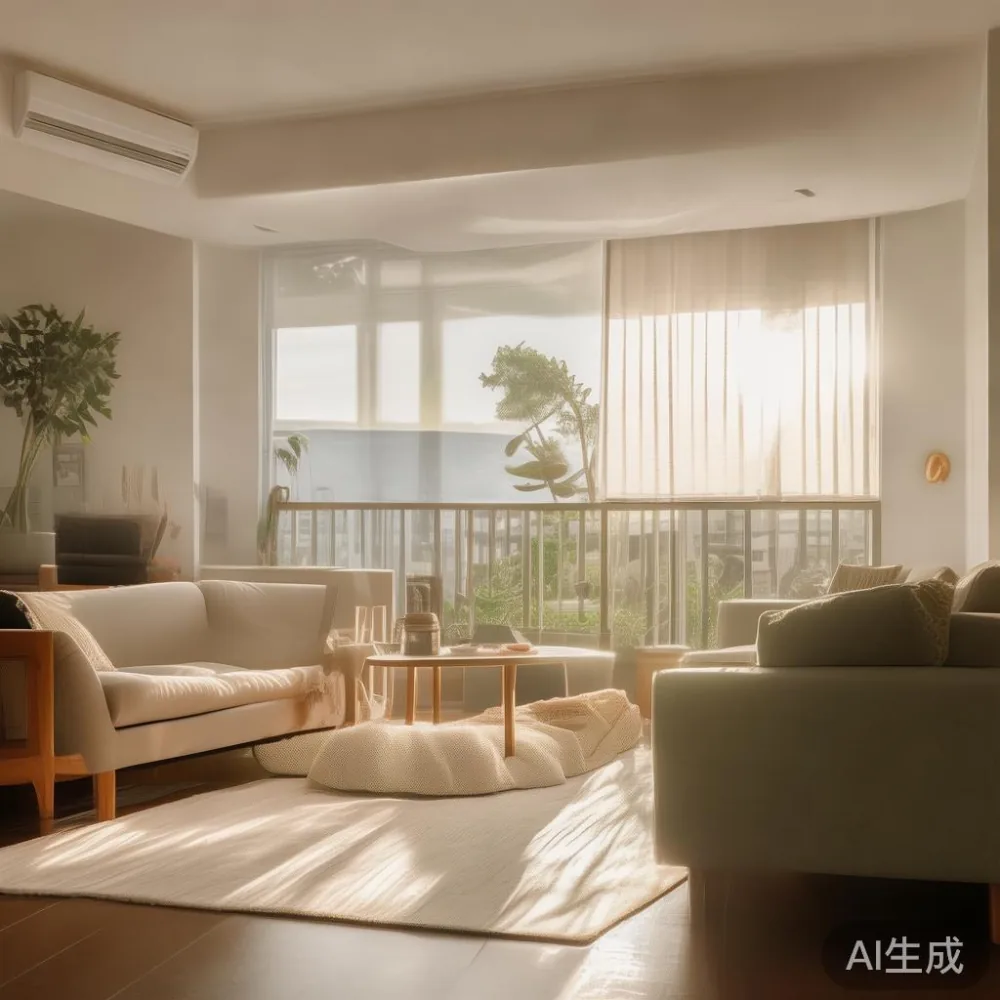
What does veneer mean in a furniture price comparison?
Veneer furniture uses a thin layer of wood, often 0.3–0.8 cm thick, bonded to a panel or core. A high-quality veneer can reproduce the grain and figure of a solid timber surface at a lower material cost. The structural core may be plywood, engineered timber, or a combination. By contrast, visible structural components in solid wood furniture are made from solid timber, commonly hardwood, although the exact species matters.
A realistic five-year comparison for one dining table might begin at S$1,290 for a veneered model and S$1,890 for a comparable solid oak table. That gap of S$600 can be sensible for a rarely used dining table in a compact HDB flat. It is less persuasive for a solid wood sofa that is used every evening, or a wardrobe whose doors and drawers open hundreds of times each year.
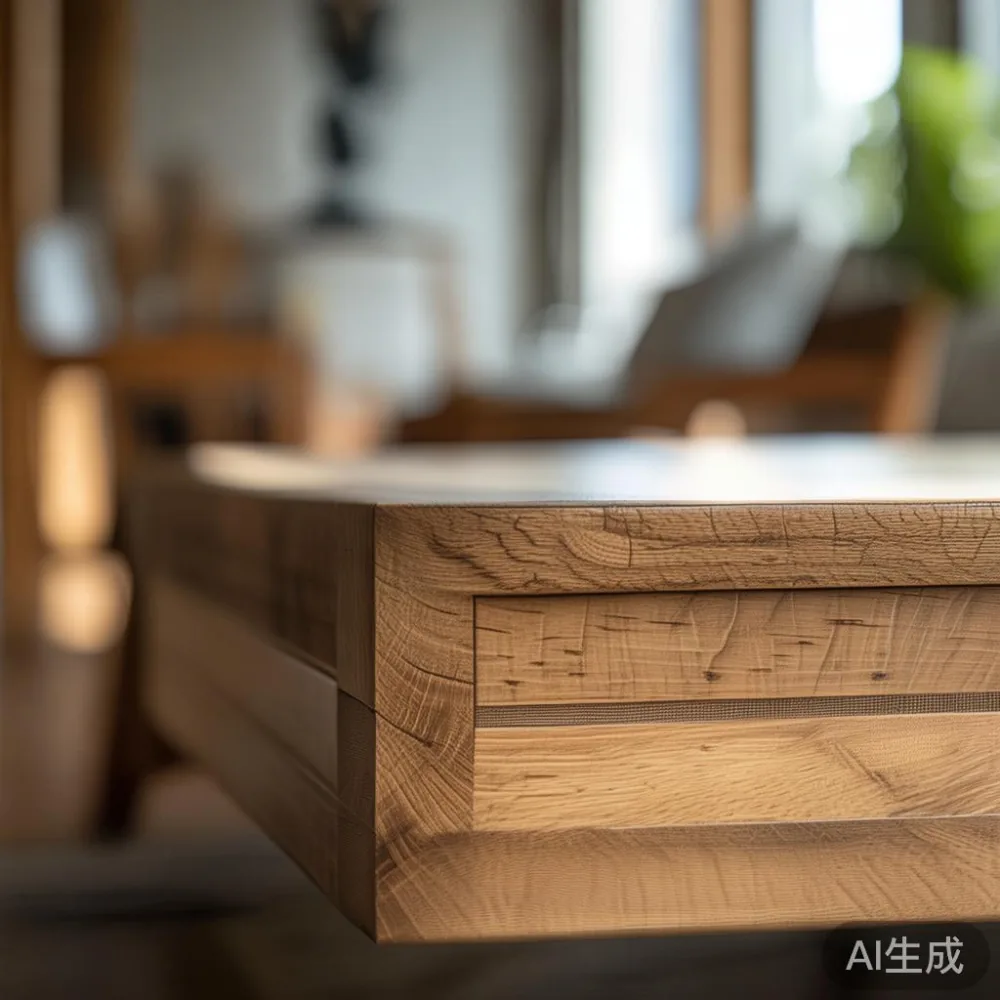
For this exercise, assume one household buys a 180 cm solid wood dining table at S$1,890 or a veneer equivalent at S$1,290. Maintenance is budgeted at S$180 over five years for veneer and S$90 for solid wood because the latter can be spot-treated and refinished. A possible replacement or repair reserve adds S$150 to the veneer total. The solid-wood option includes one refinishing service within the stated lifetime policy, so no routine refinishing charge is assumed.
This is where the label alone becomes misleading. Veneer is not automatically weak, and solid wood is not immune to movement. Humidity, cleaning methods, sunlight exposure, and quality of construction can influence both. The more useful question is whether the specific product can be maintained without replacing the entire piece.
How much does a solid wood sofa cost over five years?
For a 220 cm three-seat sofa, use S$2,590 as the representative solid-wood purchase price and S$1,990 for a similar veneer model with upholstered seating. Add S$240 for delivery and placement in Singapore, because carrying a sofa up to a HDB lift or along a condo corridor may require extra labour even when the building has a usable lift.
The solid-wood sofa carries an estimated S$60 per year for cleaning and care, or S$300 over five years. A veneer sofa is assigned S$420 over the same period, including a S$150 edge or veneer repair reserve. The solid-wood frame also has a 10-year structural warranty, whereas the illustrative veneer product carries a five-year frame warranty. Over 60 months, both remain covered by their stated frame terms.
The five-year totals are therefore S$3,190 for the solid wood sofa and S$2,650 for the veneer sofa. The solid version costs S$540 more initially. If the household expects to keep the sofa for 10–15 years and values refinishing rather than replacement, the higher purchase amount can be easier to absorb. If the sofa will be sold with the condo after four years, the lower initial cost is more relevant.
Design matters at this decision point. A buyer comparing a light luxury sofa vs Nordic sofa may like the pale timber and tailored lines of French light luxury, or the visual balance of American light luxury. A solid-wood frame fits either direction if it can be repaired. The comparison should also include seat density, cushion foam, suspension type, and removable covers; timber choice cannot compensate for poor comfort.
Is French provincial sofa worth it for Singapore homes?
The question “is French provincial sofa worth it” is usually asked as a style question, but it is also a five-year cost question. A pale, carved French provincial sofa may require careful colour matching against white HDB walls and warm oak flooring. A French-inspired solid-wood base can be ordered with removable seat covers and a washable performance textile, which helps control the first five years of use.
For a 200–220 cm sofa, allow S$2,690–S$3,890 for a French provincial-style solid wood sofa and S$2,190–S$3,190 for a veneer version with similar carving. Maintenance is estimated at 4%–6% of the purchase price across five years for either category. For a S$3,290 solid wood sofa, that means about S$165–S$197 in cleaning supplies, minor fixes, and professional care.
In my own experience, I visited a Bedok showroom last month and compared one ornately carved sofa with a plain solid-wood frame. The carved model looked richer under warm lighting, but its deeper recesses collected dust and made a minor finish repair more complicated. The simpler frame took a damp cloth across every edge without trapping moisture. That observation does not make carving unsuitable; it shows why details should be priced into ownership costs.
A French light luxury direction is best treated as proportion and finish, not as a requirement for a crowded flat. A 200 cm sofa may suit an HDB living room more comfortably than a 240 cm model, while a condo near Tampines may have room for the larger piece if the lift door is at least 90 cm wide. These compact dimensions can also lower the purchase price by S$300–S$600.
How do bed frames compare across 60 months?
A queen bed frame provides a clear example of why construction and access affect cost. A 150 × 200 cm solid-wood bed frame is estimated at S$1,590, compared with S$1,090 for a veneered frame. Local delivery and assembly are budgeted at S$140 for either option, plus S$90 if the box must be carried from a corridor staging point because the lift is unavailable.
Solid-wood care over five years is estimated at S$120, including tightening, surface treatment, and one minor repair. Veneer maintenance is estimated at S$240 because edge lifting may need specialist work. The total is S$1,850 for solid wood and S$1,470 for veneer, a five-year difference of S$380.
Buyers asking how to choose European light luxury bed should compare more than the headboard. Check whether the slats are included, their spacing, centre support, and total load capacity. A European-style upholstered or carved headboard may need a wider doorway than a plain frame. Also confirm that the mattress and headboard fit within a typical Singapore bedroom without blocking the corridor beside the bed.
The Japanese bed vs Italian light luxury bed comparison brings another local issue into focus: low platform beds can save floor space, but tall Italian-inspired headboards need wall clearance and perhaps side lighting. A Japanese-style platform may suit a compact Punggol HDB bedroom, while a European bed may suit a larger Bedok condo. If a child uses the bed daily and the frame is likely to remain for 10 years, solid-wood repairability may justify the extra S$500.
What does a five-year wardrobe and nightstand comparison look like?
A 180 cm wardrobe is another case where the veneer saving can narrow or widen. For a standard hinged model, use S$2,390 for solid wood and S$1,690 for veneer. Add S$180 for delivery and installation. Hanging rails, drawer runners, and door alignment are estimated at S$300 over five years for veneer and S$180 for solid wood.
The five-year totals become S$2,870 and S$2,170 respectively, a difference of S$700. A tall wardrobe may cost more if the lift entrance is narrower than 80 cm or if stairs must be negotiated. Budget an extra S$120–S$300 for a second-person carry or hoist service. Measuring the lift door, cabin depth, turning space, and corridor width before purchase is therefore part of the ownership cost.
For a 45 × 40 cm nightstand, the representative prices are S$390 for solid wood and S$290 for veneer. Five-year care is estimated at S$40 and S$70 respectively. The totals are S$430 and S$360, only S$70 apart. In this case, a buyer may choose according to proportion, colour, and the quality of the drawer rather than the material alone.
A small marble table adds a different maintenance profile. Marble tops require pH-neutral cleaning and careful placement of hot or heavy objects. A 90 cm square marble table may cost S$1,490–S$2,290 and can need S$250–S$500 over five years for stone care, sealing, and chip repairs. For the Italian light luxury coffee table comparison, pair the marble top with a solid-wood base when the table will be moved often; the base can be refinished if the stone suffers damage. For a low-use coffee table, a sealed veneer top may be adequate, provided spills are wiped promptly.
How should a bed’s style affect the material decision?
A European light luxury bed vs Mid-century modern bed decision should be made with the actual room in view. European light luxury often uses deeper profiles, curved edges, and upholstered surfaces, while Mid-century modern furniture relies on slimmer forms and visible tapered legs. A Euro bed may need 210–230 cm of wall space, versus 190–205 cm for a lower Mid-century frame. Those 20 cm can determine whether a bedside passage remains usable in an HDB flat.
Post-modern light luxury can work well in Singapore because it combines clean structure with warmer timber details. A solid-wood bed frame with a floating nightstand and restrained profile can give a Punggol flat a more composed look without filling the room. The key is to check the slat spacing and centre rail: attractive legs should not come at the expense of support.
For European-style beds, delivery can add S$90–S$220 when the headboard is boxed separately. For a Mid-century frame, flat-pack construction may reduce the carton size, but assembly still needs about 30–45 minutes and two people. A wardrobe with a projecting cornice may need its carton opened before it enters a narrow lift, so confirm the assembled dimensions rather than relying only on package measurements.
What delivery, GST, and access costs should Singapore buyers include?
All prices in this comparison include 9% GST. Keep the tax visible because a quoted figure can look lower if it excludes GST. A furniture order of S$1,500 including GST becomes S$1,374.31 before GST, which is the figure needed for some corporate reimbursement or home-renovation budgets.
Measure at least six access points: the road or void-deck drop, gate, lift entrance, lift cabin, corridor, and room doorway. For a typical HDB lift, an 80 cm door and 110 × 140 cm cabin may accept a disassembled bed frame, but a wide solid-wood dining table top may not. Allow 5–10 cm clearance around a cabinet on each side during turning.
Allow 7–14 delivery days for standard Singapore stock and 21–45 days for a made-to-order finish or a European light luxury dining table configuration. If a lift booking is required, coordinate it before delivery day; a failed attempt can delay the order by 1–3 days and leave the old furniture in place for longer.
Check the return policy before ordering. A 14-day return policy should state whether custom sizes, altered finishes, used items, and return freight are excluded. Photograph the furniture on arrival, retain packaging where possible, and record damage within 24 hours. This practice helps separate a manufacturing issue from an access problem or a change of mind.
Which material offers the better five-year value?
Across the illustrative package, veneer starts at lower prices, but repair and replacement reserves can reduce its advantage. A representative five-piece purchase—solid wood sofa, bed frame, dining table, wardrobe, and nightstand—comes to S$8,850 before delivery and care. A comparable veneer package costs S$7,350.
Add S$800 delivery and installation for the solid-wood package and S$680 for veneer. Estimated care and repair reserves are S$790 and S$1,190 respectively. The 60-month totals are S$10,440 for solid wood and S$9,220 for veneer. The solid-wood package costs S$1,220 more over five years, but includes a 10-year structural warranty and lifetime refinishing under MIDHILL’s stated terms. Its usable period may also extend beyond the comparison window.
That does not make veneer the wrong choice. It can be the more sensible option for a low-use dining table, a temporary rental flat, or a piece that will be replaced when the home is sold. Solid wood is usually easier to justify for a frequently used sofa, a heavily opened wardrobe, a bed frame shared by children, and furniture with details that benefit from refinishing.
A useful decision rule is to multiply the purchase price by the number of years expected in the home. A S$1,290 veneer dining table kept for three years costs S$430 per year of ownership before care. A S$1,890 solid-wood table kept for 12 years costs S$158 per year, before maintenance. Neither calculation guarantees a resale value, but it makes the time horizon explicit rather than hiding it in the checkout price.
What questions should I ask before ordering furniture?
Ask for the timber species, the dimensions of every component, the finish type, the warranty document, and the exact return policy in writing. For solid wood, confirm which surfaces are solid timber and which are veneer or engineered panels. For veneered pieces, ask about veneer thickness, substrate type, edge construction, and repair options.
Ask the seller to calculate delivery after measuring the lift and corridor. Confirm whether the quote includes GST, carrying, assembly, and removal of packaging. If the order is custom, photograph the finish and dimensions, and check whether the 14-day return policy still applies to non-standard pieces.
Most importantly, match the material to the room and the household’s habits. A compact solid-wood dining table with an easy-clean finish may suit a young family better than a larger marble table with porous stone. A low platform solid-wood bed may serve a small room more effectively than a bulky upholstered frame. If a MIDHILL dining table is being considered, compare the full five-year statement—price, care, delivery, coverage, and return terms—rather than comparing one sticker price with another.