Caring for a Lacquered Wood Surface in Singapore's Tropical Climate
Last month I walked into a freshly renovated 4-room HDB flat in Tampines with a client, and the entire living room smelled faintly of coconut oil. The owners had just unboxed an 8-seater solid wood dining table shipped from a Foshan factory, and within the first eleven days the lacquer film around the table's central leaf had begun to show a milky bloom. The relative humidity reading on my handheld hygrometer hovered at 82 percent. That single visit is the reason this article exists: lacquered surfaces and Singapore's climate are, at minimum, a careful pairing, and the return policy questions that follow a premature bloom are almost always more expensive than the prevention that would have stopped it.
For shoppers comparing a solid wood sofa, a bed frame, a wardrobe, a nightstand, or a marble table against glossy finishes, the climate question comes up on every showroom floor from Bedok to Punggol. This guide covers what lacquer actually is, how 28 to 35 degree afternoons and 70 to 90 percent humidity interact with it, what a sensible care routine looks like, and how MIDHILL's documentation either reassures you or gives you a practical exit if a finish fails within the first weeks. Along the way I'll reference specific furniture pieces, corridor logistics, GST-inclusive figures in SGD, and the kind of questions a HDB renovation contractor hears every Friday.
What "lacquered" actually means on a piece of solid wood furniture
Lacquer is a broad term that furniture catalogues use loosely. In a Foshan workshop producing mid-range solid wood pieces, lacquer typically refers to one of three systems: nitrocellulose lacquer, acid-catalysed conversion lacquer, or pre-catalysed lacquer. Each system cures by solvent evaporation and leaves a film 25 to 60 microns thick over the wood. A dining table top sealed with conversion lacquer can accept hot serving dishes up to roughly 90 degrees Celsius for short durations, but no domestic lacquer is genuinely heat-proof.
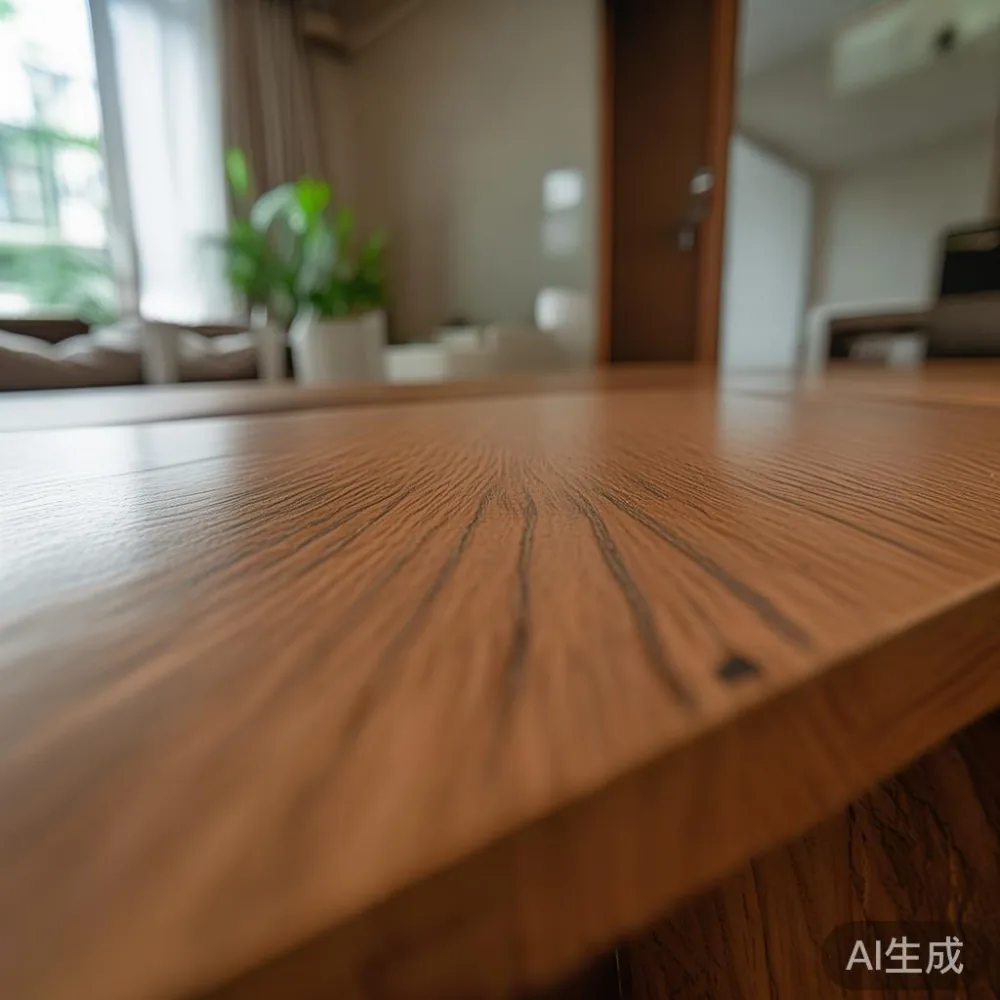
Two characteristics matter for Singapore. First, lacquer is a film finish, not a penetrating oil: it sits on top of the wood, so it can craze, alligator, or blush when humidity swings. Second, the wood underneath keeps moving. Teak and white oak, common in a solid wood sofa frame or a bed frame, expand roughly 2 to 3 percent across the grain as humidity climbs from 60 to 90 percent. A three-metre tabletop in a Punggol condo can therefore grow by 6 to 9 mm across the width, and the lacquer film has to stretch with it. When it cannot, you see hairline cracking at the joints.
Buyers browsing items such as a MIDHILL French provincial bed or a light luxury dressing table should ask the showroom which lacquer system has been applied. Conversion lacquer is the toughest on offer and is the standard at most Foshan factories that export to Europe and North America. Nitrocellulose is cheaper and easier to repair but less resistant to household chemicals.
Why Singapore's weather is unusually aggressive on lacquer film
The local climate is the variable nobody in a Foshan warehouse is fully testing for. Outdoor humidity at Changi averages 78 to 82 percent year-round, and indoor humidity in a corridor-facing HDB unit can swing between 65 and 88 percent across a single day once the air-con cycles off and the door opens. Lacquer is hygroscopic: the film itself absorbs a small amount of moisture, and when absorption is uneven across the panel you see the cloudy haze called "blush." That blush is the most common defect reported under any furniture return policy that covers cosmetic finish.
The afternoon thunderstorm season compounds the problem. A unit that hits 32 degrees with 86 percent humidity will cause lacquer to soften microscopically; a finger ring left on a bedside table overnight on a humid Tuesday will leave a permanent mark by Friday. UV exposure is the second concern, although tempered by Singapore's frequent cloud cover; a wardrobe placed 1.2 metres from a west-facing window will still yellow measurably within 14 to 18 months unless filtered glass or a curtain intervenes.
The lift and corridor constraints also play a quiet role. Standard HDB passenger lifts measure roughly 1.1 m wide by 1.4 m deep, and an L-shaped marble table or a king-size bed frame often has to be tipped on its side to clear the lift door. A corner impact during delivery can chip lacquer at exactly the spot where humidity later sneaks under the film and lifts a 3 to 5 mm patch. This is why the return policy paperwork from any reputable exporter mentions "transport damage report within 48 hours of delivery" — it matters here in a way it rarely matters in drier markets.
How often should I wipe a lacquered dining table, and what should I wipe it with?
For routine care, a soft, lint-free cotton cloth slightly dampened with warm water is enough, used once every 5 to 7 days. Avoid solvent-based cleaners, furniture polishes containing silicone, and any product labelled "spray and shine" — these leave residues that interfere with future refinishing. A 250 ml bottle of neutral pH wood soap from a furniture care retailer in Singapore costs roughly SGD 18 to SGD 28 and lasts approximately nine months on a six-seat dining table.
For sticky residue, a cloth barely moistened with a 1:4 mixture of isopropyl alcohol and water works, tested first on a hidden underside or a rear panel of the wardrobe. Dry the surface with a second cloth within 30 seconds; do not let the alcohol flash off slowly, as it can dull conversion lacquer if pooled. A microfibre cloth at 220 to 280 GSM is the safest applicator; coarser weaves will micro-scratch within a year of regular use.
Frequency actually depends on three local factors: air-con runtime, cooking style, and proximity to windows. In a Punggol condo with the air-con running 14 hours a day, dust settles slowly and a weekly wipe is fine. In a Bedok HDB kitchen where the family fries fish twice a week, oil aerosols will coat nearby cabinet lacquer within six weeks; a wipe every three days is the practical cadence. Near a sash window, add a sunscreen film of at least 99 percent UV rejection — SGD 60 to SGD 110 per panel installed — to keep the wardrobe from yellowing prematurely.
What humidity range should I keep a lacquered wardrobe in, and what tools measure it?
Target a stable indoor relative humidity between 50 and 62 percent. Above 68 percent for sustained periods, lacquer film stress rises sharply; below 42 percent, the wood itself shrinks faster than the film and checking appears at joints. A basic digital hygrometer costs SGD 12 to SGD 25 at any electronics chain and is a sensible companion for any piece of solid wood furniture over SGD 1,500.
If the wardrobe is in a room that does not have air-conditioning, a dehumidifier set to 55 percent is the strongest defence. Compressor dehumidifiers covering 30 to 50 square metres cost between SGD 280 and SGD 480, and the electricity draw at 6 to 8 hours a day adds roughly SGD 6 to SGD 10 to the monthly utility bill at current tariff rates. A silica-gel tray placed inside the wardrobe drawer is a useful secondary measure during the November to January monsoon peak, when outdoor humidity often exceeds 92 percent.
Placement also matters. Keep lacquered furniture at least 15 cm away from external walls, especially in older HDB blocks where the wall surface can sweat under thermal load. Allow 5 cm of clearance at the rear of a wardrobe for airflow; many buyers forget this when measuring up for the corridor and end up with the wardrobe flush to the wall, which traps moisture and creates exactly the bloom condition the return policy cannot reasonably cover.
Can humidity damage be repaired without affecting the factory finish?
Light blush — that cloudy haze on a dining table top after a humid week — often retreats on its own once the indoor environment stabilises. Leave the air-con running at 23 degrees for 48 hours and re-inspect. Persistent blush that remains after a week usually means moisture has entered the film beyond what evaporation can clear, and a localised re-lacquer is the next step.
For a small patch 5 cm or under, a furniture touch-up pen matched to the factory colour (request the colour code from the seller, for example RAL 1011 or a Pantone reference) is enough. Cost is roughly SGD 22 to SGD 45 per pen. Anything larger than a 10 cm area should be referred back to the manufacturer's refinishing service — a documented request to MIDHILL, for instance, can typically be honoured within their lifetime refinishing commitment when the warranty path is followed. Refinishing an entire tabletop in situ costs between SGD 220 and SGD 420 depending on size, against a replacement tabletop that could exceed SGD 1,200 plus the disassembly labour.
Hairline cracks at a bed frame joint, on the other hand, signal that the wood itself has moved beyond the elastic limit of the lacquer. These rarely repair invisibly and are usually a more honest candidate for replacement under the structural warranty than for spot repair. Document them with a dated photograph in daylight near a window, but not in direct sun, to keep the colour honest for any future claim.
What should a sensible return policy actually cover for finish defects?
Three categories of finish defect are worth distinguishing, because not every category warrants the same response. A clear return policy should normally address all three.
The first is factory defect: blushing, alligatoring, or uneven sheen that was present at the moment the box was opened. Most Foshan exporters, MIDHILL included, treat this as a 14 to 30 day reportable claim; photographic evidence dated within 48 hours of delivery is the standard request, and freight-paid replacement of the affected panel is the typical remedy. The second category is transit damage: chips, dents, and edge fractures caused during the journey from the Foshan warehouse to a Punggol doorstep. Reputable sellers inspect each piece before sealing the export carton, and any transit damage visible at unboxing should be reported in writing before the installer leaves the corridor.
The third category is environmental damage: the lacquer bloom caused by ambient humidity in the months after delivery. This is rarely covered as a return, because the cause is the room rather than the product, which is why this entire article exists. What a thoughtful return policy will offer instead is paid refinishing, replacement panels at cost, or a structured care guide tailored to the local climate. The peace-of-mind promise sits not in a refund but in the lifetime refinishing service and the 10-year structural warranty behind it. That distinction — refund, refinish, or repair — is the single most useful sentence to confirm before payment clears at a Bedok or Tampines showroom.
Practical first-week checklist after delivery in Singapore
Before the delivery team leaves the corridor, inspect the lacquered faces in daylight from 1.5 m away and from 30 cm away. Photograph any anomaly. Let the piece acclimatise inside the home for 48 to 72 hours before placing heavy objects on it; the wood needs that window to reach equilibrium with the room. Set the air-con to 23 to 25 degrees during this period if possible.
Maintain a steady indoor humidity band of 50 to 62 percent from day one. Avoid placing a lacquered nightstand directly under a window that receives afternoon sun; a sheer curtain or a UV film handles 80 percent of the photo-degradation risk. Use felt pads under every object that sits on a lacquered surface — vases, table lamps, laptop stands — as grit embedded in a rubber base will leave rings that look like moisture damage but are actually micro-abrasions.
When considering larger purchases in adjacent categories, the same climate logic applies. A marble table tolerates humidity swings better than a lacquered tabletop but suffers from thermal shock if a cold drink sits on a 28 degree afternoon in a non-air-conditioned space. A solid wood sofa with a lacquered leg benefits from the same 50 to 62 percent humidity band; the upholstery breathes, but the legs do not. Buyers asking how to choose European light luxury sofa pieces for a HDB living room should weigh the leg finish as carefully as the seat fill. Likewise, shoppers cross-comparing the best Japanese wardrobe for 2026 against the best Mid-century modern wardrobe for 2026 will find that the lacquer quality, the joinery behind the doors, and the climate suitability matter far more than the style label on the catalogue page.
Even adjacent categories such as for sale Coastal furniture listings in Singapore bend towards lighter finishes that cope with humidity, simply because the marketing photographs come out cleaner on a paler palette in 80-percent humidity. Light luxury dressing table pieces in white oak or ash are popular for the same reason: minor humidity marks are less visible on a stained, tinted surface than on a high-gloss natural oak.
One further note on distribution: items purchased from showroom floors carrying Foshan imports — including pieces built by manufacturers partnered with Wuhan Lingzhan and a small circle of allied Foshan workshops — tend to share a common conversion-lacquer standard and a common 10-year structural warranty structure. Ask for the technical data sheet before you pay the deposit; the SGD 50 to SGD 80 that a detailed spec sheet costs in documentation time is the cheapest insurance you can buy against a six-figure mistake. Pay attention to how the return policy is worded for lacquer finish specifically, not just for timber cracks or hardware failure, and keep all photographs, delivery notes, and email exchanges in a single folder for the first 30 days. Lacquer tells the truth about a piece of furniture within a month of installation, and a careful record is often the difference between a smooth refinishing appointment and a stalled claim.