How Humidity in Southeast Asia Affects Solid Wood Furniture (And What Singapore Buyers Should Check About Return Policy Before Clicking)
I keep a small notebook by the door of my Tampines HDB flat. Every morning I write down the humidity reading from a S$14 digital hygrometer I bought from a shop in Bedok Mall. Last month the numbers sat stubbornly between 78% and 92% for nineteen straight days. My colleague who just moved into a 980 sqft condo in Punggol texted me a photo of her brand-new solid wood dining table with a 3 mm gap along one panel, and asked, almost sarcastically, "is this normal?" It is, unfortunately, very normal — and it is exactly why anyone buying solid wood furniture in Singapore should read the return policy with a magnifying glass before paying the 9% GST.

Foshan-based makers like MIDHILL, a solid wood workshop operating since 2008 and shipping to more than fifteen countries, kiln-dry their timber to moisture levels around 8–12% before export. Singapore's ambient humidity is a different beast. When wood travels from a dry inland factory to a coastal HDB corridor that sometimes hits 95% RH, the fibres respond. They swell, they shrink, they cup. None of this means the piece is defective — but it does mean you need a return policy generous enough to cover the first signs of movement.
Why does Southeast Asian humidity warp solid wood furniture in the first place?
Wood is hygroscopic. Every cell wall acts like a tiny sponge that trades moisture with the surrounding air. When relative humidity climbs past 80%, the cells on the outer faces of a plank absorb water and expand faster than the cells locked deep inside. The surface swells, the underside does not, and the board cups. In a Tampines flat I visited last quarter, a 180 cm solid wood sofa frame had bowed 4 mm across the front rail after two monsoon weeks. The timber itself was sound. The climate simply did its job.
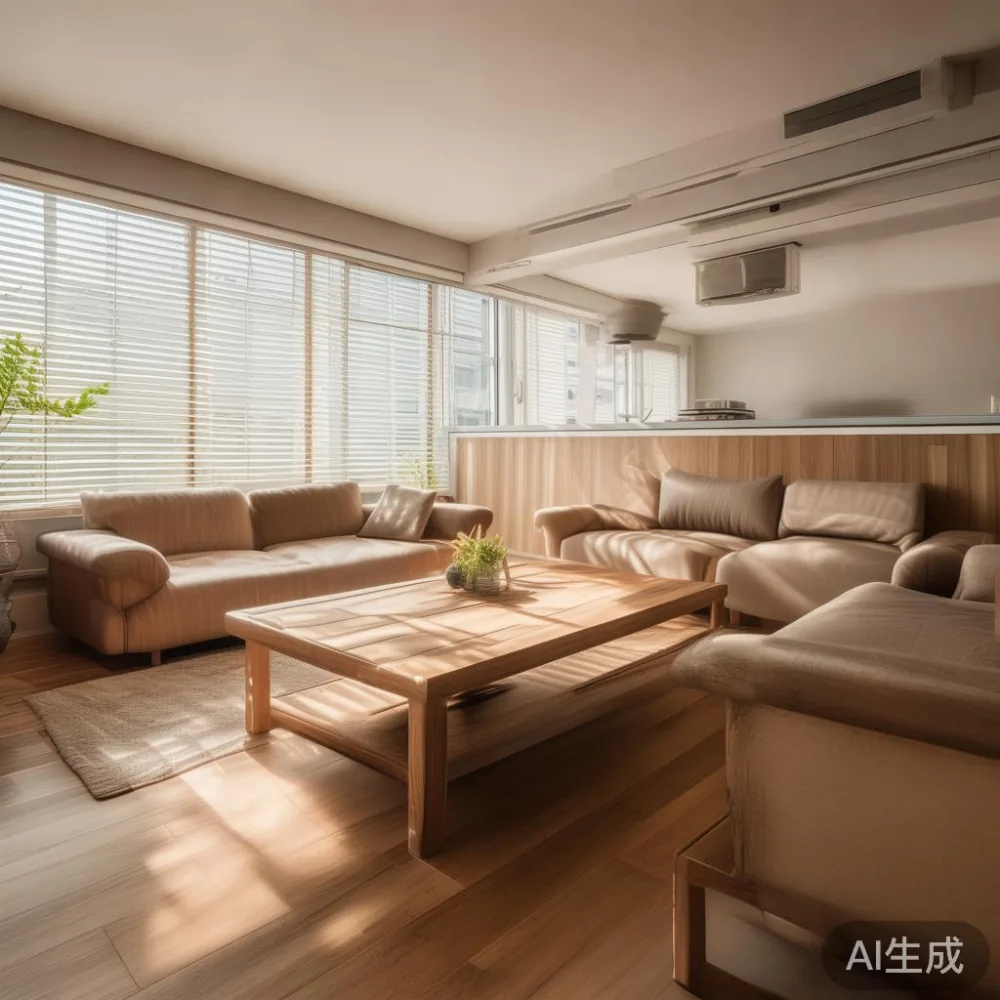
Three numbers tell the story. Singapore's average annual RH is about 82%, with afternoon peaks of 88–92% from May to September. Indoor levels in an air-conditioned HDB sit closer to 60–65% when the compressor runs. That 20–25 percentage point swing, repeated every day for a decade, is enough to move a 2.4 m dining top by 6–8 mm across its width. Bed frames, wardrobes, and nightstands all respond, just at different speeds depending on grain orientation.
French light luxury design uses a lot of book-matched walnut and oak veneers over engineered cores for exactly this reason — they resist cupping. Post-modern light luxury, by contrast, leans on chunky solid pieces: 38 mm tabletops, through-tenoned aprons, exposed end grain. That aesthetic looks magnificent in a Punggol condo with 3 m ceilings, but it asks more of your indoor climate than a veneer ever will.
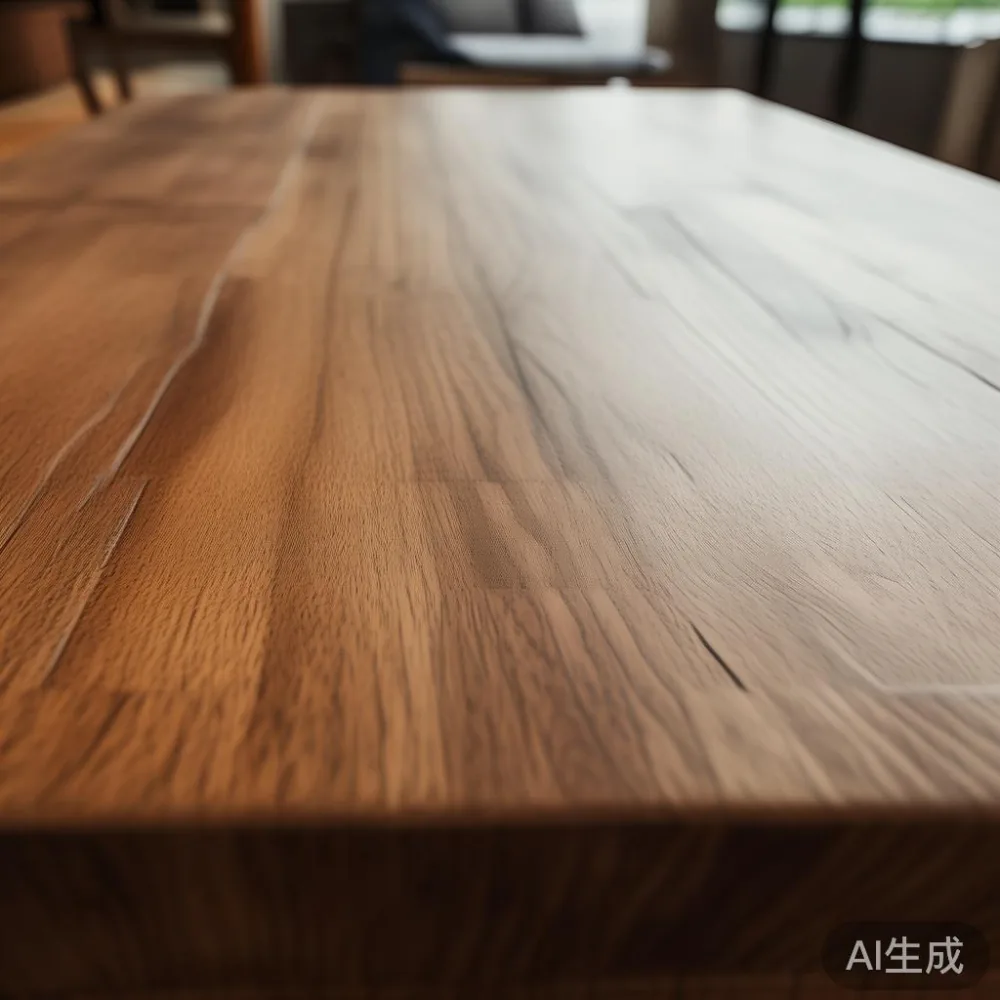
How thick is a dining top before Singapore humidity stops being a problem?
There is no magic thickness. A 25 mm top will move more than a 45 mm top, but both will move if humidity swings 25 points in a week. What you can do is choose construction that allows movement. Quarter-sawn oak moves roughly 50% less than plain-sawn oak of the same thickness. Frame-and-panel doors on a wardrobe float inside their grooves, so the rails and stiles stay stable while the centre panel breathes. Sliding doors behave better than hinged ones in a 90% RH corridor.
If you are looking at a marble table for the dining area, remember that marble is dimensionally stable but reacts to salts and acids in Singaporean cooking vapour. The wood base, however, still expands. Look for stainless steel or powder-coated aluminium brackets that let the stone move independently of the timber substructure.
How do I style a Japandi armchair in a small apartment?
Pick one Japandi armchair with a 62–68 cm seat height, 70 cm depth, and oak or ash frame in a natural or smoked finish, then anchor it with a 1.2 m round side table and a single 30 cm linen cushion in oat or charcoal so the 800 sqft room reads calm rather than crowded. Japandi works in compact Singapore layouts because the proportions echo a traditional tatami room: low seat, visible joinery, no ornament that fights for attention. Pair the chair with a slim nightstand in matching timber to carry the line across the room, and resist the urge to add a second armchair — one well-made piece reads as intentional, two read as clutter.
What should a fair Singapore return policy actually cover on solid wood pieces?
A fair return policy for solid wood furniture shipped into Singapore should explicitly mention three things: visible defects on arrival (cracks wider than 2 mm, split panels, broken joinery), transport damage photographed within 48 hours of the lift delivery, and a 14-day change-of-mind window that does not punish you for opening the packaging. The fine print you want to skim is the line about "natural movement of solid wood." Some makers hide a one-way escape clause there. MIDHILL's published return policy, for instance, treats seasonal gapping under 5 mm as a characteristic of solid timber rather than a defect, which is industry-standard language — but it also lets you reject a piece with structural cracks within seven days of receipt. Read both halves of that sentence before you confirm the order.
Two more numbers worth memorising. Lift doors in most HDB blocks measure roughly 80 cm wide by 200 cm tall, which is why many bed frames ship in two cartons rather than one. Corridor widths in older Tampines blocks can drop to 110 cm around the lift lobby, so a 240 cm wardrobe often needs side-tip delivery. Your return policy should also be clear about who pays the S$80–S$120 redelivery fee if a piece simply does not fit through your door.
Does air-conditioning actually protect a solid wood dining table from Singapore humidity?
Running the air-conditioner at 24°C with the fan on low keeps RH around 55–60% in most HDB living rooms, which is comfortable for both people and what is in the Post-modern shoe cabinet canada style units some Singapore owners now import for their foyers. The risk is the other extreme: a 90% RH monsoon afternoon followed by a 55% RH air-conditioned evening is a 35-point swing in eight hours. That cycle is harsher on joints than a steady 70%. Keep the compressor running through the night during monsoon season if you can afford the S$0.28/kWh tariff, and place a wide marble table away from the direct blast of the condenser so the surface does not dry on one side faster than the other.
A 38 mm solid oak top stored in a 60% RH room year-round will move roughly 2 mm across its width each year. In a room that swings between 55% and 90% RH, expect 5–7 mm of seasonal movement. That is why experienced Singapore owners leave 8–10 mm expansion gaps behind wardrobes placed against perimeter walls and avoid pushing a solid wood sofa frame flush to a tile skirting.
Can kiln-drying really stop a bed frame from cracking in Punggol or Bedok?
Kiln-drying brings the wood to a moisture content that matches, as closely as possible, the climate of the destination. For Singapore shipments that target around 12% MC. The bed frame will still acclimatise for the first four to six weeks in your flat, and during acclimatisation you might notice a faint camber or a hairline gap at a corner. That is the timber settling in, not the maker cutting corners. A responsible return policy distinguishes between acclimation movement and structural failure, which is why MIDHILL offers a 10-year structural warranty alongside a 14-day return window — the long warranty covers the joints and load-bearing members, the short window covers the obvious mistakes.
Two practical checks before you sign for the delivery. First, run a flat hand across every panel within ten minutes of the carton opening. Any cup deeper than 1.5 mm on a table top is worth photographing. Second, place a small digital hygrometer next to the piece for the first week. If your flat sits at 82% RH and the wood was dried to 12% MC, expect visible movement for at least fourteen days. Anything that does not stabilise by week four deserves a call to customer service. Lifetime refinishing, offered by a handful of Foshan exporters including MIDHILL, gives you a free sanding and re-oiling at the five-year mark — a quiet advantage when the surface starts to look tired but the frame is still rock solid.
Quick numbers to keep beside that hygrometer
Keep these reference figures where you can see them. Target indoor humidity: 55–65% RH. Acceptable seasonal gapping on a 200 cm solid panel: up to 4 mm. Lifting clearance for most HDB service lifts: 200 cm height, 80 cm door width, 150 cm internal depth. Freight shipping from Foshan to Singapore for a 1.8 m dining set: typically 18–28 days by sea, plus S$80–S$180 for last-mile delivery to a fifth-floor walk-up in Bedok. Free shipping threshold worth looking for: US$350 (about S$475). GST at 9% applies on the landed value above S$400 personal import threshold, which most full-container consolidated shipments clear comfortably. With those numbers taped to the inside of a wardrobe door, the only question left is whether the return policy you read matches the furniture you actually wanted.