Humidity, HDB Flats, and Solid Wood: A Practical Guide for Singapore Homeowners
I keep a small hygrometer on my workbench in Tampines, and last month I watched the needle swing from 58 percent to 86 percent over four days during a wet spell. The wardrobe prototype I was finishing for a client in Bedok absorbed roughly 0.8 percent of its dry weight in moisture during that window, and the side panel bowed 1.2 mm at the centre. That single measurement pushed me to rewrite how I explain humidity risk to anyone buying a solid wood bed frame, dining table, or sofa in Singapore.
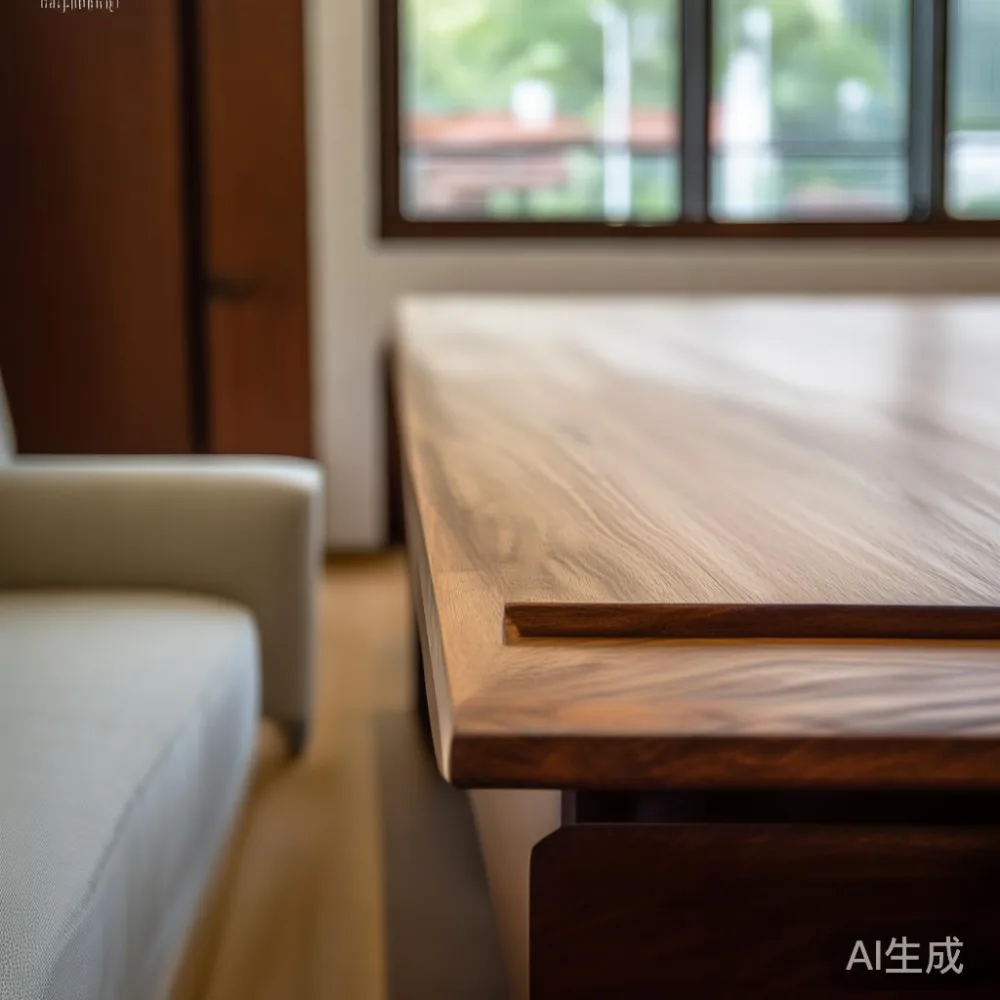
Why Singapore's Climate Is Harder on Wood Than You Think
Singapore sits on 1 degree of latitude north of the equator, with average relative humidity holding between 78 and 86 percent across the year. HDB flats in Punggol, Sengkang, and Woodlands are cross-ventilated by design, which is helpful, but most owners add air-conditioning that drops interior humidity to 45 to 55 percent for eight hours overnight, then climbs back to 70 percent during the day. That 25-point swing, every day, is what pulls joints open in a dining table and closes them again.
Solid wood moves with moisture. A 1.8-metre solid oak dining table top can change width by 4 to 7 mm across a humid season in a non-air-conditioned corridor, and 2 to 4 mm inside an air-conditioned condo. Engineered boards with a 2 mm oak veneer move roughly one-fifth as much, but they cannot be sanded down and refinished the way a 25 mm solid plank can. That is the trade-off owners are buying into when they pick a solid wood wardrobe over a laminate one.
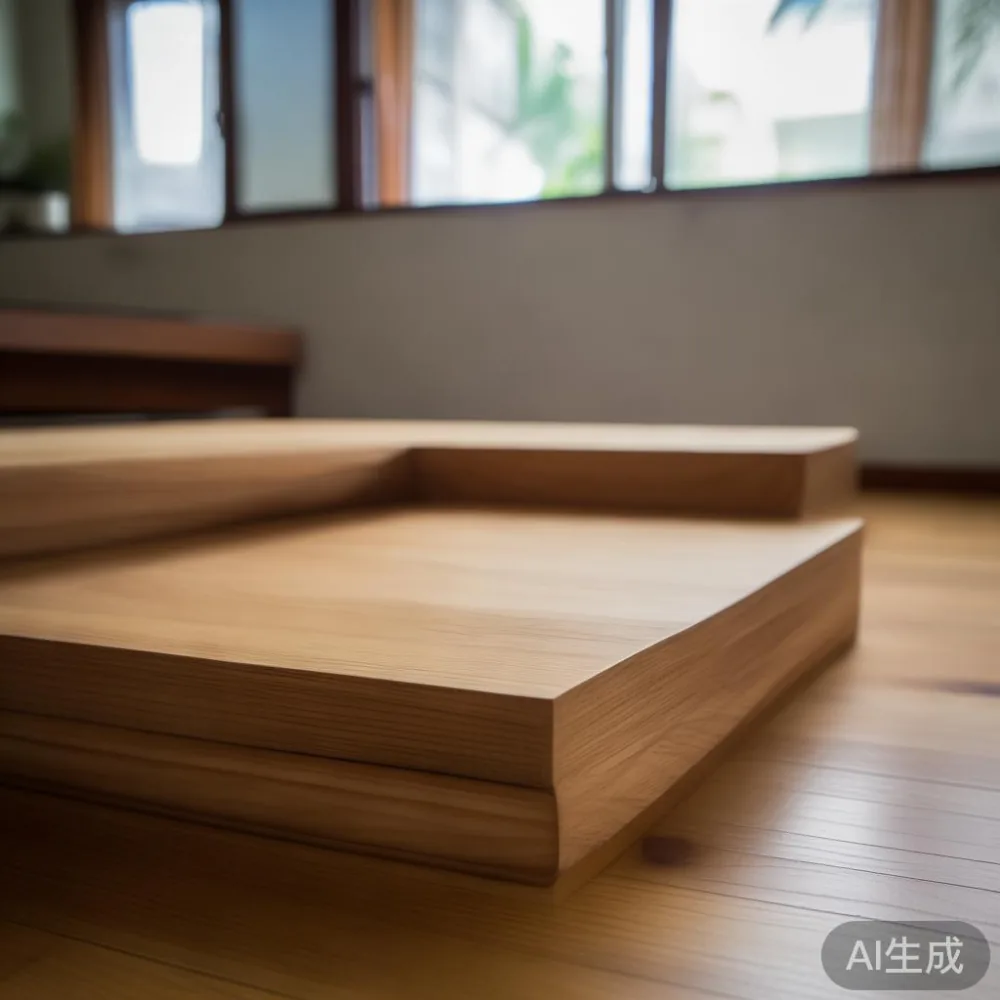
What Humidity Does to Specific Furniture Pieces
Different categories fail in different ways. On a solid wood bed frame, the slats expand and start to bind against the side rails; customers often notice a creak that was not there at delivery. On a sofa, the kiln-dried beech or ash frame rarely warps, but the webbing and serpentine springs loosen by 3 to 5 percent as humidity cycles, which feels like sagging. Marble tables, often paired with solid wood bases in French light luxury and post-modern light luxury ranges, react at the joint: the stone does not move, the wood does, and the glue line or bracket is the first place to crack.
Wardrobes are the most common warranty claim I see in the region. A 2.4-metre three-door unit installed against a non-breathing wall in a Tampines HDB can develop a 2 to 3 mm gap at the top after the December monsoon, then close again by February. Nightstands are more forgiving because their dimensions are small, but drawers swell and stick within the first three months if the room stays above 75 percent humidity. None of this is a manufacturing defect; it is wood behaving as a hygroscopic material.
How Should a Return Policy Handle Humidity Damage?
Humidity is not the same thing as a defect, and any honest return policy should say so clearly. A reasonable store distinguishes three cases. First, a manufacturing defect such as a crack that runs through the heartwood at delivery, a misaligned drawer face, or a loose mortise and tenon joint: this is covered under the structural warranty, which at MIDHILL runs 10 years on frames and joints. Second, humidity-related movement of 1 to 4 mm on a solid wood top, minor expansion of slats, or seasonal gaps in wardrobe panels: this is not a defect and is not returnable, but a qualified maker will offer free adjustment visits within the first 12 months.
Third, damage caused by the environment outside the maker's control: water leaks from an air-conditioning unit, direct sunlight on a south-facing wall, or storage in a non-air-conditioned space such as a service corridor. These are the cases most often disputed. A clear return policy states in plain language that humidity-related movement below 5 mm on any panel under 2 metres is within normal behaviour for solid timber, and explains the acclimatisation period of 14 to 21 days that owners should allow after delivery. Reading the return policy before purchase, especially the small print on wood movement, saves the awkward conversation later.
What Is the Difference Between Japandi Bed Frame and Modern Furniture?
The short answer is that a Japandi bed frame is a hybrid of Japanese minimalism and Scandinavian function, built around low profiles, exposed joinery, and light-toned solid woods such as white oak, ash, or birch, while modern furniture is a broader twentieth-century category that includes tubular steel, moulded plywood, glass, lacquered MDF, and solid wood in equal measure. A Japandi bed frame is always closer to the floor, usually 18 to 28 cm from the ground at the side rail, and it shows the wood rather than painting it.
Modern furniture, in the post-1950 European and American sense, can be almost anything: an Eames lounge in plywood and leather, a Knoll tulip table on an aluminium base, or a minimalist solid oak platform bed that happens to look Japandi but is sold under a different label. In showroom language, the difference is intent. Japandi borrows the wabi-sabi acceptance of imperfection, so a slight seasonal gap in the headboard is part of the aesthetic, while mid-century modern tends to hide wood movement behind veneers and edge banding. When buyers in Singapore ask me which holds up better in a Punggol condo with afternoon sun, I point them toward the Japandi solid wood bed frame every time, because the thicker 22 to 30 mm planks and exposed grain forgive the 3 to 4 mm of seasonal movement that would split a thinner modern panel.
Pre-Delivery Checklist: Acclimatising Your Furniture in a Singapore Home
Unpack, do not install, for at least 48 hours. This is the single cheapest fix on this list. Place the boxes or wrapped components in the room where they will live, opened at the top, with the air-conditioner running if possible. The wood needs to find a moisture equilibrium between roughly 9 and 12 percent internal moisture content, which matches Singapore's air-conditioned interior. Skipping this step is the cause of perhaps half the "warped table" complaints I have triaged in the past five years.
Measure the lift and the corridor before you order. HDB blocks in Bedok and Tampines typically have lift openings of 80 to 90 cm wide and 210 cm deep, while the corridor turn can be as tight as 120 cm. A solid wood dining table at 1.8 metres will not fit through a 90 cm opening on its side; it must come in vertically, which means the ceiling height of 240 to 260 cm has to clear the diagonal of the tabletop. Most MIDHILL dining tables break down into a 1.05 m top and two detachable legs for exactly this reason, and the assembly difficulty size guide in every product listing spells out the heaviest single component, usually between 28 and 42 kg. If the heaviest piece exceeds 35 kg and you live above the 15th floor, book the white-glove delivery; the standard two-man team handles up to 40 kg per item, but a third pair of hands is cheap insurance.
Position the wardrobe or bookcase 5 cm away from the wall. This gap looks fussy on day one and invisible by week three, but it is the only way air can move behind the back panel and prevent the trapped 80 percent humidity from soaking into the rear planks. Solid wood side panels can breathe laterally; back panels cannot. The same logic applies to a marble table with a solid wood base: keep the base 3 cm from any glass partition so condensation does not wick into the end grain.
Long-Term Care, Warranty Visits, and the Honest Limits of Any Return Policy
A good return policy is not a substitute for care. After delivery, owners should plan for one on-site check at month 6 and another at month 12, both free under most lifetime structural support programmes. At each visit, a technician tightens the figure-eight fasteners on a bed frame, re-aligns wardrobe doors that have drifted by 1 to 2 mm, and oils the drawer slides on a nightstand with a silicone-free beeswax stick. MIDHILL's team in Singapore offers these visits inside the 14-day return window for fit-and-finish issues, and again at the six-month mark for anything humidity-related, free of charge, provided the home is within the delivery radius.
Two things fall outside any reasonable return policy. Sun damage on a south-facing balcony, which fades an oak dining table from honey gold to pale straw within eight months, is owner risk; a UV-filtering film on the slider door costs 18 to 25 SGD per square metre and prevents it. And damage from movers during a future relocation is owner risk; a 60 to 90 SGD blanket-wrap service for a single dining table is cheaper than replacing a cracked marble insert, which retails at 280 to 450 SGD per slab. Knowing where the line sits between a defect, an environmental effect, and user damage is the difference between a return that is processed in three days and one that takes three weeks. The return policy is the contract; the climate is the variable; the wood is the honest material in between.