How to Match Solid Wood Furniture to a Warm Minimal HDB Interior — A Practical Guide for Singapore Homes
Last month, I visited a 92 sqm condo in Punggol with a young couple who had spent close to S$11,400 on furniture for their new place. Three weeks in, the oak dining table looked too cold against their cream walls, the bed frame blocked the corridor to the master bathroom, and a marble coffee table arrived with a chipped corner — which, mercifully, the brand's return policy let them swap within 14 days. That afternoon, surrounded by half-unwrapped cartons in a 1.2 m wide lift lobby, we rebuilt the entire scheme around warm minimalism. This guide captures what we did, the numbers we used, and the questions a Tampines or Bedok homeowner should ask before clicking checkout — all while keeping the return policy in your back pocket.
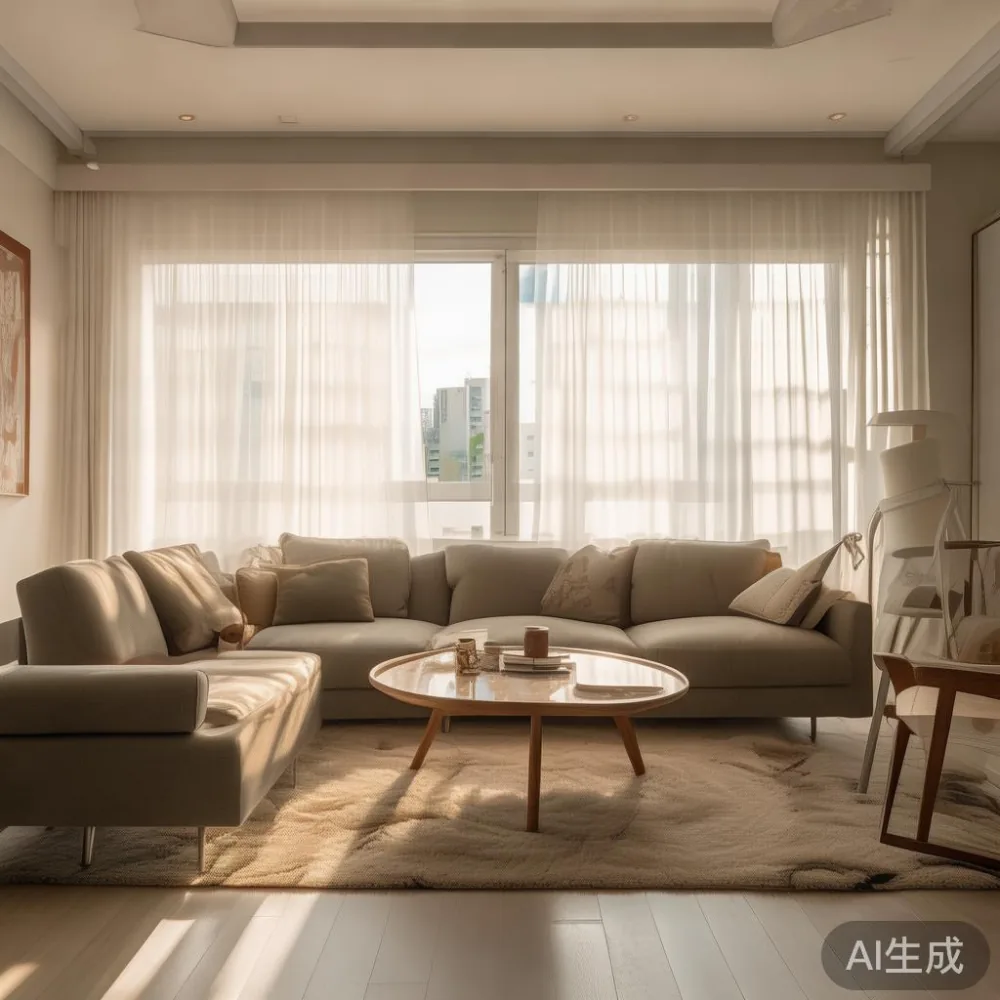
Warm minimalism is not a style you buy off a shelf. It is the slow result of choosing solid wood pieces with quiet grain, a narrow colour palette, and proportions that survive the realities of Singaporean HDB flats: 0.9 m wide corridor turns, 1.0 m lift doors, and the relentless humidity that makes MDF particle boards swell by 2–3 mm at the joints within six months. Below is the working method I use when helping clients at MIDHILL, a Foshan solid wood maker I trust for its 10-year structural warranty and lifetime refinishing service.
What exactly is warm minimalism, and why does it suit HDB flats?
Warm minimalism is the intersection of Scandinavian restraint and Japanese tactility: pale walls, a tight palette (oak, ash, off-white, one accent of black or brass), and visible solid wood grain on every large surface. It suits HDB flats because it does not fight the space — it multiplies it. A 180 cm solid wood dining table in light ash, paired with two slim benches instead of four bulky chairs, can make a 1.8 m × 2.4 m dining zone feel twice as wide. The goal is furniture that breathes: under 35 kg per piece where possible, with legs that taper to 3–4 cm so light passes underneath.
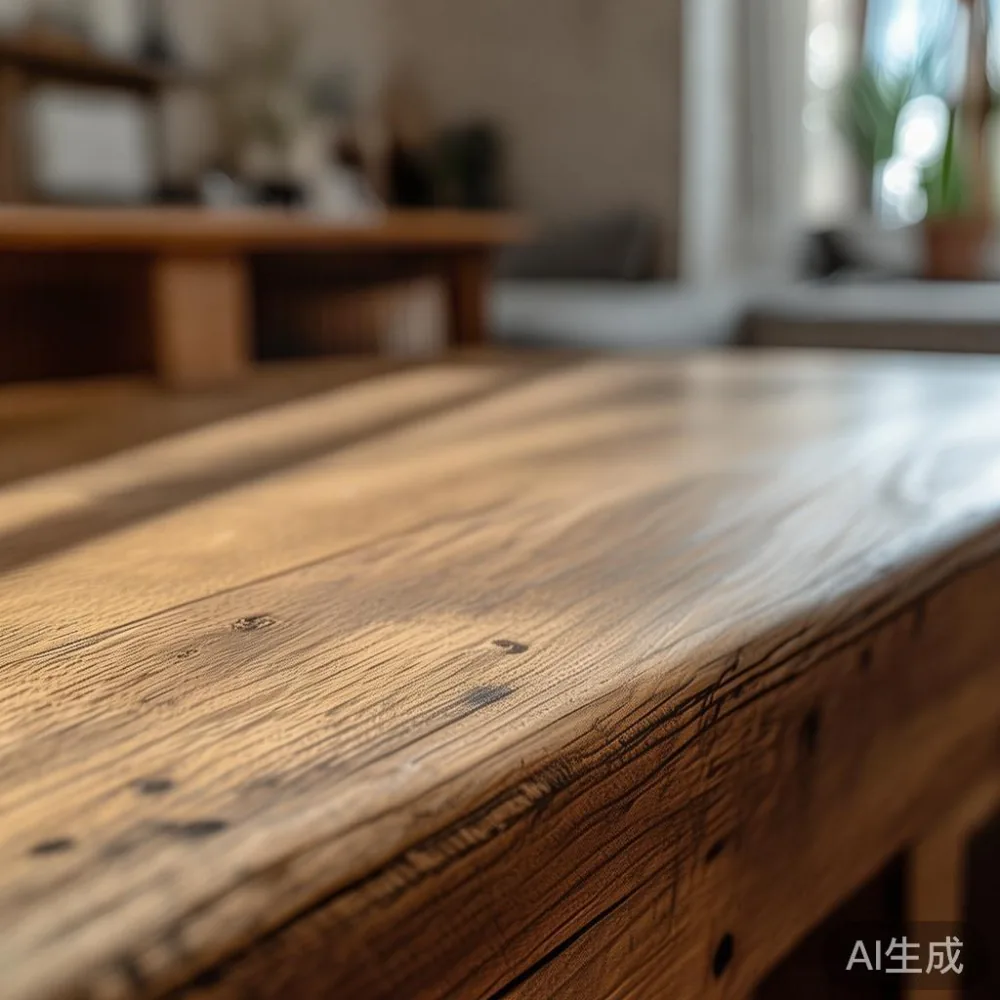
This style also accommodates the new wave of light luxury that Singaporeans are importing from Europe. French light luxury leans on pale oak, linen upholstery and slim brass pulls; American light luxury goes warmer, often in 7–9 cm thick walnut slabs with brushed gold feet; post-modern light luxury (popular in newer Punggol and Sengkang developments) plays with curved silhouettes and travertine accents. Any of the three works, provided the wood tone stays inside one of three narrow bands: pale (under 1800K on a colour chart), honey (2200–2600K), or deep walnut (3200K+).
How do I choose a wood finish for a HDB living room?
Choose a wood finish that is 1–2 shades warmer than your wall paint and no more than 15% darker than your floor, so the eye reads a calm gradient from skirting to ceiling. In a typical Tampines 4-room flat with off-white walls (Dulux 30YY 83/026 or similar) and pale SPC flooring, a solid oak sofa frame in a natural oil finish (around 1800–2000K) will feel coherent, while a dark walnut wardrobe will read as a black slab and shrink the room visually.
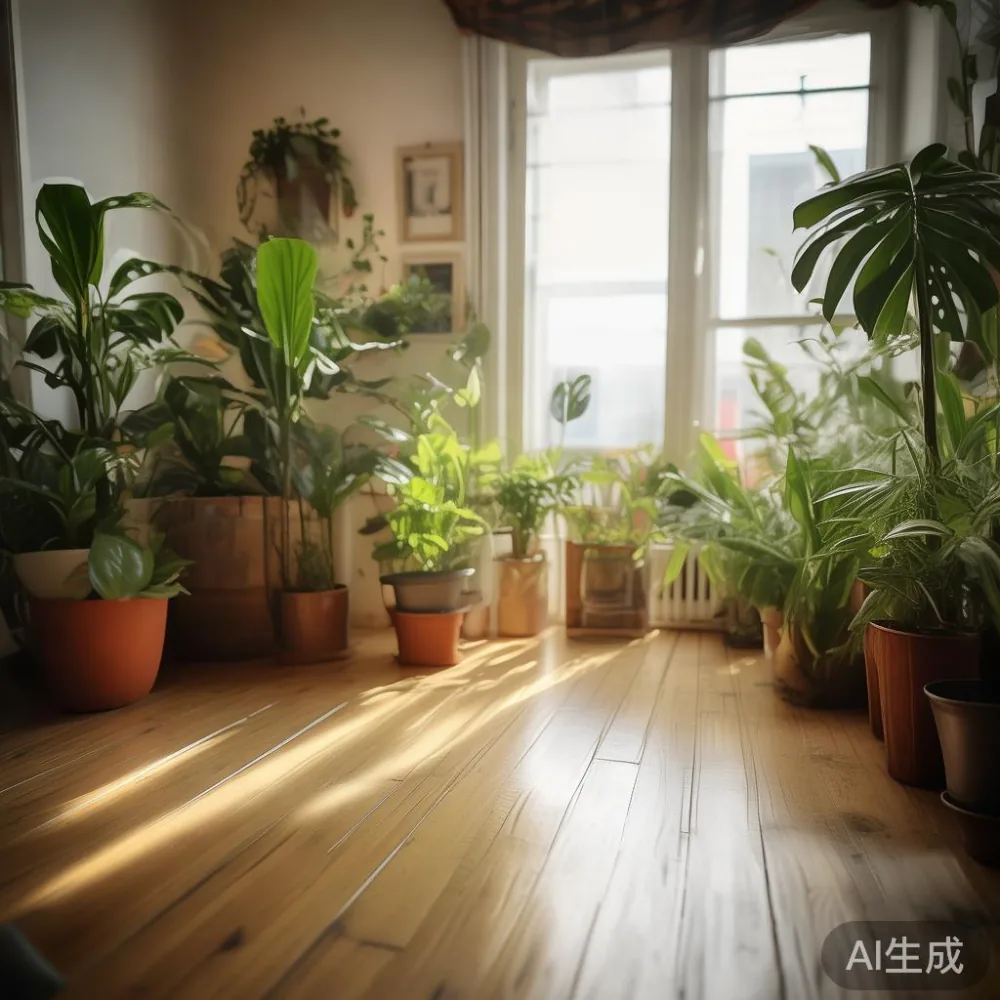
In practice, I ask the homeowner to hold three sample chips against the wall at 10 a.m., 3 p.m., and under their actual 2700K downlights at night. If the wood turns orange or grey at any of those times, it is the wrong finish. Solid ash tends to stay neutral from sunrise to LED; solid beech yellows; solid walnut darkens by 8–10% over the first year. For Singapore's 80% average humidity, an open-pore oil finish (hard wax oil, two layers, 12 hours apart) will out-perform a thick lacquer because it lets the wood expand 1.5–2% seasonally without cracking.
Which solid wood pieces should I anchor a warm minimal HDB flat with?
Anchor the scheme with five pieces, in this order of priority: bed frame, dining table, solid wood sofa, wardrobe, and nightstand. A sixth optional piece — a small marble table or travertine side table — adds the light-luxury accent without clutter.
Bed frame. A 160 cm × 200 cm queen bed in solid ash, with a 5 cm recessed plinth and a 110 cm tall headboard, leaves 60 cm of walkway on each side in a standard 3.2 m × 3.0 m HDB master bedroom. Avoid 4-poster or storage-drawer frames under S$1,800 unless the runners are steel ball-bearing (most are plastic and fail within 18 months in our humidity).
Dining table. For a 4–6 person family, a 160 cm × 80 cm oval table seats six without the sharp-corner injuries that rectangular 180 cm tables cause in narrow 1.1 m corridors. Look for 4–5 cm thick tops with a 6–7 cm apron underneath; anything thinner than 3.5 cm will bow over time. A solid oak top around 28–32 kg is the sweet spot — heavy enough to feel premium, light enough that two adults can rotate it during cleaning.
Solid wood sofa. This is the most misunderstood category in Singapore. Most "solid wood sofa" listings online are actually plywood frames with rubberwood legs. A genuine solid wood sofa has a frame you can see and feel: ash or oak arms 4–5 cm thick, mortise-and-tenon joints, and linen-cotton blend upholstery (cotton content above 35% prevents the sticky-back syndrome that pure polyester develops at 32°C). Seat depth of 58–62 cm suits most Southeast Asian frames; 70 cm depths look luxurious in showrooms but force users to perch on cushions.
Wardrobe. For a 1.5 m × 0.6 m HDB bedroom recess, a custom wardrobe in 18 mm birch plywood with solid oak veneer doors outperforms a full solid wood carcass by 40% on weight (around 65 kg versus 110 kg) while keeping the warm grain visible. If your retailer only offers full solid wood, ask for sliding doors instead of hinged to save 0.6 m of swing clearance.
Nightstand. Two nightstands, each 45 cm × 40 cm × 55 cm high, should sit 2–3 cm lower than the mattress so a phone or glass is reachable without twisting. Avoid glass or marble tops here; a dropped phone on marble at 1 a.m. has ended more Singaporean relationships than any other household accident.
How do lift and corridor widths change my furniture choices?
Measure your lift door (usually 0.9 m or 1.0 m wide) and the tightest corridor turn on the way to your unit before you fall in love with anything. A 200 cm wardrobe that fits a 1.2 m wide Tampines lift will not survive a 0.9 m HDB corridor turn — the diagonal of a flat-pack box cannot exceed 1.45 m. I have watched a S$3,200 dining table get refused at the lift on a Bedok Reservoir block because the seller quoted carton dimensions, not the assembled diagonal.
Two practical rules my colleague uses when delivering into Singapore blocks:
- The longest single piece, fully assembled, must be at least 8 cm shorter than the diagonal of the narrowest access point. Measure corner-to-corner of the corridor turn, not just the width.
- For pieces over 45 kg (a 200 cm wardrobe, a marble table with stone top), book the service lift, not the passenger lift. Most HDB blocks have a service lift of 1.3 m × 1.5 m × 2.1 m high with a 600 kg limit; reserve it 3 working days ahead through the town council.
If a piece physically cannot enter, the return policy becomes your lifeline. Reputable sellers such as MIDHILL allow returns within 14 days for pieces that fail access — but only if the cartons are unopened and you have measured first. Always photograph the corridor turn and the lift door before the truck arrives.
Can rattan wicker for small small apartment really fit a warm minimal scheme?
Yes — rattan wicker for small small apartment settings is one of the warmest textures you can add, provided you use it in measured doses. A single rattan armchair (60 cm × 65 cm × 80 cm, around 4–5 kg) next to a solid wood sofa reads as a sculptural accent rather than a tropical cliché. Avoid full rattan dining sets; they date faster than solid oak and tend to sag at the joints after 30 months in Singapore humidity unless the core is 100% manau rattan (the dense Indonesian variety), not the cheaper Pulut species that bends under 12 kg of adult use.
Keep rattan pieces 1.5 m away from any window that gets direct afternoon sun; UV will bleach the natural skin in 8–10 months. A quarterly wipe with a damp microfibre cloth and a yearly rub of tung oil (one coat, wiped off after 20 minutes) keeps the fibres supple. For bedroom use, a rattan headboard panel (120 cm × 60 cm) behind a solid wood bed frame is the gentlest way to introduce texture without crowding a 9 sqm HDB bedroom.
What does a realistic budget look like in SGD for a 4-room HDB?
For a 92 sqm, 4-room flat in Punggol or Simei, a complete warm-minimal furniture scheme in solid wood, including a marble side table, lands between S$7,800 and S$14,200 in mid-2025. A typical breakdown my clients see:
- Bed frame (queen, solid ash): S$1,400 – S$2,100
- Dining table (160 cm, solid oak): S$1,300 – S$2,400
- Dining chairs (×4) or benches (×2): S$600 – S$1,100
- Solid wood sofa (3-seater, ash frame, linen upholstery): S$2,200 – S$3,800
- Wardrobe (sliding, 2.4 m wide): S$1,600 – S$2,900
- Two nightstands: S$300 – S$550 each
- Marble or travertine side table (45 cm dia.): S$450 – S$900
- TV console (150 cm, solid ash): S$550 – S$950
Add 8% GST, and a delivery surcharge of S$80 – S$180 per trip for blocks without a service lift. Free shipping usually applies above S$350 internationally, but within Singapore most solid wood sellers charge by floor and lift type; a 12th-floor walk-up at a Bedok older block can add S$140 per piece. Budget an extra 6–8% on top of the furniture total for these soft costs — they are the line items that wreck a plan if you forget them.
How should I think about the return policy when buying solid wood online?
Read the return policy before you fall in love with the grain. A 14-day return window is only useful if the brand picks up the return shipping (a S$250 dining table can cost S$180 to courier back to a Foshan warehouse — without pickup, the "free return" is a fiction). Three clauses to look for:
- Return window starts at delivery, not at order. Most Singaporean courier delays eat 5–9 days of your 14 days before the carton even reaches your flat.
- Custom pieces (non-standard wardrobe widths, special marble cuts) are often final-sale. Ask in writing. MIDHILL, for one, allows returns on custom orders with a 20% restocking fee — cheaper than most, but still a 20% haircut.
- Defects versus damages: a chipped marble corner or a cracked oak leg on arrival is a defect and should be replaced free under any reasonable return policy. A scratch you caused during assembly is not. Photograph the unboxing, top to bottom, before the courier leaves.
Solid wood is a 20- to 40-year purchase if you choose well. A 10-year structural warranty on frames and joints, plus lifetime refinishing for surface scratches, is the difference between a piece you keep moving houses and one you replace every 6–8 years. When you weigh a S$1,600 ash bed against a S$900 rubberwood competitor, the maths over 15 years is closer than the sticker suggests — provided the warranty and the return policy are written in plain language.
What small mistakes ruin a warm minimal HDB interior?
Five recurring errors I see in new BTOs and resale flats:
- Mixing three or more wood tones. Two is warm; three becomes noisy. If your floor is honey oak, keep furniture in pale ash or grey-tinted oak, not walnut.
- Buying a marble table with a high-gloss polish. Honed (matte) marble hides fingerprints, drinks rings, and the small etches that lemon and wine cause within a week. Polished marble turns a Punggol living room into a fingerprint observatory.
- Choosing a solid wood sofa with seat cushions under 12 cm thick. Anything thinner compresses to half its loft within 18 months and never recovers. Down-wrapped foam (foam core, down jacket) outlasts pure foam by 3–4 years.
- Ignoring the corridor. A 240 cm wardrobe will not enter a 0.9 m turn, no matter how pretty the grain. Always confirm assembled dimensions, not carton dimensions, against your narrowest access point.
- Skipping the humidifier or dehumidifier. Solid wood moves. Aim to keep your flat between 55% and 65% relative humidity; outside that range for six months, even well-seasoned oak will check (small surface cracks) at the end-grain.
How long does delivery to a Tampines or Bedok flat actually take?
For stocked solid wood pieces shipping from a Foshan factory, allow 14–22 working days to a Singapore address, plus 2–4 working days for last-mile delivery and lift booking. Custom pieces (a 240 cm wardrobe, a non-standard marble cut) add 25–40 working days. Two weeks before delivery, photograph the corridor and lift again — town councils sometimes re-tile or re-route access during renovation cycles, and the access that worked last month may not work on moving day.
Ask the seller for the dispatch date, not the order date. Many Singapore resellers mark "in stock" on items that are actually built-to-order, which can stretch 14-day return windows into thin air. A written confirmation of dispatch within 5 working days is a fair minimum standard; longer than that, and you should keep your payment in a credit card with a chargeback window that protects you if the return policy turns out to be less generous than advertised.
What's the single best first piece to buy if I'm starting from an empty HDB?
Start with the dining table. It is the piece you use daily, the piece guests see first, and the piece that anchors the room's proportions. A 160 cm oval solid oak table in a warm-minimal flat earns its footprint within a week — breakfasts, work-from-home afternoons, and Sunday suppers all happen on it. Once the table is in, the chairs, sofa and TV console follow visually without argument. A bed frame can wait a fortnight if your current mattress is still serviceable; a dining table anchors the rhythm of the home from day one.
Choose one focal point, one accent material, and one rule for the rest: keep wood tones within two shades, keep metals within one family (either warm brass or cool brushed nickel, never both), and keep at least 40% of each room visually empty. That last rule is the one my Punggol couple finally understood when we removed a S$420 sideboard they had bought on impulse — and the room felt 12 sqm larger without it.