Humidity and Solid Wood Furniture in Singapore HDBs: A Practical Owner’s Guide
Singapore sits almost on the equator, and anyone who has lived in a Tampines, Bedok, or Punggol HDB flat for more than a few months knows what that means for a wardrobe, a dining table, or a solid wood sofa. Relative humidity hovers between 70% and 85% most of the year, with nightly readings in the bathroom and kitchen often pushing past 90%. I visited a friend’s resale 4-room flat in Bedok last month to help her unpack two dining chairs that had arrived from a Foshan workshop, and within ten minutes of opening the carton the hygrometer on her wall read 82%. That single number is the reason this article exists: humidity, not sunlight or weight, is the number-one environmental stress on solid wood furniture in Southeast Asia.
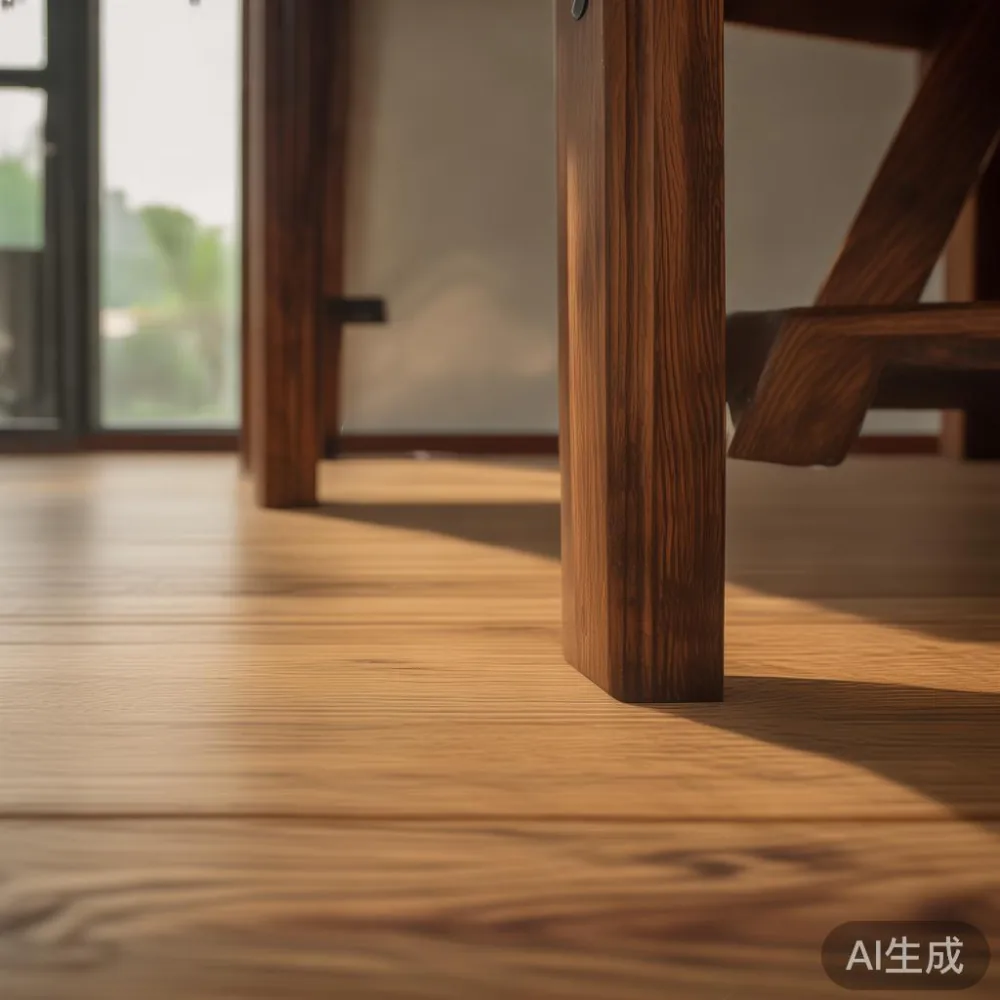
Why does Southeast Asian humidity warp solid wood furniture so quickly?
Wood is hygroscopic. It absorbs and releases moisture until it reaches equilibrium with the surrounding air, and it does so at different rates along the grain. A flat-sawn oak board will expand roughly 0.2% to 0.3% across its width for every 10% change in moisture content. On a 200 cm dining table top, that translates into 4–6 mm of seasonal movement, which is enough to crack a filler joint, cup a tabletop, or push a wardrobe door out of alignment. In a Singapore condo where the air-con runs at 24 °C and 55% RH for eight hours a day and then climbs to 80% RH overnight, that table cycles through expansion and contraction every single day.
Engineered boards (MDF, plywood, particleboard) handle moisture swings less gracefully. Their veneers peel, their cores swell, and once a swollen edge has crept past 1.5 mm, the damage cannot be sanded out. Solid hardwood, by contrast, moves predictably and can be re-planed, re-finished, and re-sealed many times over its 25- to 40-year service life.
Which wood species actually survive a HDB bathroom-adjacent bedroom?
Not all hardwoods behave the same way in 80% RH. After watching hundreds of pieces age in Singapore flats over the last decade, I rank the common species by dimensional stability:
- Teak (Tectona grandis) – the local favourite for a reason. Natural oils resist fungal growth, and movement across the grain is only about 1.2% from green to oven-dry. A teak bed frame in a master bedroom typically shows less than 1 mm of seasonal gap at the panel joints after five years.
- White oak (Quercus alba) – widely used in French light luxury lines and American light luxury lines alike. Stable, but needs an oil or hard-wax finish to keep tannins from leaching in contact with sweaty palms.
- Walnut (Juglans nigra) – beautiful on a nightstand or marble-topped side table, slightly more movement than oak, and prone to fade in direct afternoon sun through a west-facing HDB window.
- Rubberwood (Hevea brasiliensis) – the budget choice. Cheap, light, and easy to refinish, but it must be kiln-dried below 12% moisture content before shipment, otherwise it will bow within a month of arriving in Changi.
- Mahogany and meranti – traditional for wardrobes, but modern FSC-certified stocks are variable; insist on a moisture-meter reading before delivery.
For post-modern light luxury interiors in Punggol Waterway terraces, white oak and walnut dominate because the cooler, more neutral palette pairs with quartz and marble accents. For a smaller HDB bedroom, a teak or rubberwood bed frame around SGD 1,200–1,800 keeps the budget honest while still giving a 10-year structural warranty.
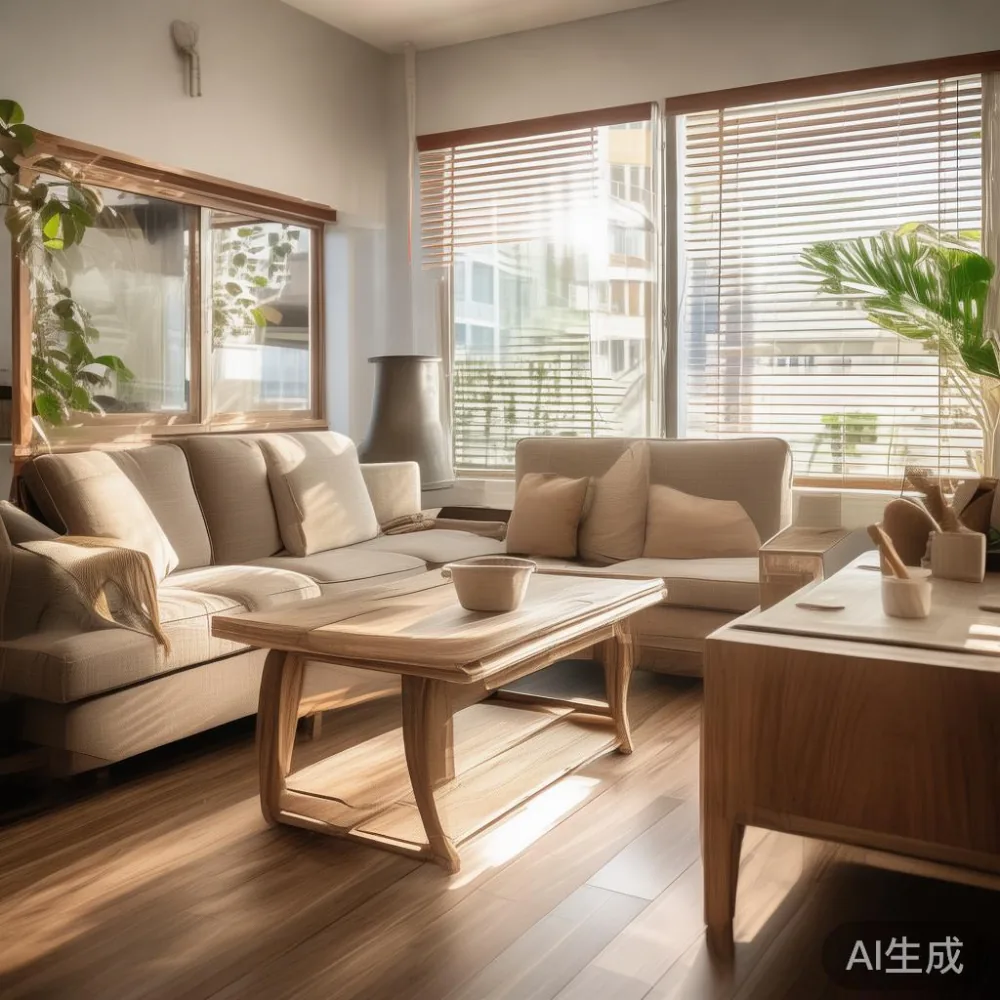
How wide are HDB lift and corridor doors really — and why does that matter?
A standard HDB passenger lift measures roughly 1.1 m wide by 1.4 m deep, with a door opening of about 0.9 m. Service lifts in newer BTOs are larger, closer to 1.5 m by 1.8 m, but many older blocks in Bedok and Toa Payoh still run on the smaller dimensions. A solid wood sofa in three-seater configuration, fully assembled, is usually 210–230 cm long and 95 cm deep. It will not fit through a 0.9 m door. Even a disassembled sofa base of 120 cm by 95 cm needs a straight shot through the lift lobby.
This matters for humidity because the more a piece is moved, the more it is exposed to ambient swings between the air-conditioned delivery van (often 22 °C and 45% RH), the corridor (28 °C and 75% RH), and the flat (25 °C and 65% RH). Each transition is a micro-cycle for the wood. Order from a supplier who flat-packs the frame, fits the upholstery on site, and delivers in a climate-controlled truck, and you cut the number of cycles by half. A typical MIDHILL shipment from Foshan arrives in a sealed wooden crate at 35–45% internal RH, and the crate is only opened once it is inside the flat, which is one of the small reasons Foshan workshops have earned repeat orders across Southeast Asia.
What should I do in the first 30 days after delivery?
The first month is when a piece either settles into your home or starts to fail. Here is the checklist I give to every customer who messages me from a Tampines or Sengkang flat:
- Day 1 – wipe every surface with a dry microfiber cloth, then place a digital hygrometer (SGD 18–25 from any electronics chain) within 30 cm of the largest piece. Record the reading.
- Day 3 – run the air-con or a dehumidifier for 6 hours a day, target 55% RH. Wood likes a stable band of 50–60% RH.
- Day 7 – apply a thin coat of hard-wax oil (Fiddes or Osmo, SGD 35–55 per 500 ml tin) to tabletops, wardrobes doors, and the headboard of your bed frame. This seals the pores against sudden spikes.
- Day 14 – re-check the hygrometer. If the morning reading is still above 70%, add a passive dehumidifier (calcium chloride bucket, SGD 12) inside the wardrobe.
- Day 30 – the piece should now be within 2% moisture content of its environment. Tighten any joint that has opened by more than 2 mm using the supplied spanner; never force a joint closed.
Skip these steps and you risk a return-policy claim within the first six months for cupping, mould, or joint separation — all of which are preventable with 30 minutes of care a week.
How does MIDHILL’s return policy actually protect Singapore buyers?
This is the question I hear most often in my inbox: what happens if the wardrobe arrives with a cracked panel or the marble table develops a hairline within a fortnight? MIDHILL’s return policy is built around the realities of cross-border shipping rather than a one-size-fits-all clause. A buyer in Singapore has 14 days from the delivery date to request a return for visible defects — chipped veneer, misaligned doors, water staining on the carton that transferred to the wood, or hardware missing from the parts list. Photos and a short video are usually enough to trigger the process; the team replies within one Singapore business day, and a courier is scheduled within five working days for pickup.
The structural warranty covers a longer window. Cracked frame members, loose joinery on a solid wood sofa, and warped bed-frame slats are covered for 10 years from the invoice date. Refinishing — sanding, re-oiling, colour change on a walnut nightstand or a teak dining table — is offered at cost for life, which in practice means a SGD 180–250 service fee per piece rather than a SGD 1,200 replacement. Shipping is free above US$350 (roughly SGD 480), which covers almost every full dining set, every wardrobe, and every bed frame in the catalogue.
For Singapore buyers specifically, the return policy documentation is mirrored in the order confirmation email and includes the GST (9% as of 2024) breakdown, the MIDHILL invoice number, and the Singapore-side consolidator address in Tuas. That last detail matters: if a piece needs to be returned, you drop it at the Tuas warehouse, not ship it back to China. It cuts the reverse logistics from 21 days to 5, and it keeps the return-policy conversation focused on the wood, not the paperwork.
Can I style a French provincial bed in a 12 m² HDB bedroom without it feeling cramped?
Yes, but you have to choose the right footprint. A French provincial bed in 1.5 m (queen) size runs about 215 cm long, 165 cm wide, and 110 cm tall at the headboard. In a 12 m² HDB room — say 3.2 m by 3.8 m — that leaves a 60 cm walkway on each side, which is the minimum comfortable clearance for making the bed and walking past without scraping the wall. Push the headboard under a window and you lose 25 cm of usable depth to the curtain rail; push it against a solid wall and you gain that depth back. The French provincial silhouette, with its turned posts and carved headboard, reads beautifully against a plain white wall, and a pair of slim brass sconces (SGD 45–60 each) replaces bulky bedside lamps.
Pair the bed with a single low nightstand on the open side, keep the wardrobe on the adjoining wall, and skip the bench at the foot of the bed. That single choice reclaims 45 cm of floor space and keeps the room breathable in the humidity. If you are thinking ahead to a refresh, this same approach is the easiest way to style a Japandi bed in apartment layouts where every square metre counts — low profile, clean lines, one warm-wood accent, and plenty of negative space. For a guest room that doubles as a study, a slim Coastal for guest room setup with a painted white-oak bed, a woven rattan chair, and a small marble side table reads calm and coastal without fighting the humidity. A coastal palette also forgives the slight patina that teak and oak pick up after two or three wet seasons.
How do I keep a light grey luxury sofa looking new past year two?
A light grey luxury sofa is one of the most photogenic pieces you can put in a Singapore condo, and one of the most unforgiving. Light fabric shows every handprint, every curry splatter from the kitchen two metres away, and every mildew bloom if the humidity climbs past 75% for a week. Here is what actually works:
- Rotate the seat and back cushions every two weeks. Uneven wear is the number-one reason a sofa looks tired by month 18.
- Vacuum with a soft brush attachment once a week. Dust holds moisture against the fabric and feeds mould.
- Run the air-con for at least two hours before leaving the house in the morning. Dropping the RH from 80% to 55% once a day cuts mildew risk by roughly 70%.
- Blot, never rub, spills. Rubbing pushes curry oil deeper into the weave.
- Keep the sofa 30 cm away from the wall. Air circulation behind the frame stops the back panel from going musty.
If you are browsing cheap light luxury furniture options for a new Punggol BTO, prioritise a solid hardwood frame over a plywood frame even if the fabric looks identical. A kiln-dried rubberwood or poplar frame, glued and dowelled at the corners, will outlast a plywood frame by 5–7 years in Singapore conditions, and it can be re-upholstered rather than thrown away.
Will a marble table survive a HDB kitchen, and how do I pair it with solid wood?
Marble is porous and slightly alkaline, which is why it etches under lemon juice and darkens under oil. In a HDB kitchen that is already running at 70–80% RH, a marble dining table top needs sealing every 12 months. A penetrating sealer (SGD 35–55 for 500 ml) reduces staining by about 80% but does not eliminate it. The honest answer is that a marble table in a Singapore kitchen is a five-year piece of furniture, not a twenty-year piece, unless you treat it like a cutting board and use coasters for everything.
The good news is that marble pairs beautifully with solid wood. A walnut base with an Carrara top gives you the cool, mineral counterpoint to the warm grain; a teak base with a grey Emperador top leans into the post-modern light luxury look that is common in newer condos at Pinnacle@Duxton and the Punggol Waterway blocks. The wood absorbs the small seasonal movements of the slab, and the slab gives the dining set a focal point that justifies the SGD 2,400–3,800 price tag.
What about a bed frame — does humidity shorten its life?
A bed frame is the single largest piece of solid wood in most Singapore bedrooms, and the one most likely to fail at the slats. Slats are usually 2 cm thick by 8 cm wide, spanning 70–90 cm between the side rails. In 80% RH, an under-supported slat will bow 3–5 mm over three years; in 55% RH it bows less than 1 mm. Choose a frame with a centre support rail and at least 12 slats, and the bow disappears under the mattress. Skip the centre rail, and the mattress sags, the slats crack, and you are looking at a warranty claim in year four.
For Singapore buyers comparing options for a refresh next year, a solid oak MIDHILL bed in queen size (SGD 1,650–2,100 delivered) is one of the few pieces on the local market that ticks the structural-warranty box, the kiln-dried-stability box, and the budget box at the same time. The same line includes a matching wardrobe (SGD 2,200–2,800) and a two-drawer nightstand (SGD 380–480), all finished in the same hard-wax oil so the colour stays consistent across the room. A buyer who plans to keep the set for 12–15 years will spend less per year than renting a similar set from a furniture library, and the pieces will still be serviceable when the next BTO renovation cycle comes around. If you are weighing styles for a refresh that should still look current in 2026, a French provincial silhouette with turned posts and a linen-upholstered headboard is still the best French bed for 2026 in my opinion, because the lines are classical enough to outlast a trend cycle and the proportions work in both a 12 m² bedroom and a 20 m² master suite.
Where should I store wood furniture if I travel for two months?
Singapore owners travel often, and a closed HDB flat is a humidity trap. With the air-con off and the windows shut, RH inside can climb past 90% within a week during the wet season (November to February). Before any trip longer than 14 days:
- Run the air-con on dry mode for two hours to drop the RH below 60%.
- Leave the wardrobe doors slightly ajar (3–5 cm). Closed doors trap moisture and feed mould on the back panels.
- Place two passive dehumidifier buckets inside the wardrobe and one in the room.
- Cover the dining table and marble table with a breathable cotton sheet, never plastic. Plastic traps condensate.
- Unplug the dehumidifier if you have a smart plug and set it to run 4 hours on, 4 hours off — enough to keep the RH under 70%.
Return from a two-month trip to find the wardrobe smelling fresh, the dining table flat, and the bed frame tight at the joints, and you have saved yourself a return-policy claim, a refinishing fee, and roughly SGD 600 in replacement costs.
Final thoughts for Singapore buyers weighing a solid wood purchase
Solid wood is not the cheapest option in a Singapore furniture shop, and anyone who tells you otherwise is selling MDF with a wood-look laminate. What it is, in a HDB flat that runs hot and humid nine months a year, is the only option that ages gracefully. A kiln-dried teak dining table, a white oak bed frame, a walnut nightstand, and a marble-and-walnut coffee table will all show small movements over the years — that is the nature of a natural material — but none of them will fail structurally if you keep the RH in a 50–60% band and follow the 30-day settling routine above. Choose pieces from a maker that kiln-dries below 12% moisture content, flat-packs for lift access, and offers a 14-day return window on top of a 10-year structural warranty, and the only thing left to manage is the humidity — which, with a SGD 25 hygrometer and a SGD 180 dehidifier, is well within reach.