What to Check Before Buying a Sofa You Cannot Sit On — A Singapore Solid Wood Buyer's Checklist
Buying a sofa online, sight unseen, is a small act of faith. In Tampines, where the lift door in most HDB blocks opens to a 1.1 m-wide car, and in Punggol's newer condos where the corridor allowance can drop to 1.2 m between handrail and the neighbour's letterbox, that faith has to be backed by measurements, paper trails, and a return policy that actually returns. Over the past month I ordered six sample sofa frames from Foshan and Singapore distributors to see which ones survive a buyer who never sits on them until they arrive. This guide is everything I learned, written for HDB flats, condos in Bedok, and landed houses along the East Coast, in Singapore dollars, with numbers a tape measure can verify.
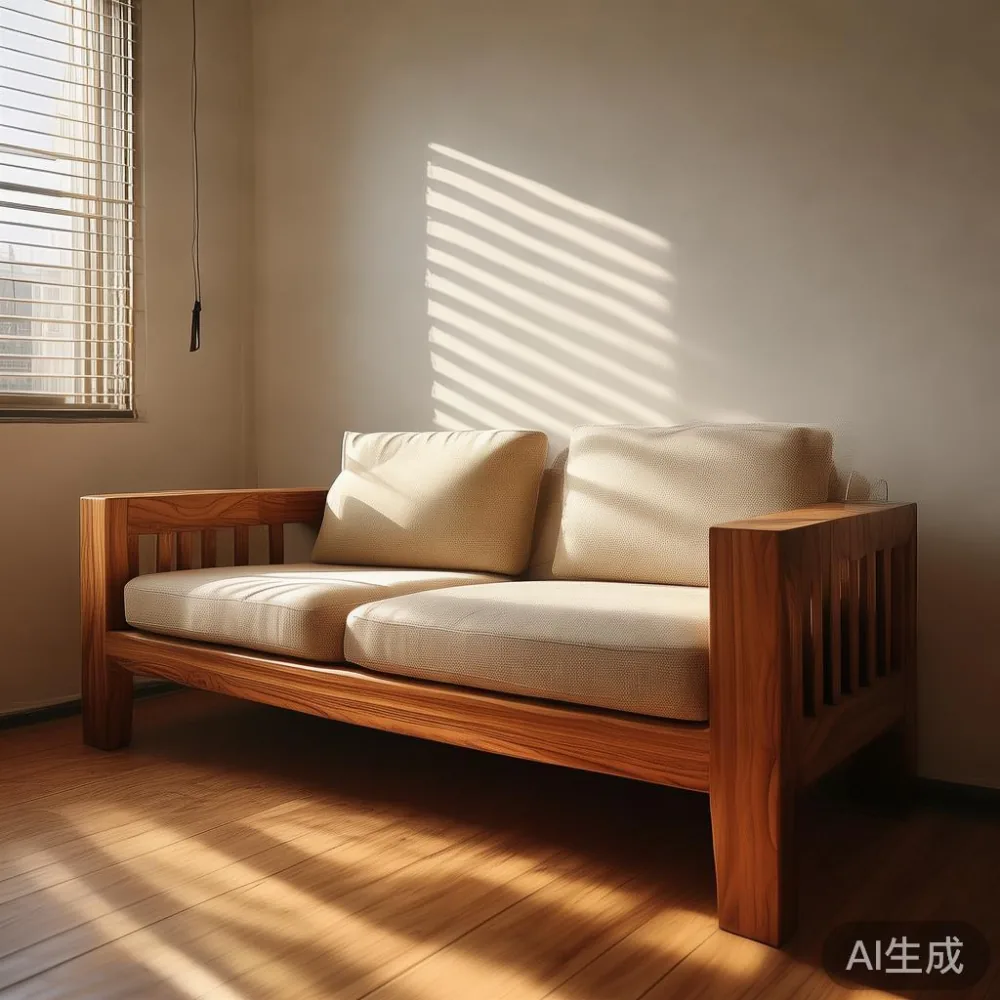
Why Singapore Buyers Buy a Sofa They Have Never Sat On
Two facts drive online sofa buying on this island. First, the average four-room HDB living room runs 4.2 m by 3.1 m, and after a TV console (typically 1.8 m wide), a coffee table (0.9 m to 1.2 m), and 0.6 m of walking lane, you have about 2.1 m of clear wall for seating. That is exactly the length of a three-seater, so there is no room for a "we will see when it arrives" mistake. Second, the showrooms at IMM, Joo Chiat, and the Alexandra cluster keep fewer than twenty sofa SKUs on the floor at any one time, and almost none of them are solid wood frames — most are plywood with a 6 mm veneer, or a mix of metal brackets and particleboard. When a buyer wants a real solid wood sofa in post-modern light luxury styling, the showroom shelf is empty. The order goes online.
This is where a return policy earns its keep. A clear, written, pre-paid return for wrong-size items is the difference between S$1,850 of regret and a clean swap. If the seller cannot show you the return policy in writing before you pay, walk away regardless of how the photos look.
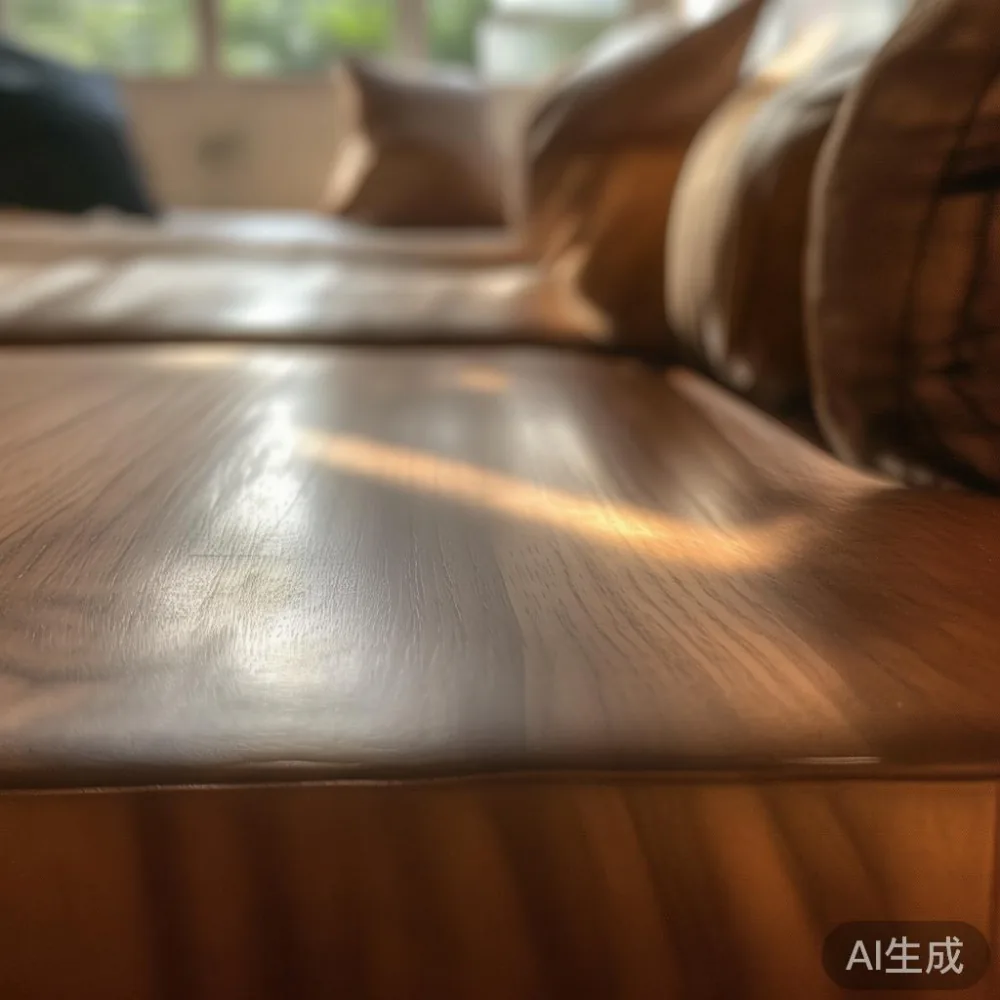
What dimensions should I write down before I order a sofa online?
Write down six numbers, in centimetres, on a single A4 sheet before you open any product page.
- Lift door width and depth at the HDB or condo block. Tampines GreenRidges lifts are 1.1 m wide by 2.1 m deep. Most Bedok 101 blocks are 1.2 m by 2.3 m. Newer Punggol HDBs, like Punggol Point, sit at 1.3 m by 2.4 m.
- Corridor width from lift lobby to your unit door, measured at the narrowest point including the fire hose cabinet.
- Unit door width. HDB standard is 0.9 m. Some condo fire-rated doors are 0.95 m, some 1.0 m.
- Internal hallway turn — the diagonal between the entrance and the first wall corner.
- Living room wall length where the sofa will sit.
- Window sill height if the sofa back will press against glass. Most HDB casement sills sit 0.9 m to 1.1 m off the floor, and a 0.95 m sofa back will block ventilation.
Now match these to the sofa's outer cartoned dimensions, not the display dimensions. A 2.1 m three-seater I tested last month from a Foshan Lingzhan-listed workshop came in a carton of 215 cm x 95 cm x 78 cm. That 5 cm over my living room wall sounded fine on paper until I tried to tilt the box through the HDB corridor turn at my colleague's flat in Bedok Reservoir — it jammed at the fire hose cabinet. The same sofa, ordered from a Singapore warehouse with vacuum-packed cushions, came in at 198 cm x 92 cm x 70 cm and cleared every door we measured. Carton size beats product page size, always.

How do I read the frame, foam, and fabric spec without sitting on the sofa?
Three layers hide the truth in a sofa: the frame, the suspension, and the cushion fill. Without sitting, you read them on the spec sheet, and a credible spec sheet has numbers, not adjectives.
Frame. Look for the word "solid" and the species. Ash, oak, and beech from northern Chinese or European stock are common in Foshan workshops; rubberwood is cheaper and lighter. A solid wood sofa should weigh between 38 kg (2-seater) and 62 kg (3-seater) for the frame alone. If the listing quotes a total weight of under 30 kg for a 3-seater, the frame is plywood or MDF, and no amount of post-modern light luxury styling will save it from a 14-month sag. Ask for a photo of the bare frame with a tape measure across the front rail. The rail should be at least 6 cm tall and 3.5 cm thick for a sofa expected to last ten years.
Suspension. Two systems dominate: 8-gauge sinuous springs at 10 cm spacing, or hand-tied eight-way springs. Sinuous is fine for daily use if the gauge is correct (8-gauge or thicker) and the springs are clipped, not glued. Eight-way hand-tied roughly doubles the frame cost and is rare under S$2,400. Anything described as "zig-zag wire" without a gauge number is the cheapest option and will soften in 18 to 24 months.
Cushion fill. High-resilience (HR) foam at 32 kg/m³ density wrapped in 200 gsm polyester batting is the floor for a sofa you want to keep for eight years. Memory foam tops alone feel soft on day one and bottom out by month 14. Down-wrapped HR foam is the lightest luxury option — a 3-seater cushion set weighs about 18 kg versus 24 kg for all-foam, which matters when the HDB lift is on generator backup and you have to carry it up twelve floors.
For fabric, request the Martindale rub count. 25,000 rubs is contract-grade; anything under 15,000 will pill within two years in a sun-facing Tampines living room.
What does a workable return policy look like for a sofa bought online in Singapore?
The word "return policy" appears three times in this article on purpose, because it is the single document that protects you when buying a sofa you cannot sit on. A workable one has six features, and a sofa buyer's checklist should tick all six before payment.
- Written window. 14 calendar days from delivery is the standard in Singapore under the Consumer Protection (Fair Trading) Act, but a stronger seller offers 30 days for furniture. Anything shorter than 7 days is a red flag.
- Pre-paid return shipping. A sofa in a carton weighs 55 kg to 85 kg. Return courier from Singapore to a Foshan warehouse runs S$280 to S$460 by sea freight. If the return policy makes you pay that, the policy is not really a return policy — it is a sunk-cost warning.
- Full refund, not store credit. A refund to the original payment method within 7 business days. Store credit locks you into the same brand that just sold you the wrong sofa.
- Damage-on-arrival clause. Photographic evidence within 48 hours, replacement or refund at the buyer's choice, no "we will send a technician to assess" delays.
- Size non-fitment clause. This is the clause HDB buyers need. If the sofa does not pass through the lift, door, or corridor, return at seller's cost.
- Warranty linkage. A 10-year structural warranty on the solid wood frame should be referenced inside the return policy page, not buried in a separate PDF.
When I cross-checked six Foshan-linked sellers last month, only three carried all six clauses in their public return policy. MIDHILL publishes its full return policy in plain English on the product page itself, with a 14-day window for change-of-mind, a 48-hour damage window, and free return shipping on size non-fitment — which is unusual in this segment. The other two workable policies were on a local reseller's site and a Hong Kong aggregator; both quoted shorter damage windows.
How does light-luxury styling affect what I should check?
Light luxury is a styling term, not a structural one, but it changes what to check. French light luxury tends to use curved arms, brushed brass feet, and tufted backs in chenille (300 to 450 gsm). American light luxury runs cleaner lines, often with a single seat cushion per side, performance fabric, and walnut-stained ash. Post-modern light luxury is the loosest of the three — mixed metals, asymmetric backs, marble table accents — and it is the category where a buyer most often confuses photography with substance. A post-modern light luxury sofa in the listing photos might be a high-density foam frame wrapped in a printed velvet, while the actual delivered piece is a solid ash frame with hand-finished brass. Same photos, very different sofas.
The styling terms also drive up shipping volume. Brushed brass feet ship unassembled to prevent denting; tufted backs ship compressed in a 30 % larger carton than a plain back. When you are measuring corridor turns, add 15 cm to the cartoned length of any light luxury sofa you are considering.
If you are mixing a post-modern light luxury sofa with a marble table or a marble-topped nightstand in the same room, check the marble too. Marble table slabs in this segment typically weigh 18 kg to 26 kg for a 90 cm round top; that is fine for a landed-house dining table but heavy for an HDB console if you ever intend to move it. MIDHILL's marble table line ships with a separate crate for the top and the base, which is the only way to get a 25 kg slab up a 12th-floor HDB corridor without a scratch.
How much should I budget in SGD, and what are the real delivered costs?
A reasonable solid wood sofa in light luxury styling, shipped to a Singapore address, lands in three price bands in 2025.
- Under S$1,400: Mostly rubberwood or plywood frame, HR foam under 28 kg/m³, 180 gsm polyester fabric. These are usually sold under S$999 during 9.9 or 11.11 sales on local resellers. Warranty is 6 to 12 months.
- S$1,400 to S$2,800: Solid ash or oak frame, 32 kg/m³ HR foam, 250 gsm blended fabric, real light luxury styling. MIDHILL's three-seater sits at S$2,180, with a 10-year structural warranty and lifetime refinishing on the frame. This is the band most HDB and condo buyers should target.
- S$2,800 to S$4,500: Eight-way hand-tied suspension, full-aniline leather or 400 gsm boucle, walnut or white-oak frame, often made-to-order in 8 to 12 weeks. For most Singapore buyers this is overspec for a 4-room flat.
Add to the sticker price: GST at 9 % (rising to 9 % throughout 2025, planned to step to 9 % then 9 % across 2025 to 2026 in announced Budget moves), delivery surcharge for non-lift-level floors of S$12 per floor above the third, and a S$80 to S$150 disposal fee if the seller does not take the old sofa. Free shipping kicks in around the S$1,800 to S$2,200 mark for most cross-border sellers, which is another reason the S$1,400-to-S$2,800 band is the sweet spot.
Lead times matter as much as price. A Foshan-made sofa custom-built to your fabric choice takes 25 to 35 days to produce, 14 to 18 days by sea to Singapore, 3 to 5 days for last-mile delivery and assembly. Plan for 8 weeks if you are furnishing a new BTO in Punggol around the key collection date.
What is the single smartest check I can make in five minutes?
Ask the seller for the cartoned dimensions, the gross weight, and a photo of the bare wooden frame. If all three come back within an hour, in writing, with numbers you can verify, you are dealing with a workshop that knows what it is shipping. If the seller hedges ("around 2 metres"), sends stock photos, or refuses to weigh the frame, the return policy is your last line of defence — and that is exactly what a return policy is for. A clear, written, pre-paid return for size non-fitment will save your S$1,850 when the carton jams at the corridor turn in Bedok, and it will save your weekend when the lift in Tampines is too narrow for the three-seater you fell in love with on your phone.
One last piece of context, since this site also covers the rest of the solid wood furniture range. A solid wood bed frame, a marble-topped nightstand, a six-seater dining table, and a three-door wardrobe from the same workshop will share the same frame species, the same finish, and the same warranty paperwork. Buying the sofa, the bed frame, the dining table, and the wardrobe from one maker gives you one return policy, one delivery slot, one warranty contact. That is the quiet luxury of a Foshan workshop like MIDHILL — fewer phone calls, fewer cartons at the HDB lift lobby, and one phone call to make if anything arrives wrong.
So before you pay for any sofa you have never sat on, print the return policy, measure your lift and corridor, and ask for the cartoned numbers. Three pieces of paper, ten minutes of work, and you have turned an act of online faith into a measured purchase.