What Actually Drives the Price of Solid Wood Furniture
I sat in a Tampines HDB living room last month watching my colleague unbox a solid wood dining table she'd waited eleven weeks for. The runner beneath her rug is engineered wood. The kitchen cabinets are laminate over particleboard. Her new table cost S$2,640 including delivery to a 9th-floor corridor that needed a service lift booking — and she told me twice that it was the first piece in the flat she never wanted to replace. That conversation is the reason I wrote this. The price tag on a piece of solid wood furniture in Singapore can swing from S$600 to S$12,000 with no obvious reason from the outside. The gap isn't marketing. It's seven specific variables that anyone can learn to read.
What is solid wood furniture actually made of?
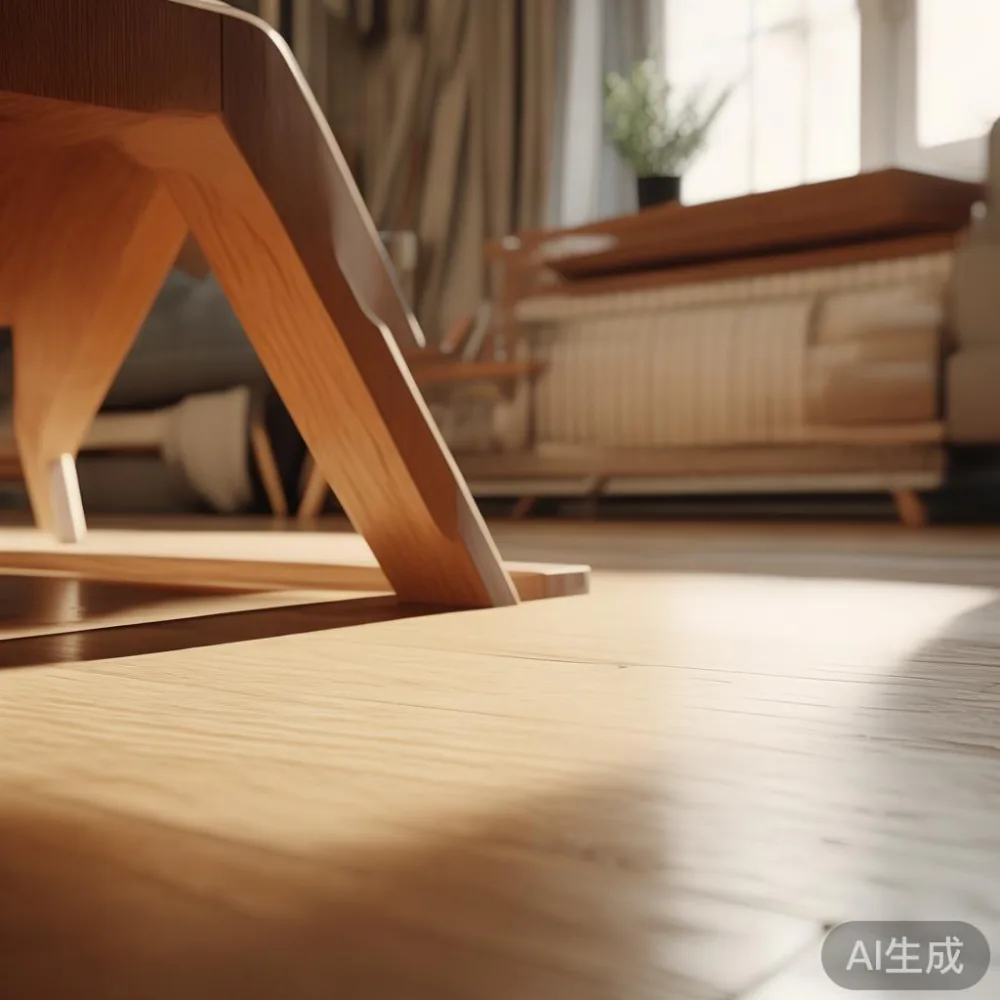
Solid wood means the structural pieces — legs, rails, tops, frames — are milled from a single tree, not glued together from fibre or veneer. A solid wood dining table might use a 4 cm thick oak slab for the top, with aprons and legs cut from the same species. A wardrobe built this way weighs 90 to 140 kg for a 2-metre three-door unit, against 45 to 70 kg for an MDF equivalent.
Engineered wood — MDF, particleboard, plywood — uses wood fibres or thin veneers bonded with resin under heat and pressure. It is lighter, more uniform, and cheaper. It also sags under sustained weight, swells when a Tampines monsoon pushes humidity past 85%, and cannot be sanded down and refinished more than once or twice in its lifetime. A solid wood nightstand, by contrast, can be refinished three to five times across decades.
When a Singapore retailer labels a bed frame or sofa frame as "wooden," ask which kind. The honest answer separates a S$900 bed frame from a S$3,400 one almost every time.
Why does the same species cost three different prices?
Wood is graded by appearance and structural integrity. FAS (First and Seconds) is the top furniture grade — long, clear cuts with minimal knots. Common #1 sits below it. Rustic or character grade lives at the bottom, with knots, mineral streaks, and colour variation.
The same species, same thickness, same dimensions: FAS white oak can cost 2.4× what character-grade white oak costs per board foot. A 200 cm × 100 cm dining table top in FAS runs about S$1,900 in raw material; the same top in character grade runs about S$790. Multiply across a six-seater table with a base, a bench, and a sideboard — the gap is now S$2,000+ on a single order.
Species itself matters. Rubberwood is the budget workhorse of Southeast Asian furniture — fast-growing, plantation-managed, widely available. A rubberwood dining set from a Malaysian supplier can land in Singapore for S$1,200 to S$1,800. Ash and beech sit in the middle. White oak, walnut, and teak climb higher. Imported North American FAS oak carries freight, duties, and currency risk on top of the raw cost.
Then there is the cut. Quarter-sawn oak shows tight parallel rays and resists cupping; it costs roughly 30% more than plain-sawn. The marble table in your living room and the wood frame around it rarely come from the same supply chain — and one of them is doing most of the price lifting.
How do I choose a industrial style for a small apartment?
Start with the wall you cannot move, then size the largest piece to leave 90 cm of walking corridor on every side, and finish with one warm-wood or marble accent to keep the room from feeling like a warehouse.
In a 90 sqm Punggol condo I visited, the owner wanted an industrial look but the bedrooms are 3.2 m × 3.4 m. A bulky reclaimed-wood bed frame would have eaten the room. The fix was a slim black-steel-and-ash bed frame at 160 cm wide — light on the floor, heavy on the eye. An industrial solid wood dining table with a raw steel base replaced a four-seater that had been crowding the window. A French light luxury sideboard in oak with brass cup pulls added warmth without softening the industrial bones. The whole set, including a marble coffee table and two nightstands, came in at S$8,900 delivered.
Three rules for industrial in a small Singapore flat: skip the exposed-brick wallpaper (it dates the room in eighteen months); choose a matte black or gunmetal leg, not chrome; and bring in one curved or upholstered piece — a French provincial sofa in a bouclé or linen weave — to balance all those straight lines. The same logic applies to a French provincial sofa Australia buyers often search for, where the provincial silhouette and an industrial metal frame can sit surprisingly well together in a smaller footprint.
Why does joinery change the price more than the wood?
Wood is the headline. Joinery is the price. A bedside table held together with staples and glue might cost S$220 at wholesale. The same shape with mortise-and-tenon joints, dovetail drawers, and a floating panel back costs S$480 to make — and will outlive the cheaper one by two decades.
Look at a wardrobe from inside the cabinet. If you see staples, cam locks, or a 6 mm hardboard back nailed in, you're holding an MDF carcass. If you see wooden dowels, dadoed shelves, and a 12 mm plywood back set into a groove, you're holding something that can be disassembled and reassembled when you move from a Bedok 4-room flat to a landed terrace in Seletar.
Drawer construction is the fastest honesty test. A solid wood nightstand with dovetail joints on all four corners of every drawer sells for a reason. A nightstand with stapled drawer boxes and a printed "wood-grain" laminate on the outside sells at a different price tier for a different reason. Both are real products — just built for different expectations.
Finishing is the third silent driver. A seven-layer conversion varnish finish on a dining table costs roughly S$180 more in labour and materials than a single coat of wax. It also resists the Singaporean habit of placing hot pots directly on wood. Ask the supplier what finish system they use and how many coats.
How much of the price is shipping, GST, and the lift booking?
In Singapore, the landed cost of a S$3,000 piece of solid wood furniture is rarely S$3,000. GST adds 9%. Delivery within mainland Singapore runs S$80 to S$220 depending on the floor and whether a service lift is available. Many HDB blocks in Tampines and Bedok have service lifts sized for 2.4 m × 1.5 m × 2.1 m — a king-size bed frame in its packaging may need the doors removed or a special time slot booked, which can add S$60 to S$150.
Overseas freight is bigger. A 40-foot container from Foshan to Singapore holds about 60 cubic metres of furniture. Sea freight on that container runs roughly US$1,400 to US$2,200 at current rates. Customs clearance, port handling, and last-mile delivery push the per-piece freight cost up further. A S$1,800 solid wood bed frame made in China and delivered to a Punggol doorstep carries S$200 to S$320 in hidden logistics.
This is why a 350 SGD free-shipping threshold matters when comparing suppliers. Below that, delivery often appears free and then shows up as a separate line item at checkout. Above it, the supplier is absorbing a real cost. MIDHILL, a Foshan maker that has shipped to 15+ countries since 2008, includes delivery on orders over US$350 to most addresses — which removes the "surprise courier fee" that distorts price comparisons in Singapore.
Does a longer warranty actually mean a longer-lasting piece?
A 10-year structural warranty means the maker is confident the joinery, the timber, and the finish will hold. A 1-year warranty means the opposite. The cost of standing behind a wardrobe for a decade — replacing a cracked rail, refinishing a sun-bleached side panel — is real, and it is built into the price.
Lifetime refinishing is rarer and more revealing. Solid wood can be sanded back to bare timber and re-finished, usually two to four times across a piece's life depending on board thickness. A supplier that offers this service, like MIDHILL's lifetime refinishing programme for original customers, is admitting the wood is thick enough to survive the process. A 1.5 cm veneer over MDF cannot be refinished at all — the layer underneath is paper and glue.
For Singaporean buyers, this matters because the climate punishes shortcuts. Relative humidity runs 70% to 85% for eight months a year. UV through west-facing windows dries and cracks unprotected wood. A solid wood dining table with a proper conversion varnish and a 10-year warranty will outlast three laminate replacements — and at the end, you can still refinish it instead of sending it to a Semakau-sized landfill.
What does a return policy tell you about the furniture?
A clear return policy is the most underpriced signal on a furniture website. A 14-day return window with the courier arranged by the seller tells you the maker is willing to take the piece back if the colour, proportion, or comfort doesn't work in your flat. A 14-day return window where the customer pays S$180 to S$400 in return shipping tells you the maker is hedging.
For heavy goods like a solid wood dining table, wardrobe, or bed frame, return shipping in Singapore often costs more than the original delivery. Read the return policy before you read the price. If the policy is generous and clear, the supplier has built the cost of occasional returns into their margin — which is how you end up with a fair price. If the policy is vague or loaded with restocking fees, the headline price is doing the work that honest disclosure should be doing.
Singapore's Consumer Protection (Fair Trading) Act gives you statutory recourse, but the practical outcome is rarely a courier showing up with bubble wrap. A written return policy on the supplier's site, with the timeframe, the condition requirement, and who pays the freight, beats every glossy product photograph in the catalogue. Check it before you fall in love with a marble table or a French provincial sofa you saw on a Sunday afternoon.
Where does the price actually go?
On a typical S$4,000 solid wood sofa, bed frame, or dining table from a Foshan factory exporting to Singapore, the rough split looks like this: raw timber 30 to 38%, joinery labour 18 to 24%, finishing and sanding 8 to 12%, hardware (drawer slides, hinges, sofa springs, upholstery fabric) 10 to 14%, factory overhead and QC 6 to 9%, packaging 3 to 5%, international freight 4 to 7%, last-mile delivery 3 to 5%, and margin 8 to 15%.
When a retailer charges S$7,500 for the same piece, the extra 88% is usually showroom rent in a Tanglin or Marina Square address, sales commissions, and a multi-tier distributor chain. None of those increase the structural life of the dining table. They increase the comfort of the buying experience — which is a real product, just not the one being sold.
If you want the same timber grade, the same joinery, and the same finish without the showroom tax, factory-direct is the short answer. MIDHILL's pricing for a six-seater solid wood dining table in FAS oak, for example, lands around S$2,800 to S$3,600 delivered to a Singapore HDB — versus S$6,800 to S$9,200 for comparable European brands retailed through multi-level local distributors. Same wood, same hardware, different number of middlemen.
How should a Singapore buyer read a price tag?
Five questions, asked in order. First, what species and what grade is the timber — and is it solid throughout or only on the visible faces? Second, what joinery is used on the load-bearing joints — mortise-and-tenon, dowel, dovetail, or staple? Third, what is the finish system and how many coats? Fourth, what is the warranty and what does it actually cover — structural failure only, or finish and hardware too? Fifth, what is the return policy in plain language — timeframe, condition, who pays the courier?
Run those five questions against a S$900 bed frame and a S$3,400 bed frame and the answer reveals itself without any salesmanship. A solid wood bed frame with mortise-and-tenon joinery, a 7-coat finish, a 10-year structural warranty, and a 14-day return with the courier covered will outlast the cheaper one through three HDB leases and a condo renovation. The price gap is not markup. It is the difference between furniture you buy once and furniture you buy twice.
Last week I sat at the same Tampines dining table I opened this piece with — same oak, same corridor, same service lift booking. My colleague has now owned it for fourteen months. The table has moved with one minor scuff from a dropped pot lid, sanded out in twenty minutes with a 220-grit pad. The runner beneath is still engineered wood. The dining table is solid wood. The price difference between them, in 2025, is about S$2,100. The lifespan difference is about thirty years.