What to Check Before Buying a Sofa You Cannot Sit On
Last month I visited a Tampines HDB showroom with my colleague Cheryl, and she pointed at a beautifully styled three-seater. "This one," she said. The salesman smiled and told us to sit on it. Cheryl hesitated. She had been searching online for weeks and had shortlisted six sofas she had never touched in person. We sat on three of them. Two felt fine. One felt wrong — the seat depth swallowed her knees, the back angle pushed her shoulders forward, and the armrest sat 6 cm too high for her 158 cm frame. She walked out without buying that one. That visit is the reason I wrote this guide: a return policy is your safety net, but the real work happens before you swipe your card.

Shopping for a sofa online, from a catalogue, or across a busy showroom floor is the same exercise. You are evaluating a piece of furniture that will sit in your living room for ten to fifteen years, take 30,000 hours of use, and survive three or four house moves if you are an HDB upgrader moving from a 4-room flat in Bedok to a five-room unit in Punggol. In Singapore, the practical constraints come first: lift width, corridor turning radius, ceiling height, and whether the building's loading bay can accept a 2.4 m parcel on a Saturday morning. The aesthetic decision — solid wood sofa or upholstered frame, French provincial for apartment proportions or post-modern light luxury shapes — comes after.
I am a furniture specialist who has spent years writing about solid wood sofa construction, bed frame joinery, dining table extensions, wardrobe internals, nightstand ergonomics, and marble table care. MIDHILL, a Foshan-based solid wood maker exporting to 15+ countries since 2008, has been one of the factories I have tracked for nearly a decade. Their 10-year structural warranty, lifetime refinishing service, free shipping over US$350, and 14-day return window have made them a common reference point for buyers who cannot sit on what they buy. This article uses their standards as a benchmark, but the checklist applies to any brand.
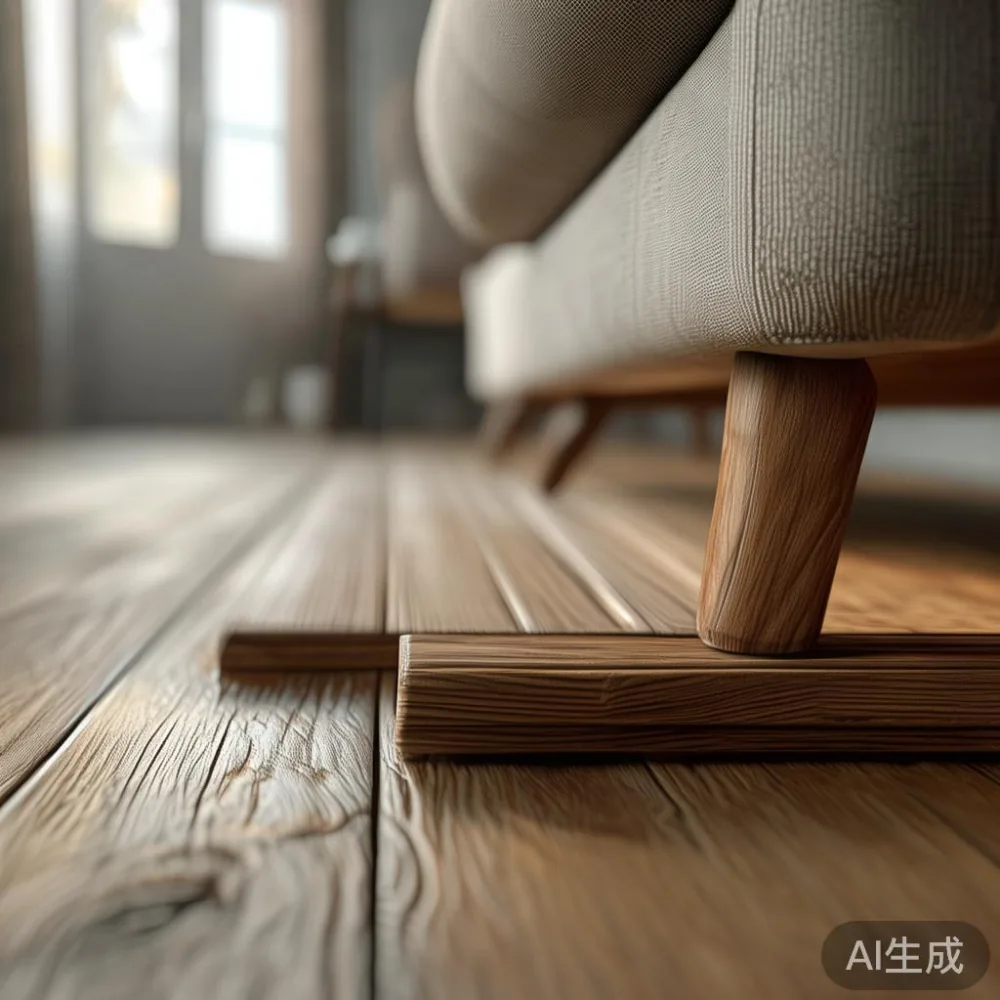
How do you judge a sofa you cannot physically sit on?
You judge it on paper and on specification. Every measurable detail that affects comfort can be read from a product sheet if you know what to look for. Seat depth, seat height, back height, arm height, frame material, suspension type, foam density, and density are all numbers a responsible supplier publishes. If a retailer hides them, treat that as a signal.
Seat depth is the single most common mistake I see Singapore buyers make, especially for HDB three-seaters where the average living room is 3.2 m to 3.8 m wide. A seat depth of 58 cm to 60 cm suits most adults for upright sitting and reading. A seat depth of 63 cm to 66 cm suits taller users who like to curl their legs up or who prefer a lounge-style recline. Anything beyond 68 cm becomes a chaise territory and only works if your room can spare 95 cm to 100 cm behind it for circulation. In a 4-room HDB with a 2.6 m walkway between the TV wall and the sofa back, you want 60 cm depth, not 66 cm.

Seat height is the next number. Standard Singapore comfort sits at 42 cm to 46 cm from the floor. If you are above 175 cm, target 45 cm to 47 cm so your knees do not push upward. Below 162 cm, target 41 cm to 43 cm so your feet plant flat. Back height matters for neck support — 45 cm to 55 cm measured from the seat is the comfortable range for everyday TV watching. Anything below 40 cm becomes a bench with cushions, which is a different product category.
Arm height should sit 18 cm to 22 cm above the seat cushion. Lower than that, and the arm becomes useless as an elbow rest. Higher than that, and short users feel hugged awkwardly. I have watched Cheryl try three different arm heights in twenty minutes; the 20 cm arm was the only one her shoulders relaxed on.
Is American sofa worth it for a Singapore HDB?
This is a question I get from at least one buyer a week. The answer depends on three things: scale, suspension, and corridor geometry. American sofa silhouettes tend to run deeper (66 cm to 72 cm), wider (per seat, 90 cm to 105 cm), and taller (back heights of 60 cm to 75 cm) than the compact European or Japanese proportions most HDB flats were designed around. If your living room is under 14 sqm, an American three-seater at 230 cm to 250 cm wide will dominate the space and leave you with under 70 cm of walkway behind the coffee table.
If your living room is over 18 sqm — typical for newer Punggol or Tengah five-room flats — an American profile works, and the trade-off pays off in two ways. First, the deeper seat allows genuine lounging, which a 58 cm Asian-proportioned sofa cannot. Second, the higher back supports the head when reading or watching films, which a 40 cm bench-back cannot. If you are asking is American sofa worth it for an HDB, the honest answer is: worth it in scale only if your room width is 3.4 m or more and your TV-to-sofa distance is at least 2.4 m. Anything tighter, and a compact three-seater at 200 cm to 210 cm will look better and breathe better.
Suspension is the hidden American advantage. Most export-grade American sofas use sinuous S-springs or eight-way hand-tied springs, both of which outlast elastic webbing by a wide margin. A solid wood sofa frame in ash, oak, or beech — kiln-dried to 8–12% moisture content — will not warp in Singapore's 80% average humidity, provided the factory has stored it in a climate-controlled warehouse for at least 30 days before crating. MIDHILL's frames, for instance, are dried in Foshan for 60 days before assembly, then crated with silica desiccant packs. That kind of detail is what separates a sofa that lasts ten years from one that cracks at the joints in year three.
What specs protect you when a return policy has to do the work?
A return policy is the cushion that catches you when judgement fails. In Singapore, the Consumer Protection (Fair Trading) Act gives you statutory rights regardless of what a brand promises, but the brand-level return policy usually extends those rights with convenience. Read it the way you read a sofa spec sheet — for the numbers, not the adjectives.
Look for four numbers. The return window in days (14 is the standard, 30 is generous, 7 is tight). The restocking fee in percent (0% is fair, 15% is painful, 25% is punitive). The condition clause (must be unused, in original packaging, with no assembly) — this is the clause that voids most returns, so read it carefully. And the return shipping responsibility (who pays the roughly SGD 80 to SGD 220 pickup fee for a three-seater in Singapore). MIDHILL's 14-day return policy sits in the standard bracket for export-grade furniture, with no restocking fee on uninstalled pieces and the buyer covering return logistics — a structure I have seen echoed by most Foshan factories shipping direct to Singapore.
Translate those four numbers into a risk calculation. A SGD 2,400 sofa with a 0% restocking fee and free return shipping is in effect a 14-day test drive. A SGD 2,400 sofa with a 15% restocking fee and SGD 180 return shipping carries SGD 540 of downside if the sofa does not work out — that is 22.5% of the purchase price. Decide whether the spec sheet you cannot sit on is worth that risk.
This is also the point where a pre-purchase spec audit pays for itself. Before you click buy, ask the brand for: frame wood species and origin, moisture content at crating, joint type (mortise-and-tenon, dowel, or staple), suspension type and gauge, foam density in kg per cubic meter (a minimum of 28 kg/m³ for seat cushions, 22 kg/m³ for back cushions), and fabric Martindale rub count (30,000 rubs for light residential use, 50,000+ for heavy use or households with pets). If the brand cannot answer these in writing, the return policy becomes your only protection, and a return policy is a slow, expensive substitute for getting the sofa right the first time.
How to style American sofa in room without losing Singaporean proportion?
The trick is to let one piece do the visual heavy lifting. Pick either the sofa or the dining table or the wardrobe as the hero, and keep the other two quieter. In a 4-room HDB living room of roughly 16 sqm, an American three-seater in oatmeal linen with a 230 cm footprint pairs best with a slim-profile marble table at 110 cm by 60 cm and a low-slung solid wood TV console. The marble table gives you a hard-surface anchor that reads European without competing with the sofa's bulk, and the solid wood TV console grounds the wall in warmth.
If you want a stronger statement, run the American sofa against a French light luxury palette — soft greys, brushed brass legs, a single curved velvet armchair in dusty rose — and keep the dining table in pale oak with a thin 4 cm top. Avoid mixing a heavy American sofa with a heavy French provincial carved-frame dining set in the same open-plan space; the two silhouettes fight each other. For tighter rooms, a post-modern light luxury direction — slim brass legs on the sofa, a rounded-edged marble table, lacquered ribbed wardrobes — reads lighter and saves 15 cm to 20 cm of perceived footprint.
Rug sizing is the most common styling error I see. With an American three-seater, your rug should extend 25 cm to 30 cm beyond the sofa on the front and both sides, which means a 250 cm by 300 cm rug minimum. Anything smaller makes the sofa look like it is floating. In HDB living rooms where the rug has to coexist with a dining zone, consider a 200 cm by 290 cm rug that tucks partly under the front sofa legs and partly under the dining table — this visually merges the two zones without crowding either.
What about matching pieces — bed frame, dining table, wardrobe, nightstand?
If the sofa is the centrepiece, the rest of the room should fall into one of three directions: match the wood tone, match the metal finish, or match the silhouette language. Matching the wood tone is the easiest — pick a dining table and wardrobe in the same oak, ash, or walnut tone within a 10% shade variance. Matching the metal finish means brushed brass sofa legs, brushed brass wardrobe pulls, brushed brass dining table base. Matching the silhouette language means curved sofa arms pair with curved wardrobe corners, or straight-line sofas pair with shaker bed frames.
For buyers considering a light luxury bed vs Modern bed in the master bedroom, the decision often mirrors the sofa choice. A light luxury bed in pale velvet with a channel-tufted headboard at 130 cm to 150 cm height suits the same homeowner who picks a French light luxury sofa. A Modern bed in solid ash with a low 90 cm platform headboard suits the same homeowner who picks a Scandinavian-style or Japanese-proportioned sofa. The two directions should not mix in one home unless you are deliberately running a contrast story.
The bed frame material matters more in Singapore than in temperate climates. Solid wood bed frames in kiln-dried oak, ash, or beech handle humidity better than MDF or particleboard frames, which swell at the joints within two monsoon seasons. A solid wood bed frame paired with a slatted base (ideally beech slats at 5 cm to 7 cm width, with 3 cm to 5 cm gaps) will outlast a box-spring setup by years and breathe better in HDB bedrooms that do not run air-conditioning 24/7. Pair the bed with a two-drawer nightstand in the same wood species, and the room reads coherent without trying.
Wardrobes are the largest single piece in most bedrooms, so the style call matters. If you are asking how to style light luxury wardrobe in room, the rule is to keep the wardrobe quieter than the bed. A floor-to-ceiling wardrobe in pale taupe laminate, with slim vertical brass pulls and no visible hardware, lets a more expressive bed or sofa take the visual lead. Conversely, if the wardrobe is the statement piece — say, a fluted glass-front wardrobe with a brass frame — keep the bed low, the nightstand small, and the bedding monochrome.
Dining tables for HDB flats should sit four to six on a 140 cm to 160 cm rectangular top, or four on a 110 cm to 120 cm round marble table. Marble table tops in Carrara or Calacatta run 22 kg to 28 kg per square meter at 2 cm thickness, which means a 140 cm by 80 cm top weighs 50 kg to 60 kg before the base. Make sure your HDB floor can take that — most concrete HDB floors can, but older parquet floors may need a plywood sub-base to spread the load evenly over the four legs.
Japanese bed vs French provincial bed — which fits a Singapore master bedroom?
A Japanese bed runs low (35 cm to 45 cm platform height), narrow (90 cm to 140 cm width), and simple (no headboard or a thin 30 cm padded headboard). A French provincial bed runs tall (55 cm to 65 cm platform height), wide (150 cm to 200 cm), and ornate (carved headboard at 130 cm to 170 cm, scrolled footboard optional). The two styles suit very different Singapore bedroom footprints.
In a 12 sqm HDB master bedroom with a 2.8 m wall for the bed, a Japanese bed leaves 1.5 m to 1.7 m of clear floor space on each side and reads spacious. A French provincial bed in the same room consumes 30 cm to 40 cm more footprint per side and reduces the walkway to 1.1 m to 1.3 m — still functional, but the room feels tighter, and the carved headboard fights with any wall-mounted air-conditioning console or window grille above the bed.
In a 16 sqm master bedroom with a 3.4 m wall, the equation flips. A French provincial bed has room to breathe, and the height of the headboard frames the wall properly. A Japanese bed in the same space can look lost unless paired with a tall wardrobe or a high window. If you are deciding between Japanese bed vs French provincial bed, measure the wall behind the bed and the walkway clearance first. Style follows geometry, not the other way around.
French provincial for apartment living is more workable than its reputation suggests, provided you choose the apartment-scaled versions — narrower footboards, headboards under 150 cm height, and lighter painted finishes in ivory or soft grey rather than the heavy distressed-wood farmhouse look. The painted finishes also handle Singapore humidity better than raw carved timber, because the paint seal reduces moisture exchange at the wood surface.
What final questions should you ask the brand before checkout?
Five questions, in order. One: what is the crated weight and crated dimensions of the sofa, and will it fit through my HDB lift? Most HDB passenger lifts have an internal cabin of about 1.5 m by 2.1 m with a 1.1 m door, and a 1,000 kg to 1,600 kg load limit. A three-seater sofa crated typically runs 230 cm by 95 cm by 90 cm at 70 kg to 100 kg, which clears most lift cabins but not all corridor turns. Service lifts in older blocks may be smaller. Two: does the price include GST, and can the brand provide a GST invoice? Singapore requires GST registration at SGD 1 million turnover, but even smaller brands will register voluntarily if they ship to consumers. You want the invoice for warranty claims. Three: what is the actual warranty term in years, what does it cover (frame, spring, foam, fabric), and what is excluded? A 10-year structural warranty on the frame is the Foshan export standard. Lifetime refinishing, offered by makers like MIDHILL, is rarer and worth a premium of roughly SGD 200 to SGD 400 over a standard finish. Four: what is the lead time from order to delivery in Singapore? Most direct-from-Foshan brands quote 35 to 55 days including sea freight from Shenzhen or Guangzhou to Singapore, plus 3 to 7 days for last-mile delivery and installation. Add 7 to 10 days buffer for monsoon-season shipping delays. Five: who handles assembly, and is it included in the price? For sofas, assembly is usually minimal — attach the legs, position the cushions. For bed frames, dining tables, and wardrobes, assembly can be 30 to 90 minutes of work, and a few brands include white-glove assembly free above a spend threshold.
Once you have those five answers in writing, the return policy becomes a backup rather than a plan. That is the right way to use it. Cheryl eventually bought a 210 cm compact three-seater with a 60 cm seat depth, brushed brass legs, and a 14-day return window she never needed — because the spec sheet matched her body, her room, and her lift. That is the goal.