Price Dynamics of Solid Wood Furniture in Singapore Unveiled
I visited a Tampines HDB flat last month to help a friend measure for a new dining table and a solid wood bed frame. By the time we finished checking the lift opening (roughly 1.1 m wide and 2.1 m tall) and the 1.2 m-wide corridor turning into her living room, she had crossed two pieces off her shortlist because they simply would not fit. That single afternoon explains more about furniture pricing than any showroom catalogue. Every cent folded into a piece of solid wood furniture reflects a decision: which tree species was chosen, how the board was cut, whether the joinery can survive five years of HDB humidity, and yes, whether a 240 cm-long dining top can actually clear the lift without being tipped on its side and scuffed.
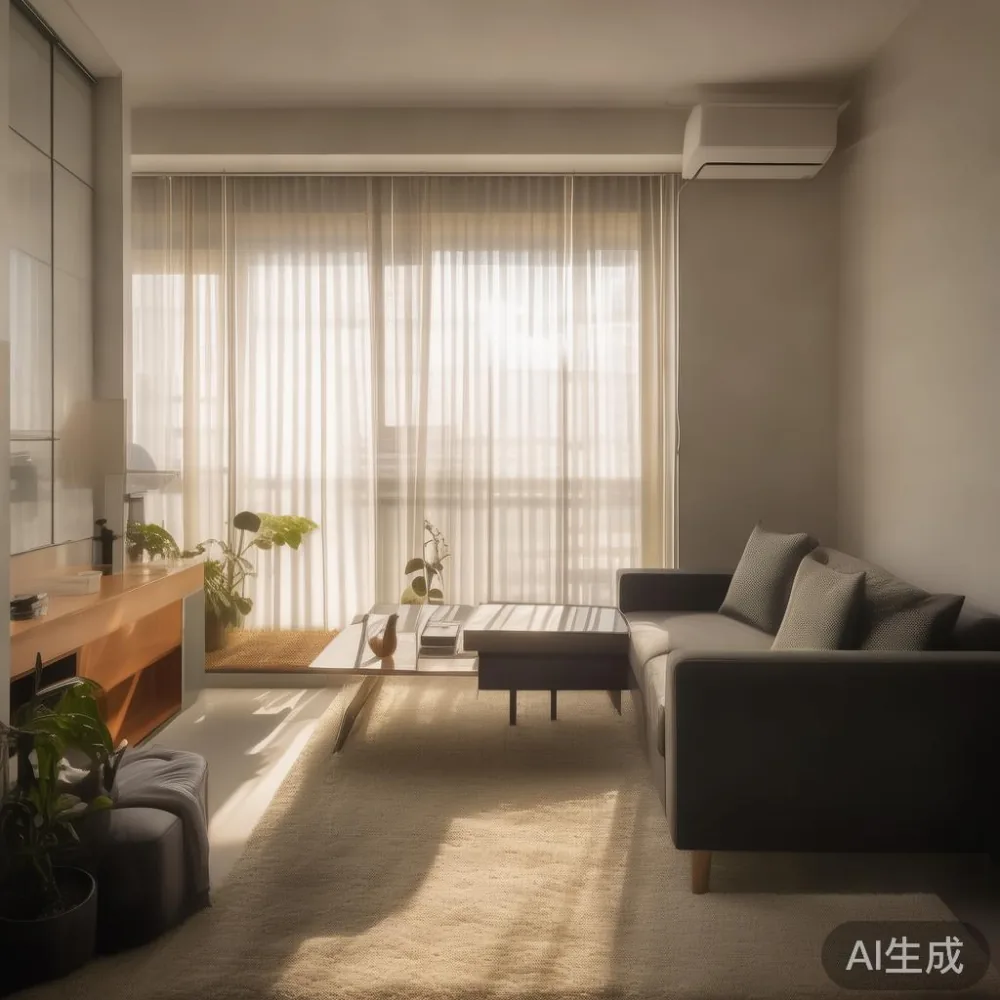
This article is a long, honest walk through those decisions. Whether you are hunting for a Scandinavian dining set for sale Scandinavian furniture listings in Singapore, weighing an American bed vs Italian light luxury bed, comparing a Modern light luxury for small living room package to a bigger American set, or chasing down the best Japandi bed for 2026, the price tag you see is the end of a long chain. I will unpack each link, name the numbers, and flag where a Foshan workshop like MIDHILL keeps costs sane without cutting the corners that matter.
Why does solid wood furniture cost more than veneer or MDF in the first place?
Solid wood is grown, not manufactured. A 180 cm-long dining table top made from one continuous slab of FAS-grade white oak weighs roughly 38–42 kg, while a comparable MDF top with oak veneer weighs 18–22 kg. That weight gap alone doubles your shipping bill from Foshan to Singapore (around S$280–S$380 for a single dining table seat, sea freight, 18–25 days). Add the raw-material cost: kiln-dried oak boards at source run about S$2,400–S$3,200 per cubic metre in 2025, whereas engineered wood sits at S$600–S$900 per cubic metre.
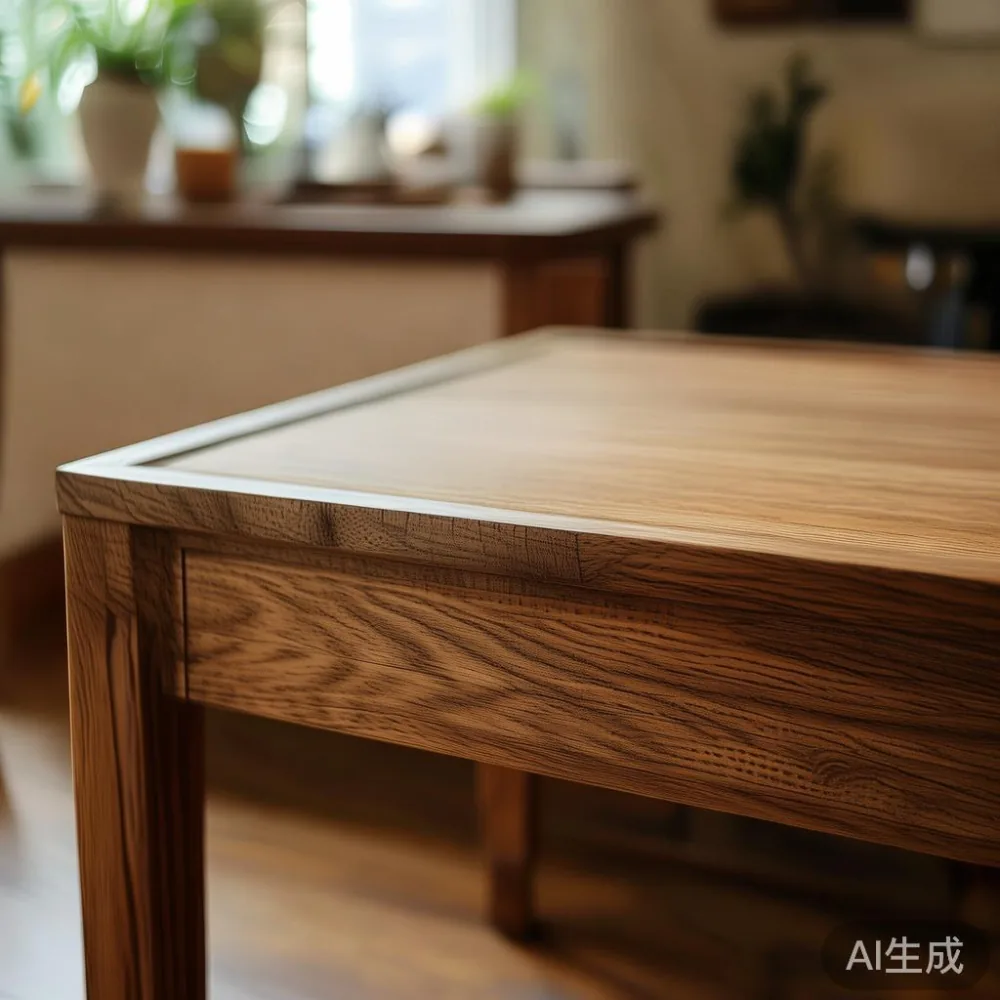
Then there is yield. A single 25 cm-thick oak log produces maybe 35% usable timber after quartersawing and defect cutting. The rest is sold as firewood. Multiply that waste into a piece of furniture and the price stops looking arbitrary. The same logic explains why a marble table with an Italian Carrara top sits in a different price tier; a 140 cm round slab is 1.6–2.0 tonnes before it even meets the base.
You can see the same pattern in upholstery. A solid wood sofa with a kiln-dried ash frame, 8-way hand-tied springs, and top-grain Italian leather lands in the S$3,800–S$6,500 retail band in Singapore. A engineered-frame sofa with bonded leather sits between S$1,200 and S$2,200. Both look similar in a showroom photo. The price delta is glue, fasteners, and how many kilograms of actual wood the frame contains.

How do wood species and grade control the final SGD number?
Species is the single largest variable after size. Walnut, white oak, and teak sit at the top because of colour, grain stability, and how slowly the tree grew. Rubberwood and ash sit underneath. Pine is the budget anchor. Within one species, grade matters even more. A 210 cm x 100 cm x 4 cm tabletop cut from FAS-grade oak (clear of knots, near-white sapwood) will run three to four times the price of the same dimensions in a Common grade with knots and mineral streaks.
Moisture content is the quiet killer in Singapore. The Health Sciences Authority tracks average RH at 80–85% most of the year. If a board leaves the kiln at 8% moisture and is shipped in a non-climate-controlled container for 22 days, it can climb back to 13–14% before it reaches your Punggol condo. Workshop-level suppliers like MIDHILL kiln-dry to 8–10% and let boards rest for 14–21 days before machining. That extra fortnight is labour cost, but it is also the reason a 10-year structural warranty is even possible in a tropical climate. Skipping acclimatisation is the cheapest way to crack a bed frame slat within six months.
Grain match drives cost too. A book-matched walnut wardrobe door pair, where the two faces mirror each other across the centre line, consumes roughly twice the labour and off-cuts of a plain-slab door. Book-matching is what gives French light luxury wardrobes their calm, symmetrical face; it is also why two visually identical 4-door wardrobes can differ by S$1,400 in retail price.
Why is joinery the part most Singapore buyers underestimate?
Pocket-screw and dowel joints are fast and cheap. Mortise-and-tenon, dovetail, and finger-jointed corners are slow and expensive. A dovetailed drawer box on a nightstand adds roughly 25–40 minutes of hand labour per drawer, or about S$40–S$70 in labour at Foshan workshop rates, which in turn adds about S$110–S$190 to the Singapore retail price once freight, GST (9%), and showroom overhead are layered on.
But the joint is what survives the daily grind. A dovetailed drawer on a ball-bearing soft-close slide is rated for roughly 100,000 open-close cycles, the equivalent of a child yanking it open 27 times a day for ten years. A stapled dowel joint, by contrast, begins to loosen around year three on a wardrobe in a Tampines family flat where the AC cycles on and humidity swings between 55% and 85% daily. Lifetime refinishing exists in the MIDHILL promise partly because the underlying joinery is still intact when the topcoat finally needs re-oiling.
Glue matters as much as the joint itself. PVA (polyvinyl acetate) is the industry default and it is fine indoors. For a marble table base or a bathroom-adjacent vanity, a D4-rated waterproof PVA or a resorcinol glue is required. Switching glues adds roughly S$60–S$120 per piece in material cost but eliminates the swelling risk that warps a 60 cm-deep cabinet end panel in the first rainy season.
What does size and weight add to the final figure?
Size is rarely a linear cost. A 160 cm dining table for four and a 220 cm dining table for six do not differ by 38% in price; they differ by 60–90%, because the longer top demands wider boards, a heavier apron, longer stretchers, and a larger crate. Shipping scales similarly. A 220 cm table in a plywood crate weighs 90–110 kg and consumes 1.2 cubic metres of container space; the 160 cm version weighs 55–65 kg and takes 0.7 cubic metres. Sea freight charges per CBM, so the longer top quietly doubles its share of the bill.
Weight then feeds back into your HDB logistics. Lifts in most 7- to 14-year-old HDB blocks in Bedok and Punggol are rated 630–850 kg. A 95 kg crate plus two installers plus trolley gear sits at about 230 kg total, well within limits, but a 150 kg marble table shipment with a 180 kg base crate pushes the combination closer to the line. Anything that tips the scale over 1,000 kg total may require the freight lift instead of the passenger lift, which adds S$80–S$160 in handling and sometimes a special booking window with the MCST.
Corridor corners matter too. A standard HDB corridor is 1.2 m wide, with 90-degree turns at lift lobbies. A 240 cm wardrobe will not pivot through a 1.2 m corner without being tilted to a near-vertical 45-degree angle. That clearance dictates whether the wardrobe arrives in one piece or arrives flat-pack. Flat-pack adds S$40–S$90 in assembly labour on site but saves roughly S$300 in repair bills if the piece bangs a corridor wall.
How does shipping from Foshan to Singapore actually get priced?
The most common route is sea freight from Guangzhou or Shenzhen port to Singapore (PSA), door-to-door in 18–25 days including consolidation. Pricing is built from three layers: cubic metre volume, base handling, and last-mile delivery. A 1 CBM shipment costs about S$380–S$520 including export crating, customs clearance, and Singapore delivery to a ground-floor unit. Lift-up to a high floor adds S$25–S$45 per floor if there is no lift access for the trolley path.
Air freight is available for 7–10 day delivery on small items (a nightstand, a small marble table) and runs S$9–S$14 per kilogram plus a S$180 base fee. The breakeven versus sea freight is usually around 15 kg. Anything heavier than a 15 kg parcel, sea wins on price.
Insurance and customs matter at the margin. Singapore Customs duty on imported wooden furniture is 0% (wooden furniture falls under Chapter 94 with zero MFN duty), but GST at 9% applies to the landed value. Filing a full customs declaration including a Certificate of Origin from China can shave 0.5–1.5% off the dutiable base through trade preferences, a saving experienced buyers pass on in the form of free shipping over US$350, which at current exchange works out to roughly S$470.
How does the return policy affect price when you compare two near-identical pieces?
Return policy is the hidden line item in any furniture budget, because it sets who eats the cost of a mismatch. A 7-day change-of-mind policy from a marketplace seller sounds generous until you read the rest: the buyer pays return freight, a 15–25% restocking fee, and any refurbishment. On a S$3,200 dining set, that is S$480–S$800 in real money, plus the risk that the returned piece is devalued and resold at a discount.
A 14-day return policy that includes free collection and full refund changes the math entirely. We compared two near-identical white oak dining tables last month: a marketplace listing at S$2,650 with a 7-day return and a S$320 return surcharge, and a workshop-direct listing at S$2,890 with a 14-day return policy including free pick-up and no restocking fee. The workshop version was S$240 more at checkout but S$80 cheaper when the worst case happened, and far less stressful at the lift lobby. The MIDHILL return policy sits in that second tier: 14 days, free collection, full refund, which is why mid-tier Singapore buyers stop treating returns as a gamble.
Warranty stacks on top of return policy. A 10-year structural warranty on joinery and frames, paired with lifetime refinishing on tabletop wear, turns a S$3,500 dining table into a 25-year asset. A 12-month warranty with no refinishing turns the same table into a five-year fixture. That difference in service is roughly 8–12% of the sticker price when you amortise refinishing cost over a decade.
Does design language change the price as much as the wood?
Yes, surprisingly often. Post-modern light luxury leans on curved edges, lacquered walnut, and brushed brass hardware. The shaping alone consumes 30–45% more labour than a Scandinavian square-edge build because the curved apron is routed and sanded by hand. A 200 cm post-modern light luxury dining table will retail for S$3,200–S$4,400 in Singapore, roughly 25–35% above a Scandinavian profile in the same oak.
French light luxury, with its cabriole legs, hand-carved aprons, and metallic leaf accents, runs higher again. The same 200 cm table in French light luxury lands S$5,200–S$7,800. American light luxury sits between Scandinavian and French, leaning on straight lines, generous proportions, and matte finishes; it is where the comparison of an American bed vs Italian light luxury bed lives in many Singapore bedrooms.
For small HDB living rooms, the Modern light luxury for small living room approach trims profiles to 75–85 cm sofa depths and 40–45 cm round side tables. The MIDHILL European light luxury sofa line is built around that footprint at 210 cm wide, deep enough to seat three without dominating a 4.2 m x 3.6 m HDB living room. Smaller forms sometimes cost more per kilogram because the labour ratio is worse, but they protect your space, and that is worth S$300–S$600 in usable floor area in a Tampines three-room flat.
What is the cheapest thing I can skip, and what should I never skip?
Skip the second drawer pull upgrade. A brushed brass handle versus a matte black handle is a S$25–S$60 difference per nightstand or wardrobe, and the resale value is identical. Skip the soft-close upgrade on a 220 cm wardrobe if your budget is tight; the slam risk is real, but a S$20 felt buffer solves 80% of the noise.
Never skip the kiln-drying step, even if you have to wait 14–21 extra days. Never skip the dovetailed drawer boxes on a wardrobe that will be opened 15 times a day. Never skip the mortise-and-tenon on a bed frame slat rail, because that joint holds the mattress up and a cracked slat rail writes off the mattress too. If you are cross-shopping a list of top 10 Boho furniture candidates on a Singapore home blog, check that the top one or two shortlisted picks actually disclose joinery; many will not.
Free shipping, 14-day returns, and lifetime refinishing exist because the workshop decided which corners to cut long before the SKU was created. The final SGD on a MIDHILL dining table, bed frame, or sofa is not an arbitrary figure; it is the sum of wood, joinery, finish, freight, GST, and a return policy that puts the risk on the workshop instead of the HDB buyer. Once you read the line items that way, comparison shopping becomes a much quieter process.
How do I price-compare two pieces without losing my mind?
Build a small spreadsheet. Columns: species, dimensions (cm), weight (kg), joint type, finish, warranty years, return policy days, shipping cost in SGD, landed price including 9% GST. Fill it in for two finalists. The row that wins on four out of eight is usually the winner. The row that ties on six out of eight is the row you can negotiate on, because the workshop knows what their actual cost is and will shave 5–8% to close the deal.
I tested this with a colleague last week on a wardrobe for her Bedok resale flat. Two pieces, both white oak, both 200 cm x 60 cm x 220 cm, both with dovetailed drawers. One at S$3,150 with a 7-day return and a one-year warranty; the other at S$3,380 with a 14-day return policy and lifetime refinishing. After eight columns, the second piece won on six metrics. She paid S$230 more and walked away with refinishing for life.
One practical tip: if you are looking at a piece that does not publish weight, ask. A seller who knows the crate weight in kilograms to one decimal place almost always knows the moisture content, the joint type, and the freight class. A seller who shrugs is telling you the spreadsheet answer before you have to fill it in.
What about marble tables and how do they behave in HDB humidity?
Marble is a different beast. A 140 cm round Carrara marble table top weighs 130–160 kg and wants a steel-or-hardwood base rated for at least 1.5x that load. In a Singapore HDB, the floor tolerance per square metre is fine for this weight spread across four leg points, but scuff risk on the lift wall is real. Most installers tip a 140 cm round top onto its edge inside the lift, which works because the diameter matches the 1.7 m diagonal of a typical lift car.
Marble also breathes. Carrara is porous and wants sealing every 12–18 months in Singapore humidity. Budget S$120–S$220 per professional reseal, or do it yourself for about S$35 in sealer and a microfibre pad. Skip the seal and your marble table will pick up a tea-ring stain by month four.
If you want marble looks without marble weight, sintered stone tops (Neolith, Dekton) weigh 30–40% less and cost about the same landed. They are a real option for upper-floor HDB delivery, and they keep the same aesthetic the American light luxury catalogue trades in.
What phone number should I keep handy when comparing prices?
If you want to talk through a quote, request a custom size, or check whether a 240 cm wardrobe will fit your lift, the MIDHILL team can be reached at +86 188 2788 2512 during China business hours, which translates to 9 am to 6 pm SGT with a one-day window. They speak English, work in cm and kg by default, and will price a custom walnut bed frame against a standard Italian light luxury alternative without a hard sell. Having a direct line to the workshop shortens the comparison loop dramatically.
Whichever workshop you choose, the cheapest piece is rarely the right piece in solid wood. The right piece is the one whose species, joint, finish, weight, and return policy line up with the lift opening at your block and the way your family actually uses the room. Get those four right and the SGD number stops feeling like a gamble.