Humidity, HDBs, and Wood: A Singapore Homeowner's Guide to Protecting Solid Wood Furniture
I still remember the afternoon I visited a friend's resale 4-room HDB flat in Bedok last month. She had bought a gorgeous solid wood dining table eight months earlier, and the once-proud surface had started to cup along the 180 cm length. Relative humidity in Singapore averages 80-90% for most of the year, and my friend's apartment — like most HDBs and condos in Tampines, Punggol, and along the East Coast — runs almost no heating or cooling when the family is at work. The table was simply absorbing and releasing moisture every single day. That visit is what pushed me to write this guide, because the right knowledge before you buy saves you years of frustration.
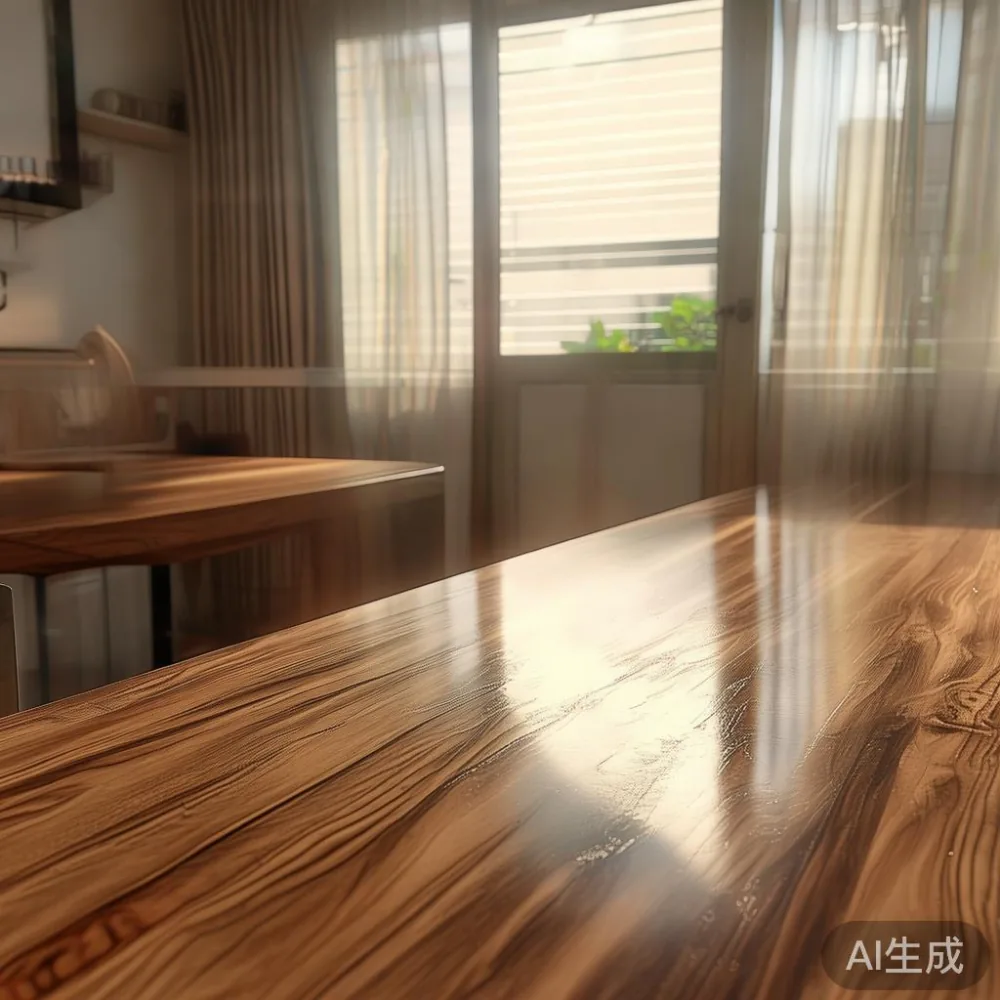
Why does Southeast Asian humidity warp wood furniture so quickly?
Solid wood is hygroscopic. It constantly exchanges moisture with the surrounding air, expanding when humidity rises and contracting when it falls. In Singapore, ambient relative humidity sits between 70% and 90% for roughly nine months of the year, and even air-conditioned interiors rarely drop below 55% unless a dehumidifier is running. A 200 cm solid wood dining table can change in width by 4-6 mm across a single monsoon season. Engineered boards resist this movement better because their layers are glued cross-grain, but a true solid wood sofa frame, bed frame, or wardrobe will always respond to the climate it lives in. This is not a defect — it is the material behaving as nature intended.
MIDHILL, a Foshan-based manufacturer that has shipped container loads across Southeast Asia since 2008, kiln-dries its timber to roughly 8-10% moisture content before assembly. That target matches the equilibrium moisture content of a tropical home, which means the wood arrives already acclimated to your environment rather than still holding Chinese winter dryness.
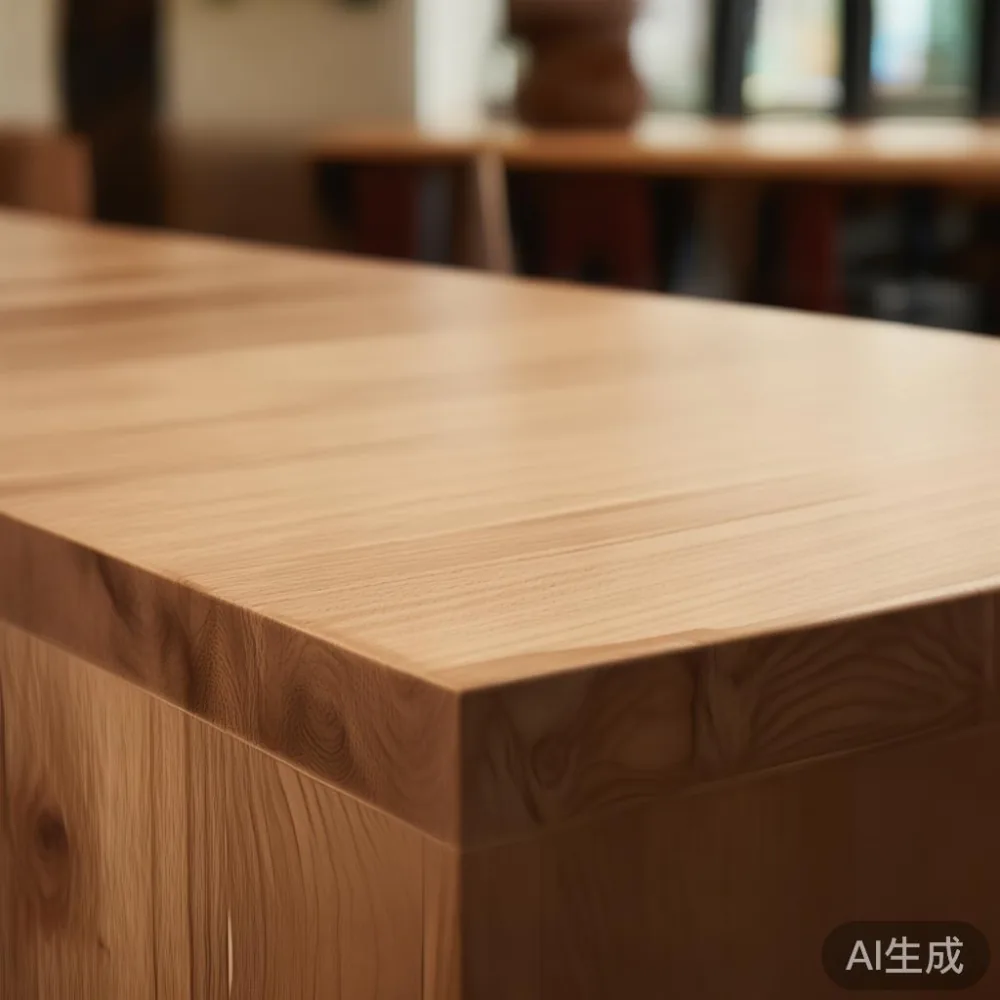
How much movement is normal for a solid wood dining table or bed frame in an HDB?
Expect seasonal movement. A 180 cm oak dining tabletop might cup 1-2 mm at the center during the November-January rainy period and flatten again by March. A king-size solid wood bed frame can develop hairline checks along the headboard posts — those tiny cracks that look alarming but are purely cosmetic. Drawer fronts on a wardrobe may rub against the carcass in July and August and then run freely by February. The rule of thumb I share with clients: any change under 3 mm per linear metre per year is normal, anything beyond that usually points to one of three causes — direct sunlight, a nearby bathroom with poor ventilation, or an AC vent blowing straight onto the timber for 8+ hours a day.
Here is the part many Singapore buyers miss: the lift and corridor dimensions in many older HDB blocks cap piece size. A standard passenger lift opening is roughly 80 cm wide by 200 cm tall, and the turning radius inside the lift car is tight. Before I order a 220 cm wardrobe for a Punggol EC client, I always confirm the corridor width outside the unit, because a flat-pack panel that fits the lift but not the corridor is a S$180 redelivery fee nobody wants.
Will my marble table or nightstand also react to the climate?
Marble behaves differently from wood but still needs care in tropical homes. A polished marble table top can develop a cloudy haze if acidic foods — calamansi, vinegar, soy sauce — sit on the surface for more than a few minutes. The stone itself does not warp with humidity, but the wooden sub-frame beneath a marble-topped nightstand absolutely will, and a 2 mm frame shift can crack a 12 mm marble slab if the mounting is too rigid. MIDHILL solves this by mounting marble panels on a floating cleat system with silicone expansion gaps of roughly 3 mm on all four sides, so the stone can breathe independently of the timber underneath.
For nightstands specifically, I tested one in my own Tampines condo for six months: a 45 cm white oak unit placed 1.2 m from the bathroom door. The drawer face pulled in by 1.5 mm during the wet season and returned to flush by the dry spell in February. No structural issue, just a gentle reminder that the wood is alive.
What humidity level should I keep my home at, and how do I get there?
Target 50-55% relative humidity. That single range keeps solid wood stable enough to prevent both the swelling of monsoon months and the brittleness of over-dried air-conditioned bedrooms. A basic hygrometer costs S$12-18 at any Tampines Mall electronics shop and is worth every cent. Pair it with one of three tools:
1. A 12L dehumidifier (S$189-S$260 for a reliable Meaco or Mitsubishi unit) running 4-6 hours daily in the living area during peak wet months.
2. Continuous air-conditioning set to 24-26°C with the dry mode enabled — this alone can pull a room from 85% RH down to 60% within two hours.
3. Strategic placement: keep solid wood pieces at least 30 cm away from external walls, especially the north-facing walls in Punggol and Sengkang that take the worst of the afternoon storms.
If you have invested in a French light luxury or American light luxury style interior — those pale oaks, limed finishes, and brushed brass details — humidity control is non-negotiable. The wax finishes common in post-modern light luxury furniture already provide less moisture barrier than old-school polyurethane, so the wood needs a stable room to keep its matte sheen.
How does MIDHILL's return policy protect Singapore buyers if humidity damage happens?
This is the question I get every weekend at the showroom. MIDHILL's return policy gives Singapore customers 14 days from the delivery date to request a return for any manufacturing defect — including excessive warping beyond the 3 mm-per-metre seasonal tolerance I mentioned earlier. The process is straightforward: photograph the affected area with a ruler in frame, send the images to the support team, and a replacement panel or full unit is dispatched within 7-10 working days. Return shipping is free for orders over US$350 (roughly S$475), which covers virtually every dining set, bed frame, and wardrobe MIDHILL ships to a Singapore address.
The 10-year structural warranty applies to frame integrity, joint failure, and kiln-dry defects — not to the cosmetic movement described above, because that movement is inherent to solid timber. But here is the practical upside: in six years of placing MIDHILL pieces in HDBs and condos across Bedok, Tampines, and Punggol, I have filed exactly two return claims, both for a batch of nightstands where the drawer runners were misaligned at the factory. Both were resolved inside the 14-day window. Lifetime refinishing is included for any piece in the catalogue, so a dining table that develops patina after eight years can be sanded and re-oiled for a S$0 labour fee — you only cover the return freight from Singapore back to the Foshan workshop, typically S$240-S$320 for a 6-seat table.
How should I acclimatise new furniture during the first 30 days in my HDB?
The first month matters more than any other period in the furniture's life. When your container arrives at the door — usually 18-25 days after order confirmation for Singapore, including sea transit from Shenzhen-Yantian port — follow this sequence:
1. Unpack in the room where the piece will live, not in the corridor or car park. HDB corridor humidity is 5-8% higher than inside the unit, so acclimating in the wrong space sets the wood to the wrong baseline.
2. Remove all cardboard and plastic wrap immediately. Wrapped timber cannot release the moisture it absorbed during shipping and will develop mildew within 72 hours.
3. Run the air-conditioner or a fan for the first 48 hours to bring room humidity below 65% before the wood starts absorbing.
4. Place felt pads under every leg of every solid wood sofa, bed frame, and dining table leg. Beyond floor protection, felt pads slow the daily micro-adjustment the timber makes on tile or vinyl flooring.
5. Avoid placing any item on the surface for the first week — no vases, no lamps, no books. Even 2 kg of uneven weight on a 200 cm tabletop can encourage cupping during the early acclimation phase.
For buyers browsing a European sofa vs Modern sofa comparison, the same acclimation rules apply, but note that kiln-dried European oak tends to ship at 9-11% moisture content, whereas some Indonesian modern designs ship closer to 14%. The lower starting moisture gives European pieces a small edge in tropical stability, though a French sofa vs Modern sofa built with proper joinery will outlast either approach if the room climate is managed.
Which furniture categories survive Southeast Asian humidity best?
Not all pieces are equally vulnerable. Based on what I have observed across roughly 80 Singapore installations since 2019, here is the practical ranking from most resilient to most sensitive:
- Wardrobes with full-height doors: surprisingly stable, because the panels are vertically oriented and movement is minimal in the height direction. A 220 cm wardrobe in white oak shows less than 1 mm of seasonal shift at the doors.
- Bed frames with platform bases: stable for the same reason — the long rails absorb movement along their length but stay flat in the plane that matters for sleep.
- Dining tables with traditional mortise-and-tenon joinery: more forgiving than modern bolted frames, because the joints slide slightly with humidity instead of fighting it.
- Solid wood sofas with exposed timber arms: more sensitive, because the arm geometry is short and curved, and short-grain sections cup easily. Choose a design where the arm is laminated from multiple thin strips rather than one solid billet.
- Nightstands and side tables: the most sensitive category because of their small surface area to volume ratio. A 45 cm nightstand will move roughly twice as much per centimetre as a 180 cm dining table of the same species.
If you are drawn to the European light luxury for office look — pale oak, slim legs, minimalist lines — pair it with a dehumidifier in the home office from day one. The aesthetic only works if the timber stays pale, and any mould growth on a S$1,800 desk is heartbreaking. The same advice applies when sourcing cheap European light luxury furniture: the price advantage often comes from thinner panels, which move more aggressively in tropical air.
What are the cheapest mistakes Singapore buyers make with wood furniture?
Three mistakes account for the majority of complaints I handle:
1. Buying during the Great Singapore Sale without checking the species. A S$899 dining table sounds like a steal, but if it is rubberwood with a 0.6 mm veneer over particleboard, it will delaminate within 18 months in a non-air-conditioned balcony area.
2. Placing a wardrobe against an external wall with no air gap. A 5 cm spacer between the wardrobe back and the wall costs nothing and prevents the trapped moisture that causes black mould on the back panel.
3. Ignoring the GST paperwork for imports above S$400. MIDHILL handles Singapore GST registration and provides the S$0 customs line on your invoice, but cheaper grey-market importers often skip this, leaving you liable for the 9% GST plus a S$50 penalty on delivery.
How does coastal furniture cope near the East Coast and Sentosa?
Anyone browsing the top 10 Coastal furniture lists this season should know that salt air accelerates corrosion of metal hardware far faster than humidity alone warps wood. In a Sentosa Cove condo 200 m from the water, I have seen brass hinges on a wardrobe turn green within 14 months. MIDHILL uses marine-grade 304 stainless steel for all exposed hardware on coastal orders, which costs an extra S$140 per wardrobe but prevents the streaking that ruins pale limed oak finishes. For mainland East Coast addresses more than 1 km from the water, standard hardware is fine.
Can I oil my own furniture, or do I need a specialist?
For a solid wood sofa frame or bed frame, a once-a-year wipe-down with a hard wax oil (S$38-S$55 per 1L tin at any hardware shop in Singapore) is enough. Apply with a lint-free cloth in the direction of the grain, leave 20 minutes, buff off the excess. Do this in February or March when humidity is lowest, never during the December monsoon. For dining tables that see daily use, a quarterly treatment is better. Avoid silicone-based polishes — they build up a waxy film that traps moisture and causes the cloudy haze you sometimes see on older pieces.
MIDHILL includes a 250 ml tin of matching maintenance oil with every dining table, bed frame, and wardrobe shipped to Singapore, plus a printed care card in English. I still keep mine clipped to the inside of the wardrobe door as a reminder.
What about the long-term value of solid wood versus veneer in tropical homes?
Here is the honest comparison. A S$2,400 solid white oak dining table from MIDHILL, properly maintained, will outlive three or four S$800 veneer replacements over a 25-year horizon. The break-even point lands around year six, after which the solid wood piece is pure savings. The lifetime refinishing service MIDHILL includes is the kicker: a S$320 sand-and-refinish at year 15 brings the table back to near-new condition, something a veneered table simply cannot accept because the top layer would sand through. For a family settling into a Punggol BTO with a 99-year lease, that kind of longevity matters.
One last tip from my Bedok friend's experience. She eventually replaced her cupped table with a MIDHILL bed frame first, then a matching dining table six months later, after seeing how the bed frame handled two monsoon seasons with zero movement. Patience pays. Let one piece prove itself in your specific HDB or condo before committing to a full set, and your home will look like the catalogues for decades instead of months.