Return Policy: Veneer or Solid Wood? A 5-Year Cost Comparison for Singapore Ho
Choosing furniture for a Singapore HDB flat or condo is rarely a question of appearance alone. A dining table must pass through a 90 cm doorway, turn through a 100 cm lift lobby, and still fit a corridor where two neighbours share the space. A wardrobe must suit a bedroom wall measuring 240 cm, while a solid wood sofa needs to feel comfortable without overwhelming a 9 m living room. Price matters, but so do movement, humidity, repairability and the likelihood of returning or replacing a damaged item.

This comparison examines veneer and solid wood over 5 years. It uses representative Singapore pricing, including GST, and assumes a household replacing a dining table, bed frame, wardrobe and nightstand once during that period. The figures are planning estimates rather than quotations. Product dimensions, timber species, finishes and delivery conditions can change the final amount.
MIDHILL was established in 2008 and exports to more than 15 countries. Its 10-year structural warranty, lifetime refinishing service and 14-day returns policy make ownership costs easier to assess. Shipping is free above US$350, though the final bill for a Singapore order should be confirmed in SGD. For residents of Tampines, Bedok or Punggol, the return policy is especially useful because a full-size piece that cannot pass through a lift should be documented and raised promptly after delivery.
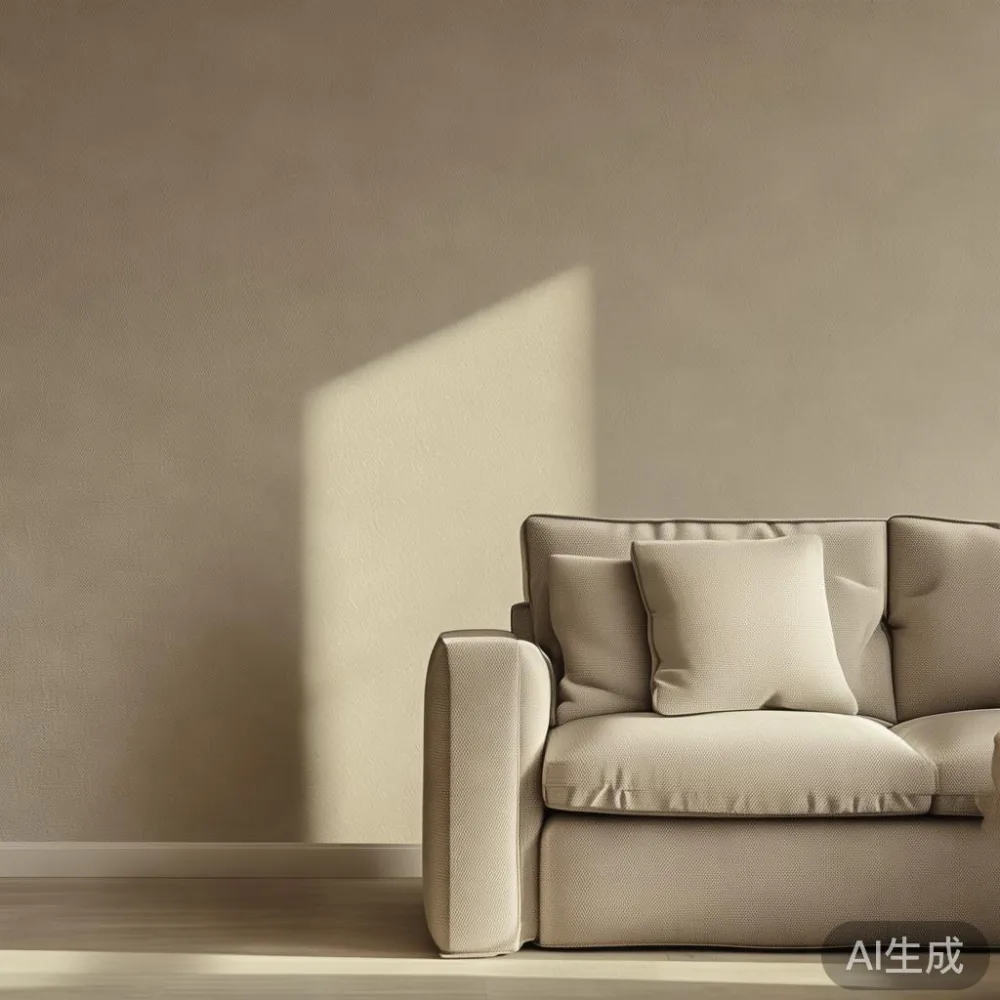
What is the real difference between veneer and solid wood?
Veneer is a thin layer of real timber, usually 0.6 mm to 1.2 mm, bonded to a panel or engineered core. A 180 cm dining table might use several veneered panels, each approximately 25 mm thick. Solid wood refers to structural timber used across the visible surface, although the underside and internal supports may include other materials.
That distinction affects more than the product label. Veneer preserves the grain pattern and colour of a selected log across a large surface, but edge chipping can expose the core. Solid wood can be sanded and refinished at the damaged area, although old repairs may remain visible. Veneer may also use less timber All told, which influences purchase price and transport weight.
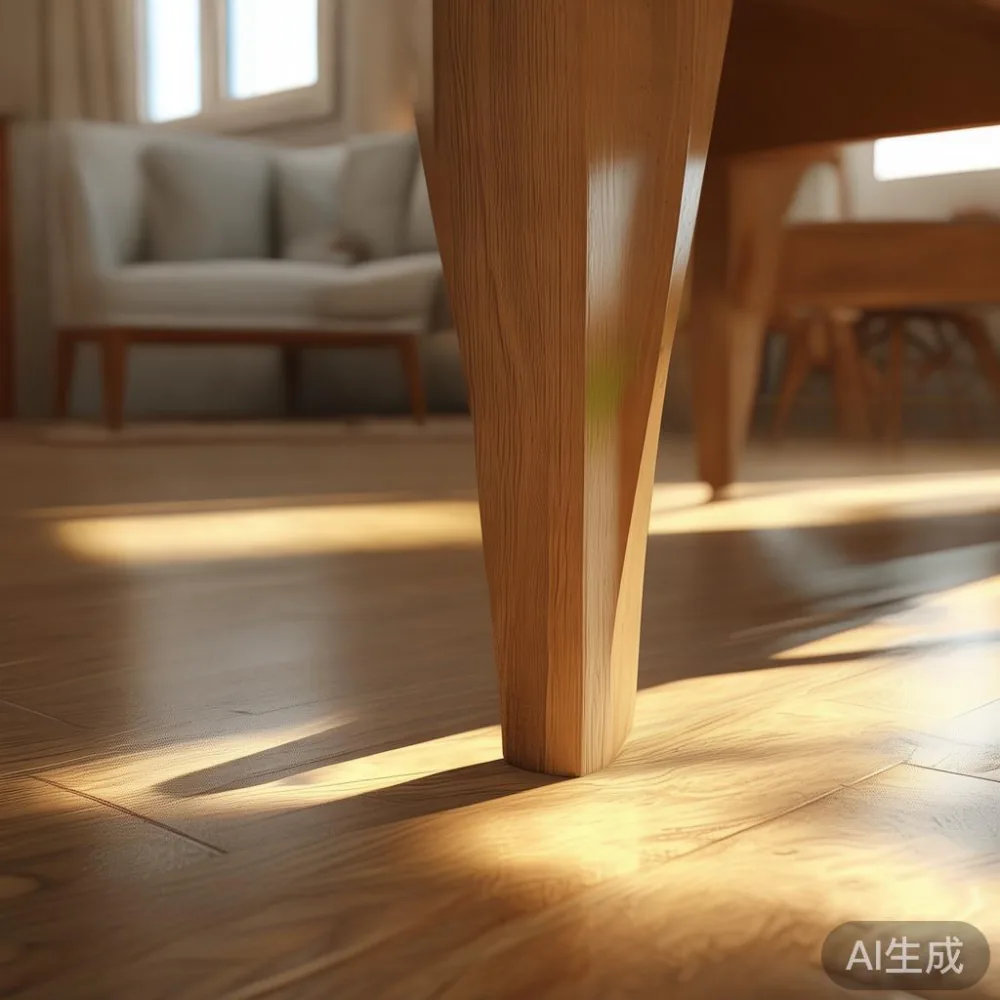
For a Singapore home, the standard 9% GST should be shown separately from the pre-tax price. GST registration and treatment can vary, so buyers should request a tax-inclusive quotation. A veneer dining table listed at SGD 1,450 before GST becomes SGD 1,580.50 after GST. A comparable solid wood dining table at SGD 2,250 becomes SGD 2,452.50.
Natural movement also differs. Solid oak, teak, ash and walnut expand and contract with humidity, commonly around 3 mm to 6 mm across a 100 cm width. Singapore conditions are not extreme like a tropical harbour, but air-conditioned rooms can still be much drier than adjacent corridors. A good supplier should explain movement, joint construction and seasonal care.
How much do veneer and solid wood furniture cost over 5 years?
The table below uses a representative package for one household: a dining table, bed frame, wardrobe, nightstand and occasional solid wood sofa or marble table accent. It includes initial purchase, 9% GST, estimated delivery, and realistic ownership costs over 5 years. Refinishing frequency is deliberately conservative; furniture does not automatically need refinishing every year.
| Item | Veneer package | Solid wood package | 5-year difference |
|---|---|---|---|
| 180 cm dining table | SGD 1,580.50 | SGD 2,452.50 | SGD 872.00 |
| 160 cm bed frame | SGD 1,143.00 | SGD 1,716.00 | SGD 573.00 |
| 180 cm wardrobe | SGD 1,626.00 | SGD 2,793.00 | SGD 1,167.00 |
| 45 cm nightstand | SGD 323.00 | SGD 427.50 | SGD 104.50 |
| 210 cm 3-seat sofa | SGD 2,180.00 | SGD 4,360.00 | SGD 2,180.00 |
| Delivery allowance | SGD 180 | SGD 240 | SGD 60 |
| 5-year care and repair allowance | SGD 240 | SGD 300 | SGD 60 |
The package totals approximately SGD 7,272.50 for veneer and SGD 12,289.00 for solid wood. The 5-year difference is SGD 5,016.50, or about SGD 1,003.30 per year. The higher figure includes one wardrobe replacement in year 3 because of a moving accident, estimated at SGD 1,626 for veneer and SGD 2,793 for solid wood.
Without that replacement, the difference falls to SGD 3,849.50 over 5 years, or SGD 769.90 annually. This is where the construction method and warranty matter. A 10-year structural warranty can reduce the risk of paying for frame failure during years 1 to 5, while lifetime refinishing limits the cost of restoring a scratched solid wood dining table. Veneer pieces with chipped edges may need panel replacement rather than local sanding.
Delivery is not an afterthought in a high-rise. A packed dining table may weigh 65 kg as veneer and 90 kg as solid wood. A three-seat sofa may arrive in cartons measuring 220 cm by 95 cm by 65 cm. If a Tampines lift opening is 90 cm wide and the internal car depth is 130 cm, turning geometry must be checked before dispatch. Bedok and Punggol owners should also confirm staircase turns and corridor clearance. An item that cannot enter the home is not cheaper once redelivery or return handling is counted.
Which material offers the lower total cost for a Singapore home?
Veneer generally offers the lower 5-year cost in this model, mainly because the starting price is lower and repairs are less likely to be attempted as owner refinishing. Solid wood offers advantages that a spreadsheet does not capture: visible repair history, the ability to refresh a surface, and a material character that many buyers value in a solid wood bed frame or dining table.
Consider the wardrobe. A 180 cm freestanding veneer wardrobe might cost SGD 1,490 before GST and weigh 78 kg. A solid wood version might cost SGD 2,570 before GST and weigh 104 kg. The veneer unit leaves SGD 1,167 more budget for a future replacement or a bedroom project. Yet its 25 mm panels are more exposed to impact during moving. The solid wood unit may tolerate repeated assembly better, provided the hardware and joints are sound.
The nightstand shows how scale changes the calculation. A 45 cm veneer nightstand at SGD 295 before GST costs SGD 321.55 after tax. A solid wood equivalent at SGD 390 before GST costs SGD 425.10. The annual difference is modest, but solid wood can be refinished after a watch or lamp leaves a mark. A 60 cm marble table adds another category: marble is not timber, and its brittleness, weight and seal maintenance should be compared separately from veneer or solid wood.
For interiors based on French light luxury or American light luxury, veneer can be specified with fluted oak, walnut-effect veneer and restrained brass hardware. In a compact HDB living room, the visual economy can be useful. The goal is not to imitate solid wood by pretending a panel is a solid slab; it is to select a stable, repairable construction for the room’s use and the household’s budget.
Should you buy solid wood if the purchase price is much higher?
A higher purchase price can make sense when the piece will be moved repeatedly, kept for more than 10 years, or used where visible surface repair has practical value. A solid wood dining table in a Punggol condo may be worth the extra SGD 872 if the owners value hand-finished edges and plan to refinish rather than replace it after 8 years.
The return period must be used properly. MIDHILL’s 14-day returns policy allows the buyer to inspect scale, finish, movement and delivery access. It is not a substitute for checking the actual layout. Measure the lift door, the corridor, the bedroom door and the turning space. Photograph each route. For a 200 cm bed frame, a folded package may measure 205 cm by 165 cm by 35 cm and weigh 48 kg for veneer or 67 kg for solid wood. If the lift car measures 210 cm deep, installation becomes a real question rather than an assumption.
Inspect the sofa under load too. Sit on every seat, test the reclining mechanism, check that the solid wood sofa frame has a central support, and look for gaps wider than 3 mm. For a marble table, inspect the underside for cracks and confirm that the packaged dimensions will fit the lift. A 120 cm round marble table may weigh 78 kg and arrive in a box 130 cm long, which is impossible to angle through an 85 cm doorway without removing the door panel in some conditions.
Those checks also support a fair return request. If the finish differs materially from the confirmed sample, the item is damaged in transit, or the supplier misstated the packed dimensions, the buyer should document the issue with photographs and delivery notes within the return period. Clear evidence makes the return policy workable and avoids turning an avoidable delivery error into a 5-year expense.
What should you look for when comparing a solid wood bed frame or dining table?
Start with the underside, back and internal structure rather than only the face. For a solid wood bed frame, look for mortise-and-tenon or dowelled joints, corner blocks and a centre support. A 160 cm queen-size frame may use 14 hardwood slats at 70 mm to 90 mm spacing, while a solid wood slat base should be rated for the intended load. Ask whether “solid wood” applies only to the visible parts and whether the structural warranty covers joint failure under normal residential use.
For a dining table, ask about the top construction. A solid timber top 25 mm thick can be refinished, but a 20 mm top may be more prone to cupping. Table height should normally be 73 cm to 76 cm for dining, while a bed frame is often 28 cm to 35 cm high for easier access in an HDB bedroom. A 90 cm clearance around the table may be needed for chairs, leaving a 2.7 m dining zone to 3 m wide for comfortable circulation.
Search phrases can help define a style, but construction evidence should guide the purchase. A buyer looking for the best Post-modern bed for 2026 may find tapered legs, softened corners and a low oak finish. A query for under 2000 Italian light luxury furniture may point toward a 45 cm nightstand or a compact solid wood sofa module rather than a full imported suite. These labels describe design direction, not timber performance or warranty quality.
Ask for a finish sample and care instructions. Matte finishes can show fingerprints; satin finishes can be more forgiving. Use a damp cloth, wipe spills within 30 minutes, and keep direct sunlight away from the panel. Maintain indoor relative humidity around 40% to 65% where practical. Avoid placing a veneer wardrobe against a damp exterior wall or directly beside an air-conditioning vent that repeatedly changes the surface temperature.
How do light-luxury styles affect the 5-year decision?
Style affects replacement probability. A post-modern light luxury bedroom with a sculptural solid wood bed frame may remain in place for 10 years, spreading its purchase cost over a longer period. French light luxury tends to use cream upholstery, pale oak, curved profiles and slim nightstands. A coordinated veneer wardrobe can work well here because the pattern is repeated across doors, while visible solid wood edges can add tactility where hands and knees make contact.
Scandinavian design often favours pale oak, ash or beech, with clean lines and generous spacing. Japanese-inspired interiors use low profiles, warm woods and a restrained number of objects. If you are comparing a Japanese sofa vs Italian light luxury sofa, the cost comparison must include comfort and dimensions. A Japanese-style three-seat sofa may be 200 cm wide with firm cushions, while a curved Italian-style sofa may be 220 cm wide with deeper padding and a higher frame. Both must fit the lift route and the room’s 240 cm to 300 cm usable wall length.
For the wardrobe, a useful design brief is how to style light luxury wardrobe in room. In Bedok, warm-white walls and a 180 cm wardrobe can be balanced with a slim mirror, brass-toned handles and a 45 cm nightstand. Avoid visual crowding in a room measuring 3.2 m by 3 m. The door swing needs about 60 cm clearance, while drawers need 75 cm to 90 cm of pull-out space.
Style also affects maintenance. Pale Scandinavian finishes reveal stains, while walnut tones show lighter scratches less clearly. Curved Italian seating catches dust in the crease between cushion and frame and is harder to refinish than a flat solid wood dining table. Japanese low seating may use removable covers that are easier to clean. Select the construction that suits how the room is used, not only how it appears in a catalogue photograph.
What did I learn after testing both approaches in real homes?
Last month I visited a colleague’s three-room HDB flat in Tampines to compare a veneer dining table with a solid wood replacement. The room measured 3.1 m by 2.7 m, and the lift doorway was 88 cm wide. The solid wood table had a 180 cm top and weighed 82 kg; the veneer table had the same external dimensions but weighed 61 kg. The lighter veneer package turned through the lift lobby more easily, although the solid wood frame required two installers and 20 minutes of careful rotation.
The more revealing test involved a 12 cm scratch. I placed the veneer sample with its face partly detached to simulate an edge chip; the pale core appeared immediately. The solid wood sample had a shallower mark, and after sanding and applying a matching lacquer, the repair was barely visible from 60 cm away. That does not mean solid wood is damage-proof. It means its repair route differs.
My colleague also measured the wardrobe delivery route. The 180 cm unit could enter the lift but its 88 cm diagonal carton made the final corridor turn difficult. The supplier redesigned the internal packaging before dispatch, reducing the carton depth from 62 cm to 48 cm. This avoided a return, but it shows why packed dimensions deserve the same attention as product dimensions.
For this household, veneer remained the more practical budget choice at SGD 1,626 including GST, while the solid wood option at SGD 2,793 offered better local repairability. Both could suit post-modern light luxury styling. The deciding factor was not prestige; it was how the family expected to move, cook, clean and use the room during the next 5 years.
Which option should you choose for the next 5 years?
Veneer is the stronger financial choice for many Singapore households when the comparison is limited to 5 years. The estimated package was SGD 7,272.50, against SGD 12,289.00 for solid wood. That gap of SGD 5,016.50 can absorb one wardrobe replacement, a delivery retry or a full room refresh without relying on credit.
Solid wood becomes more attractive when long retention, visible surface repair and an established refinishing service are priorities. It can also be appropriate for a focal solid wood dining table or bed frame in a condo where the owner accepts the higher purchase cost. For a short ownership horizon, compare the projected resale or continued-use value rather than assuming every solid wood piece will recover its premium.
Use the return policy as the final control before payment. Confirm dimensions, materials, finish, delivery days, GST and warranty in writing. Typical Singapore delivery after production is 30 to 45 days, though timber selection and peak periods can extend this to 60 days. Check the piece on arrival, keep packaging photographs, and report any damage within the 14-day return window.
For design research, the best Scandinavian sofa for 2026 may favour pale upholstery and clean oak framing, while the best Japandi bed for 2026 may use a lower silhouette and warm, tactile surfaces. Yet a beautiful category label cannot outweigh an impractical lift fit. Buy the construction that suits the home, budget and movement plan, then protect it with sensible care. That is how a five-year cost comparison becomes a sensible furniture decision rather than a short-term price comparison.