Cost Comparison: Veneer vs. Solid Wood for Singapore Homes
Choosing furniture for a Singapore home is rarely a matter of appearance alone. A solid wood sofa, dining table, bed frame, wardrobe, nightstand, or marble table must fit a HDB flat or condo without overwhelming the room, while also surviving humid weather, frequent moves, and changing family needs. The sticker price can look similar across two categories of furniture, yet the costs over 5 years may not be.

Veneer uses a thin layer of real wood applied to a manufactured board or engineered timber core. Solid wood is cut from solid timber components. That structural difference affects price, weight, repairability, resale appeal, and the practical experience of receiving and returning furniture. For buyers in Tampines, Bedok, and Punggol, delivery access matters just as much as the material: a 60 cm corridor and a 90 cm lift door can turn a showroom purchase into a difficult installation.
MIDHILL makes solid wood furniture for international buyers and offers a 10-year structural warranty, lifetime refinishing, free shipping above US$350, and a 14-day return policy. Its policies provide a useful reference point, but they are not a substitute for comparing the full ownership cost of veneer and solid wood over 5 years. This comparison uses realistic Singapore dollars, estimated dimensions and weights, and common household scenarios.
What is the real difference between veneer and solid wood?
Both materials can look convincing in photographs. Veneer is not automatically inferior, and solid wood is not automatically suitable for every room. The distinction lies in what sits beneath the finish and how the furniture responds to use over time.
A veneered wardrobe might use a 18 mm particleboard or plywood core with a 0.6 mm wood veneer. A comparable solid wood wardrobe may use 20–25 mm solid timber boards, depending on the design and species. Veneer can be lighter by roughly 15–30 kg for a three-door unit, which can help during delivery through a narrow HDB corridor. Solid wood generally feels heavier, offers more exposed material at edges, and can be repaired or refinished differently.
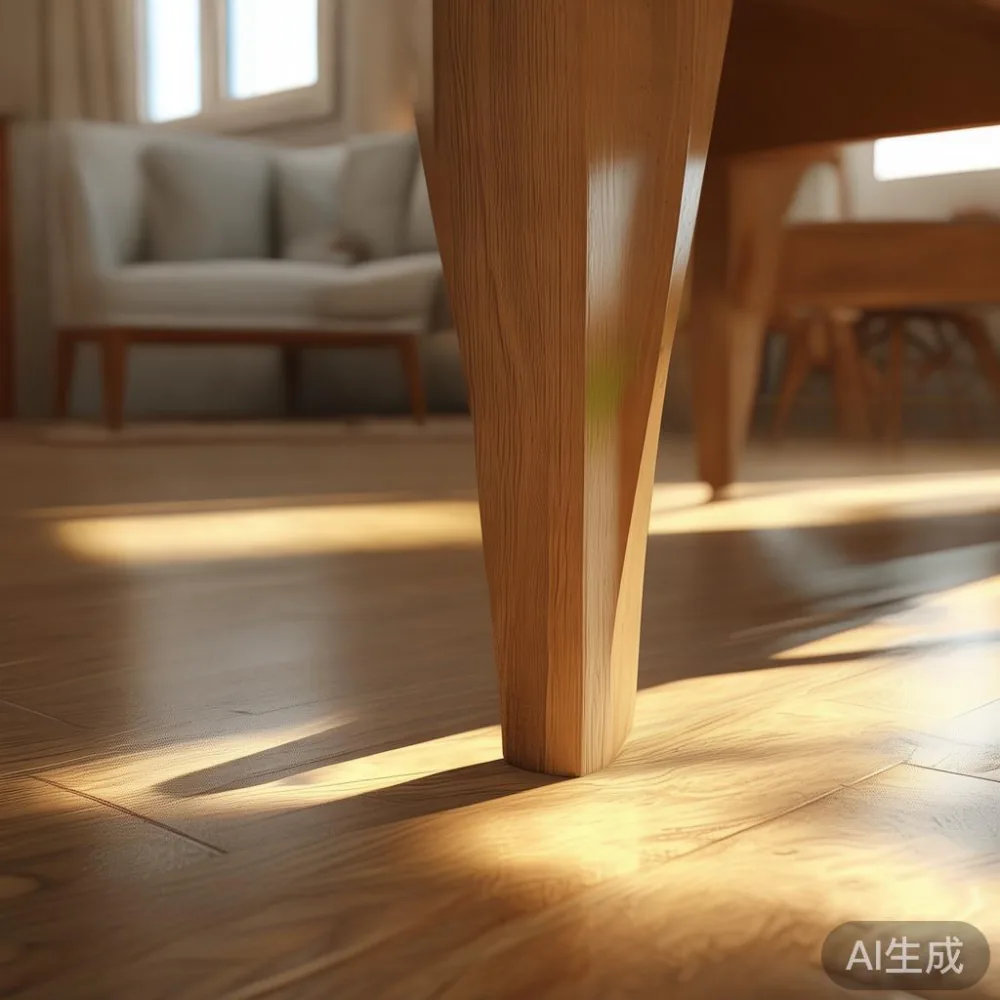
The finish matters. A sealed veneer surface may resist stains well, but a scratch that cuts through the veneer can expose the core. Solid timber can usually be sanded and refinished, although deep chips may need a filler. Veneer can also be repaired if the sheet is replaced, but matching grain and colour after years of sunlight is less predictable.
For Singapore, humidity is a normal operating condition rather than an exceptional event. Engineered cores can remain stable when properly sealed, but exposed edges, joints, and lifting doors deserve attention. Solid wood expands and contracts with humidity as well. Good ventilation, sensible placement away from air-conditioning outlets, and regular cleaning remain important for either material.
How much does a solid wood dining table cost over 5 years?
For a practical example, compare a 180 × 90 cm dining table seating six people. A quality veneered table in Singapore may cost SGD 1,200, while a solid wood version with comparable joinery may cost SGD 1,800. The higher solid wood purchase price is partly material, but it also reflects the mass and labour involved.
Here is a 5-year cost model:
Veneer dining table: SGD 1,200 purchase price, SGD 80 delivery, SGD 100 delivery insurance or lift handling, SGD 90 for 2 refinishing or repair sessions, SGD 80 for replacement fittings, and SGD 0 for expected refinishing. The total is SGD 1,550. If a major veneer repair is needed in year 4, adding SGD 300 brings the total to SGD 1,850.
Solid wood dining table: SGD 1,800 purchase price, SGD 120 delivery, SGD 120 for lift handling, SGD 150 for 3 protective-maintenance or refinishing sessions, and SGD 60 for replacement fittings. The total is SGD 2,250. If the table is sold after 5 years, an assumed resale value of SGD 600 is deducted, producing a net cost of SGD 1,650. The veneered table might resell for SGD 250, reducing its net cost to SGD 1,300 before the major repair, or SGD 1,600 with it.
This shows why the lower purchase price can still be sensible for a dining table that will be replaced within 5 years. It also shows why solid wood is not automatically the lower-cost choice when the table is well made and retained for a decade. A 45–55 kg solid wood table may require a two-person carry and careful measurement of the lift. A 30–40 kg veneered table is easier to manoeuvre through a Punggol HDB common corridor.
What does a solid wood sofa cost after 5 years of family use?
A sofa combines timber structure, upholstery, foam, fabric, and moving parts. A solid wood sofa does not have a meaningful resale advantage if its cushions or fabric have aged. For cost comparison, assume a three-seat model measuring 210 cm wide, 90 cm deep, and 82 cm high. The veneered version may weigh 55–65 kg; the solid wood version may weigh 70–85 kg.
A veneered solid wood sofa with quality frame construction might cost SGD 1,800. Over 5 years, allow SGD 150 for delivery, SGD 100 for lift handling, SGD 250 for upholstery cleaning and small repairs, and SGD 120 for replacement legs or brackets: SGD 2,420 total. A solid wood sofa priced at SGD 2,600 may add SGD 200 delivery, SGD 120 handling, SGD 180 for refinishing, and SGD 200 for repairs, reaching SGD 3,300. A lower estimated resale value of SGD 500 for the solid wood sofa and SGD 250 for the veneered version reduces those totals to SGD 2,800 and SGD 2,170.
The material should not be confused with the frame. Some furniture described as solid wood sofa has solid timber in the visible frame but engineered elements inside the seat platform. A buyer should ask for the frame species, the platform construction, foam density, and the upholstery fabric composition.
For visual direction, a Modern light luxury sofa can suit a compact living room if its arms remain slim and its depth is controlled. French light luxury often uses curved profiles and pale upholstery; American light luxury tends toward straighter lines, deeper seating, and warmer timber tones. For a 180 cm-wide HDB living room, a 190–200 cm sofa may be more practical than a 220 cm model.
Is a solid wood bed frame worth the higher price?
A queen bed frame is a strong candidate for solid wood because the headboard, side rails, and slats all perform under repeated loading. Assume a 160 × 200 cm frame with a slatted base. A veneered frame may cost SGD 900 and weigh 35–45 kg. A solid wood frame may cost SGD 1,400 and weigh 50–65 kg.
Over 5 years, the veneered frame might incur SGD 80 delivery, SGD 80 handling, SGD 70 for 2 joint inspections, and SGD 60 for minor repairs, giving SGD 1,190. The solid wood frame might incur SGD 120 delivery, SGD 100 handling, SGD 90 for 3 maintenance visits, and SGD 80 for fittings, giving SGD 1,790. A solid wood frame could later sell for SGD 400, while the veneered frame might fetch SGD 150, producing net costs of SGD 1,390 and SGD 1,040.
The mattress is a larger expense and should be excluded from both totals. If the mattress is replaced once at SGD 800, the ownership equation changes for both categories equally. What should be compared is the cost of the frame itself, including movement, repair, and eventual disposal.
For an apartment, the question of how to style American bed in apartment is partly about spacing. A queen frame with a 12 cm headboard extension and 5 cm side clearance fits many rooms, while a thick upholstered version may need 15 cm more wall space. If the lift is only 90 cm wide and the frame is delivered in 2 packages, confirm that the longest package can enter without turning on its side against the lift wall.
How should you compare a wardrobe and a nightstand?
A wardrobe is where material choice becomes more expensive. For a 150 cm-wide, 210 cm-high, 60 cm-deep wardrobe, a veneered model may cost SGD 1,500 and weigh 75–95 kg. A solid wood model may cost SGD 2,500 and weigh 110–140 kg. Installation in a Tampines or Bedok condo with a narrow lift may add SGD 150 for the solid wood model, compared with SGD 100 for veneer.
Over 5 years, assume the following:
Veneer wardrobe: SGD 1,500 purchase, SGD 120 delivery, SGD 100 handling, SGD 150 for hinge and drawer adjustments, SGD 100 for 2 edge or surface repairs, and SGD 150 for removal at the end of ownership. Total: SGD 2,120.
Solid wood wardrobe: SGD 2,500 purchase, SGD 180 delivery, SGD 150 handling, SGD 180 for hardware maintenance, SGD 120 for refinishing, and SGD 180 for removal. Total: SGD 3,310. If it holds its value better and is resold for SGD 800, the net cost is SGD 2,510. A veneered wardrobe resold for SGD 300 produces a net cost of SGD 1,820.
This is where a return policy should be assessed realistically. A 14-day return policy can help if the wardrobe does not fit its designated space, but it cannot solve a 20 cm measurement error after delivery. Confirm the product dimensions, package dimensions, lift capacity, and corridor turns before ordering.
The process of how to choose American wardrobe involves checking internal dimensions, drawer travel, mirror weight, and door swing. For a compact bedroom, a 45 cm nightstand may be easier to use than a 55 cm model. A solid wood nightstand might cost SGD 280 and weigh 18–22 kg; a veneered version might cost SGD 180 and weigh 12–15 kg. Add SGD 40–60 delivery in Singapore. Over 5 years, small repairs and refinishing may add SGD 60 to the solid wood total and SGD 45 to the veneer total.
What about a marble table and other stone-topped furniture?
A marble table should be compared separately because the stone, not the timber, drives much of the weight and replacement cost. A 120 cm round marble-top coffee table may weigh 45–60 kg with a solid wood base and cost SGD 1,600–2,400. A timber table of similar dimensions may cost SGD 900–1,300 and weigh 20–30 kg.
For a 5-year period, a marble table priced at SGD 2,000 may require SGD 150 delivery, SGD 180 handling, and SGD 200 for 2 seal or chip repairs, totaling SGD 2,530. If the marble cracks and must be replaced, a new top may cost SGD 700–1,100. A solid wood table priced at SGD 1,200 may total SGD 1,480 after SGD 100 delivery, SGD 100 handling, and SGD 80 for refinishing. Its resale value could be higher, but a damaged stone top often lowers the whole table’s value.
Marble needs a separate inspection because wood refinishing does not repair a broken stone edge. Check whether the top is natural marble, sintered stone, or engineered marble, and ask how cracks, chips, and colour variations are handled. Keep the table away from direct rain and use coasters rather than decorative paper mats.
How do delivery days, access, and GST affect the comparison?
All prices in this comparison should be treated as before 9% GST unless stated otherwise. A SGD 1,800 solid wood dining table becomes SGD 1,962 with GST; a SGD 1,200 veneered table becomes SGD 1,308. For a full-home project, this difference is significant, so request a written quotation including GST, delivery, lift handling, and any stair or corridor surcharge.
Typical Singapore delivery is 7–14 calendar days after production confirmation for a stock item, while custom pieces may require 30–60 days. If a sofa, bed frame, dining table, wardrobe, and 2 nightstands are ordered together, consolidated delivery can reduce the number of trips and damage risk. Individual deliveries may take 3–5 days each and require 2 workers for a solid wood wardrobe or marble table.
I last month visited a colleague’s Bedok condo with a 100 cm lift door and a 120 cm internal lift dimension. A flat-pack solid wood wardrobe required 3 packages, while a single 190 cm solid wood dining table would not have entered the lift upright. The furniture team assembled one package in the corridor, but the building manager required a 24-hour booking for the second package. That delay added roughly 2 days and SGD 80 in access charges. Measuring first prevented a wrong turn and a refused delivery.
For HDB homes, photograph the lift plate, door opening, corridor corners, and staircase landing. For Punggol flats, note the distance from the service lift to the front door. A 65 cm-wide nightstand may pass where a 72 cm marble side table does not. Check whether doorways allow a 210 cm sofa package to rotate vertically.
Which choice gives the better 5-year value?
The answer depends on the furniture category and the expected holding period. For a frequently replaced dining table, nightstand, or sofa, veneer can provide a lower total cost and a lighter delivery. For a bed frame, wardrobe, or table intended to remain for at least 10 years, well-made solid wood can offer a stronger long-term case because of repairability, structural confidence, and better retention of value.
A fair comparison should use at least 5 figures: purchase price including GST, delivery and access, annual maintenance, repairs, and resale value. Here is a compact example before GST:
- Veneer dining table: SGD 1,550 over 5 years before a major repair; SGD 1,850 with one major repair.
- Solid wood dining table: SGD 2,250 over 5 years; SGD 1,650 after an estimated SGD 600 resale value.
- Veneer wardrobe: SGD 2,120 gross cost; SGD 1,820 after estimated resale value.
- Solid wood wardrobe: SGD 3,310 gross cost; SGD 2,510 after estimated resale value.
- Solid wood bed frame: SGD 1,790 gross cost; SGD 1,390 after estimated resale value.
- Veneer bed frame: SGD 1,190 gross cost; SGD 1,040 after estimated resale value.
Style should not be sacrificed to the calculation. The question of how to choose Italian light luxury sofa may involve a curved back, soft upholstery, and a narrow silhouette. The phrase best light luxury bed for 2026 can help define the style target, but the material still needs to suit the room. Designer French provincial furniture often relies on shaped timber, carved details, and a pale, layered finish; solid wood can make those details feel substantial, while quality veneer can reproduce them at a lower weight.
The return policy remains part of the purchase decision, not just a website clause. Check the return window, who pays collection freight, what condition the item must be in, and whether custom dimensions or assembled wardrobes qualify. For MIDHILL, the 14-day return policy, 10-year structural warranty, and lifetime refinishing are most relevant when buyers retain a piece and value ongoing care. Veneer and solid wood should still be compared on their own merits.
The practical recommendation is simple: use solid wood for pieces likely to stay, handle hard knocks, or be handed to another owner. Use good-quality veneer when the budget matters, the item will be replaced within 5 years, or lower weight is important for HDB access. In both cases, inspect construction rather than relying on the word “wood,” measure the complete delivery path, and keep the receipt, care instructions, and warranty details for at least 5 years.